
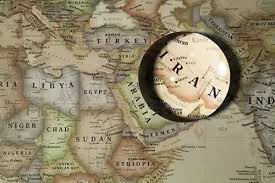
Persian Relationship with other languages.
The Relationships of Persian with Other Languages
Let us examine the characteristics of Persian and its relationships with other languages.
The Characteristics of Persian and Its Relationships with Other Languages
You can learn Persian in Iran at institutions such as Tehran University, Dehkhoda Institute, Qazvin Imam Khomeini University, and Bonyad-e Saadi. In Tajikistan, it is also possible to receive education in this language at Khujand and National Universities. In Afghanistan, education related to this language can likewise be obtained at Herat and Kabul Universities. Ottoman intellectuals always kept their eyes on the East. They learned two languages extensively from the East: Persian and Arabic. They read the Iranian poets Saʿdi and Hafez and admired the poems of the Arab poet al-Mutanabbi. For a long time, they did not take the West into consideration. With Westernization, French and English were added. If French had engaged our intellectuals earlier, it might have reduced the influence of Arabic on Turkish. However, in that case, our language would have been filled with French words. I humbly think that nationalism has saved Turkish from the influence of Western languages. Today, many things have been invented, and inventors give what they invent names in their own languages. This causes those words to enter Turkish in that form. For example, the word “television” entered the language in this way. In Turkey today, this language is taught at nine universities. It is offered as an elective course in many departments.
In Persian, there is no masculinity or femininity, that is, no grammatical gender in words. Its alphabet is the Arabic alphabet, and letters that do not exist in the Arabic alphabet, such as “ç,” “j,” “p,” and “g,” are found in Persian. The alphabet consists of 32 letters. It is written from right to left. It shares a great many common words with Arabic and Turkish. There are only three tenses: past, present, and future. It is somewhat easier to learn for those who know English and German, as English and German are also Indo-European languages. It is an indispensable language for reading the Masnavi, for Sufi studies, and for Ottoman and Seljuk history, language, and literature. A professor of grammar once said, “Grammar rules can fit on a postcard.” Therefore, its grammar is quite easy. The following sentence is very valuable: “Arabic is knowledge, Persian is wisdom, Turkish is action.” It shows the scholarly aspect of Arabic, indicates the connection of Persian with Sufism, and highlights the practical aspect of Turkish. It truly stands before us as a wonderful sentence.
In Persian, there is no definite article like “the,” and irregular verbs are not as complex and difficult as they are in other languages. All verbs are based on one of two roots: kardan (to do) and shodan (to become). It can be said that there is almost nothing beyond these. It is the language of ghazals, qasidas, and masnavis.
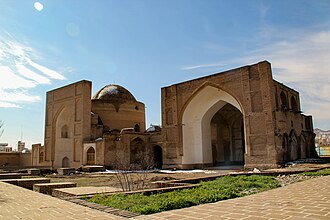
The Tomb of Qutb al-Din Haydar, One of the Turkic-Origin Sufi Masters, in Iran
Letters can be written in different forms at the beginning, in the middle, and at the end of words. A significant number of letters join with the letter that follows them, while there are also letters that do not join. An example of letters written at the beginning, in the middle, and at the end is as follows:
|
Letter |
Beginning |
Middle |
End |
Meaning |
|
ب |
بـ |
ـبـ |
ـب |
b |
|
ن |
نـ |
ـنـ |
ـن |
n |
|
م |
مـ |
ـمـ |
ـم |
m |
|
ک |
کـ |
ـکـ |
ـک |
k |
|
س |
سـ |
ـسـ |
ـس |
s |
The following letters, however, are not written connected to the letters that come after them. This is the same in Arabic.
|
Letter |
Name |
Latin Equivalent |
Example Word |
Explanation |
|
ا |
alif |
e |
آب (âb) |
Does not connect at the beginning or in the middle |
|
د |
dāl |
d |
دل (del) |
Does not connect to the following letter |
|
ذ |
zāl |
z (lisped) |
ذکر (zekr) |
Likewise does not connect |
|
ر |
re |
r |
روز (ruz) |
Does not connect to the following letter |
|
ز |
ze |
z |
زبان (zabân) |
Does not connect |
|
ژ |
je |
j |
ژاله (žâle) |
Does not connect |
|
و |
vāv |
v/u/o |
دوست (dūst) |
Does not connect |
In my opinion, the existence of letters that do not connect to the following letter adds a distinct beauty to Arabic and Persian. If it were not so, I think the written form of these two languages would not be as beautiful.
Persian is called “the French of the East.” Although words are read as they are written, there is no vowel-marking system. Because there are no vowel marks, one must look up the pronunciation of individual words. Although its grammar is not difficult, this feature makes it challenging for learners. For example, the word reften (رفتن) could also have been read as rofton. We can learn this either by looking it up in a dictionary or by listening. In Persian, there is a colloquial language called goftāri. Unlike formal and literary Persian, some words are swallowed or shortened in speech. For example, let us write the sentence “I want a glass of water” in both literary and colloquial pronunciation.
“Men yek âb mi-hâhem” is the literary form. In colloquial speech, people say “men ye âb mi-hâm.” That is, they shorten it. It is one of the easiest languages for Turks to learn. İlber Ortaylı uses the following expressions about Persian:
“The transition of this ancient language into writing approaches three thousand years. The classical form of today’s Persian was completed twelve centuries ago. That is, any educated Iranian can recite a poem written in the 900s and, if they could come together with their ancestors from 1,200 years ago, could easily speak and correspond with them. Many peoples who today boast of their literature and language do not possess this quality.”
“There are experts of the Persian language within the Mevlevi order and among the Rifaʿis. The most fundamental commentaries on Hafez and Mevlana were produced within Ottoman society.”
“Yet when we speak of Iranian culture, even this name was one that we used for them mostly during our rule over Iran. It has been very important for the Turkish people from the earliest ages to the present day. We cannot understand an important part of our language and culture without Iran.”
İlber Ortaylı uses the above statements about Persian.
İlber Ortaylı also says the following about Persian: “Persian, unlike Chinese, has not remained confined to a single country. Nevertheless, it has not reached a large population like Spanish, French, or English either.” Persian became a lingua franca. Its influence was not easy to break. During the Samanid period (819–999), Persian entered a major crisis. In this period, Ferdowsi tried to revive Persian. If Arabic had not arrived, hardly any language could have easily broken Persian dominance in the Middle East. The fact that the language of the Qur’an and the Hadith is Arabic caused Persian to be pushed into the background. Iranians, however, were disturbed by Arabic replacing Persian. Nationalist writers such as Zarrinkub called this period “two hundred years of silence.” This period includes the Umayyad and Abbasid eras. Our Turkish language is very beautiful, but Turks were more inclined toward military life. The expression “a military nation” is accurate for Turks. The saying “every Turk is born a soldier” is not said in vain. Nevertheless, important figures were also trained in the Enderun. There was also an ancient belief that if engagement with literature increased, it meant the end of the state was approaching, because action was being replaced by words. Instead of making conquests, people were producing conquest literature. The existence of periods such as the Tulip Era in the late Ottoman period, coinciding with the period of decline, somewhat supports this theory. However, each country is essentially different.
When we look at the present day, in the environment where I live there are many young people who have never read a single book, who belittle knowledge, and families who put pressure on those who spend money on books. Generally, the youth here strive to become soldiers. I do not generalize these statements, but I have not encountered even a single young person here who has read at least one book. Even university graduates stop reading books. We do not have reading rates like Russia or the West. Cemil Meriç says, “The opium of the West is the book.”
Throughout history, many languages have served as lingua francas—that is, the most widely spoken language of a region. Although lingua franca literally means “Frankish language,” it means “common language” in usage. Today, English is a “global lingua franca,” that is, a global common language. Persian, on the other hand, has been a regional lingua franca (common language). It was spoken as a lingua franca in Central Asia, South Asia, and the Middle East. It greatly influenced the languages spoken in these regions. It greatly influenced the languages spoken in these regions. For example, the language of Pakistan, Urdu, is almost composed of Persian. Languages such as French, Latin, Arabic, and Greek have also been lingua francas throughout history. Over time, when languages lost their literary, political, and cultural influence and new empires were established, new common languages emerged in the region.
Persian belongs to the Indo-European language family. I would like to list below the languages from this family that are most similar to Persian. I would also like to share an example of a dictionary prepared in Bengal. Turkish, Arabic, Persian, Urdu, and Hindi have all exerted influence. For the Bengali language, a dictionary was prepared with the following title: Haque-Rafiqul (2007), Arabic Persian Turkish Hindi Urdu Word Dictionary in Bengali.
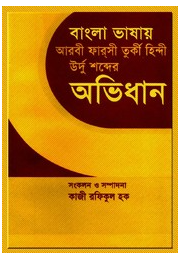
The Dictionary Compiling Arabic, Persian, Turkish, Hindi, and Urdu Words in the Bengali Language
|
Rank |
Language |
Degree of Similarity |
Explanation |
|
1 |
Tajik |
90%+ |
Considered a dialect of Persian; written in the Cyrillic alphabet. |
|
2 |
Dari (Afghan Persian) |
90%+ |
A variety of Persian spoken in Afghanistan. |
|
3 |
Pashto |
60–70% |
Belongs to the Iranian languages group; shares common vocabulary with Persian. |
|
4 |
Kurdish (Kurmanji, Sorani) |
50–60% |
Part of the Iranian language family; shows similarities in grammar and origin. |
|
5 |
Balochi |
~50% |
Spoken in southeastern Iran; shares common roots with Persian. |
|
6 |
Hindi / Urdu |
40–50% |
Belong to the Indo-Aryan group; Urdu has borrowed extensively from Persian. |
|
7 |
Armenian |
30–40% |
An isolated Indo-European language; contains some cognate words. |
|
8 |
Sanskrit |
~30% |
Shares a common Proto–Indo-Iranian origin with Persian; shows ancient linguistic similarities. |
Although it is not written here, there are many common words between Persian and English. According to tradition, thousands of years ago these languages were a single language, and as geography diversified over time, the languages also diverged. Let us look at some shared words between English and Persian in table form.
|
English |
Persian |
Transcription |
Meaning |
|
mother |
مادر |
mâder |
mother |
|
father |
پدر |
peder |
father |
|
brother |
برادر |
berâder |
brother |
|
name |
نام |
nâm |
name |
|
new |
نو |
nov |
new |
Languages such as Dari and Pashto are dialects of Persian. Countries have an official language, and they also have dialects spoken close to that language. Weinreich’s witticism defines the relationship between a language and a dialect as follows: “A language is a dialect with an army and a navy.” By this, Weinreich implies that dialects become languages through state support. As long as there is an army and a navy, a dialect advances to the level of a language. In Iran, during the Reza Shah period, Persian became the official language. One of the best examples of becoming an official language through military and state power is Hebrew. Through state enforcement, Hebrew was imposed on Jews. Languages such as Yiddish and Ladino, which had been used until then, were almost eliminated.
One of the most striking aspects of this table is the similarity between Persian and Armenian. The other languages are ones that those who study Persian might already know, but the closeness between Persian and Armenian is not widely known. I will briefly touch upon the other languages.
Let us look at the similarities between Persian and Kurdish. There are similarities in numbers, verbs, suffixes, and many other areas. I used to talk with a friend named Cengiz Yur. He knew Kurdish and would ask me the numbers. I would tell him. For example, I would say yek, and he would say, “This is Kurdish.” In this way, we first noticed the similarities ourselves. At that time, I did not have much research on languages. This brother of ours passed away due to a severe illness. I ask readers to offer prayers for his soul. He was a good brother.
Persian and Kurdish Numbers
|
Turkish |
Persian |
Kurdish |
|
1 |
yek (یک) |
yek |
|
2 |
do (دو) |
du |
|
3 |
se (سه) |
sê |
|
4 |
çahâr (چهار) |
çar |
|
5 |
panj (پنج) |
pênc |
Persian and Kurdish Nouns
|
Meaning |
Persian |
Kurdish |
|
Brother |
barādar (برادر) |
bira |
|
Woman |
zan (زن) |
jin |
|
Man |
mard (مرد) |
mêr |
|
Child |
kudak (کودک) |
zarok |
|
Name |
nām (نام) |
nav |
Some Commonly Used Sentences
|
Turkish |
Persian (فارسی) |
Kurdish (Kurmanji) |
|
What is your name? |
ism-et çiye? (اسمت چیه؟) |
Navê te çi ye? |
|
My name is Ali. |
Esm-e man Ali-ye. (اسم من علیه) |
Navê min Ali ye. |
|
How old are you? |
Chand sâl dari? (چند سال داری؟) |
Tu çend salî yî? |
|
How are you? |
Çetori? (چطوری؟) |
Tu çawa yî? |
|
What are you doing? |
Çi kâr mikoni? (چی کار میکنی؟) |
Tu çi dikî? |
|
Are you married? |
Ezdevâj kardi? (ازدواج کردی؟) |
Tu zewicî? |
|
See you. |
Mibinamet. (میبینمت) |
Êdî dibînim te. |
The relationship between Persian and Turkish is also quite close. Reza Shah was greatly influenced by the reforms in Turkey. In Turkey, there was an alphabet reform, and efforts were made to remove Arabic and Persian expressions from Turkish. During the same period, Reza Shah also wanted to purge Arabic and Turkish words from Persian. When Ottoman intellectuals engaged with literature, they often read poets such as Hafez and Saʿdi. In Arabic, they read poets such as al-Mutanabbi. Since the Seljuk period, Iranians have held important positions in state administration and cultural life. Turkish was therefore heavily influenced by Persian. Persian has also had a major influence on Azerbaijani Turkish, which is a Turkic language. Along with Russian, Persian has significantly influenced Azerbaijani. For example, Azerbaijanis use the phrase komek eylemek, which means “to help.” The word komek comes from Persian and means “help.” Persian inevitably influences the languages of the countries within its geographical sphere.
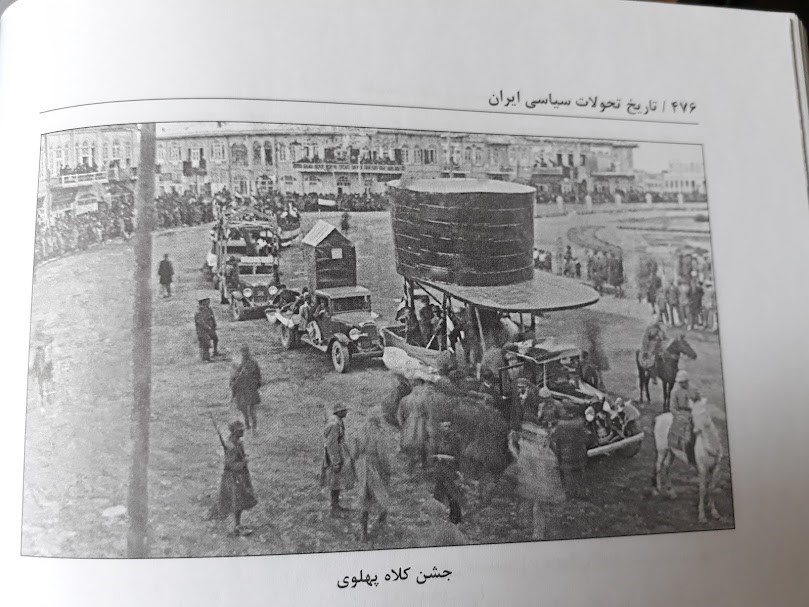
Reza Shah, influenced by Turkey’s Hat Reform, made wearing the Pahlavi hat compulsory. Scenes from a celebration organized to encourage the public.
A significant portion of nouns, suffixes, verbs, and words in Turkish are of Persian origin. It is said that there are around 1,500 Persian words in Turkish. For example, alemdar: alem is Arabic and means “flag,” while dâr is Persian and indicates possession. Thus, it means “flag bearer.” The name Dilara comes from Persian; ara means “to adorn,” while dil means “heart.” Dilber is also of Persian origin. Dil means “heart,” while ber comes from bordenden (to take, to carry) and means “the one who takes,” thus conveying the meaning “one who steals the heart.”
Iranians learned religion from the Arabs; we learned it from the Iranians; and Bosniaks learned it from us. We learned our religious terminology through Persian. Persian played a major role in the Islamization of the Turks. For example, the words namaz and peygamber are Persian. Peyam means “message,” while ber means “carrier.” Even Iranians do not say “to take ablution,” whereas we say abdest almak. Âb means “water,” and dest means “hand.” Iranians say vuzû’ giriften. The verb almak (to take) is the same in both languages when ablution is concerned. We say namaz kılmak (to perform prayer), while they say namaz okumak (to read prayer). Namaz is the same in both languages; in Arabic, namaz is salat. The days of the week also come from Persian. Çarşamba comes from çehar şenbe and means “the fourth day.” Perşembe comes from penç şenbe and means “the fifth day.” In Iran, days proceed as “first day,” “second day,” “third day,” and “fourth day,” just as in Arabic. Words such as zaman, saat, and dakika also entered Turkish from Persian. Colors such as kırmızı (red) and siyah (black) likewise passed into our language from Persian. Food names such as peynir (cheese) and şeker (sugar) also entered Turkish. Some animal names, such as ördek (duck), have likewise entered our language.
Since moving from the easy to the difficult is essential in education, we can recommend the following method: first, our youth should learn Ottoman Turkish, then Persian, and then Arabic. If you wish to learn the languages I have learned, I would like to list them as follows: Ottoman Turkish, Persian, Hebrew, Arabic, and Russian. The order from easy to difficult is like this. Although Arabic is more difficult than Russian, because it shares many words with the other languages and because you are already familiar with the alphabet, you will learn it more easily, God willing.
The largest number of words in our language came first from Arabic, then from French, and third from Persian.
The present tense forms of simple verbs have influenced Turkish as follows:
- ârâsten → ârâ “to adorn” / dilara
- âsûden → âsâ “to rest” / asude, asayiş
- âşüften → aşûb “to mix, to become disordered” / aşüfte
- âferîden → âferîn “to create” / aferin, ifrit
- âlûden → âlâ “to become tainted” /
- âgeşten “to embrace” / aguş
- üftâden “to fall” / üftade
- istâden → sitan “to stand” / sütun, bedesten, bostan, Özbekistan
- perestîden → perest “to worship” / hayalperest
- efzûden → efzâ “to increase” / ferahfeza
- endâhten → endâz “to throw” / endaze, hendese
- âvikhten → âvîz “to hang” / avize
- engikhten → engîz “to set in motion” / esrarengiz
- endişîden → endîş “to think” / endişe
- pesendîden → pesend “to like” / pesendide, müşkülpesend
- âmeden → â “to come” / amade
- âmikhten → âmiz “to mix” / hakaretamiz
There are so many such suffixes that have passed into Turkish that it is difficult to describe them all.
In Persian and Turkish, sentence order is subject, object, and verb. In English terms, this is Subject–Object–Verb (SOV).
|
Persian Sentence |
Turkish Sentence |
|
من کتاب را خواندم (man kitâb râ hândam) — man: I, kitâb: book, râ: “-ı/-i”, hândam: read |
Ben kitabı okudum |
|
او سیب را خورد (u sīb râ hord) — u: he/she, sīb: apple, râ: “-ı/-i”, hord: ate |
O elmayı yedi |
|
ما خانه را ساختیم (mâ khâne râ sâkhtim) — mâ: we, khâne: house, râ: “-ı/-i”, sâkhtim: built |
Biz evi inşa ettik |
A significant number of suffixes have entered Turkish. In the word sanatkâr, kâr is Persian and means “the one who does,” that is, “artist.” The word ostan means “country.” Hindistan means “the land of the Hind,” and Pakistan means “the land of the pure.” The suffix -baz is Persian. There is a Persian verb called baziden (بازیدن). Its present tense form is bâz, and kumarbaz means “one who plays gambling.” Sihirbaz means “one who performs magic.” The word çapraz also comes from Persian. Çep means “left,” while rast means “right.”
There are many dialects of Persian spoken in Afghanistan and Iran. I learned a detail about the Tehran and Kabul dialects by asking an Afghan friend. Now let us take a brief look at some of these differences.
In Iran, words such as zemistân (winter) and tâbistân (summer) turn into zemistûn and tâbistûn in spoken language. We say canım; the word comes from can. Instead of canem, it becomes cûnem. Ekmek is nân and turns into nûn. I write the Persian spellings of what I mentioned here in order: زمستان = زمستون, تابستان = تبستون, جان = جون, نان = نون.
In the Kabul dialect of Afghanistan, these words are pronounced as they are written. In the present continuous tense, however, a change occurs in the Kabul dialect. Let us look at examples.
In Afghanistan
- “I am going” = mîrevum میروم
- “I am coming” = miyayum میایم
- “I am eating” = mihurum میخورم
In Iran
- “I am going” = mîrevam میروم
- “I am coming” = miyayem میایم
- “I am eating” = mihurem میخورم
In Tajikistan, Persian is written in the Cyrillic alphabet.

Zebân-ı Tâcikî” is written in the visual above, and Tajik is written in the Cyrillic alphabet.
Its being written in the Cyrillic alphabet is the result of Russian policies. After the First World War, the Russians first converted the language of Central Asia to the Latin alphabet and then to the Cyrillic alphabet. The aim was to distance it from the Arabic alphabet and Islamic culture. When Turkey adopted the Latin alphabet, Russia converted the language of Central Asia to the Cyrillic alphabet. Today, news is coming that good progress has been made in joint language efforts within the Turkic world.
William O. Beeman, in his work, compares Tajik, Dari, and Persian and reaches the following conclusion:
|
Persian |
Tajik |
Dari |
|
|
Writing system |
Arabic alphabet |
Cyrillic alphabet |
Arabic alphabet |
|
Literature |
High |
Medium |
Low |
|
Relative prestige |
High |
Medium |
Low |
Sanskrit is among the oldest languages in the world. Hindi developed from Sanskrit. Moreover, during the 700–800 years of Muslim conquests in the region, Persian was one of the dominant languages. Through Persian, Arabic words entered Hindi, just as they entered Turkish. Arabic is one of the Semitic languages. Hindi is a member of the Indo-Aryan languages. Hindi is written first because it is older. Persian and Hindi both belong to the same language family. In fact, many languages, such as English, also originate from this family. Some linguists believe that Sanskrit and this linguistic origin possess superior qualities. We think that this view is a product of a particular period. Nevertheless, studies conducted in this field are valuable.
Professor Korhan Kaya includes the following statements in his book:
“The vocabulary of the Hindi language is based on words from various languages such as Sanskrit, Arabic, Persian, Turkish, English, and the Dravidian languages.”
Let us look at some words in Persian and Hindi:
|
Turkish |
Hindi (Devanagari) |
Hindi Pronunciation |
Persian |
Persian Pronunciation |
|
Bahar (season) |
बहार |
Bahâr |
بهار |
bahâr |
|
Dost |
दोस्त |
dost |
دوست |
dust |
|
Düşman |
दुश्मन |
duşman |
دشمن |
duşman |
|
Şair |
शायर |
Şâyar |
شاعر |
shâʿir |
|
Şarap |
शराब |
şarâb |
شراب |
şarâb |
|
Şehir |
शहर |
şeher |
شهر |
şehr |
|
Perde |
पर्दा |
perdâ |
پرده |
perde |
|
Renk |
रंग |
reṅg |
رنگ |
reng |
As can be seen, there are many common words among Persian, Hindi, and Turkish.
Commonly Used Daily Sentences in Iran
|
Turkish |
Persian (Arabic Script) |
Pronunciation (Latin Script) |
|
What is your name? |
اسمت چیه؟ |
İsmet çiye? |
|
My name is Ozan. |
اسم من اوزان است |
ism-i men Ozan est |
|
Where are you from? |
اهل کجایی؟ |
ehl-i kocayi? |
|
I am from Turkey. |
اهل ترکیه هستم |
ehl-i Türkiye hestem |
|
Where do you live? |
کجا زندگی میکنی؟ |
Koca zindegi mikoni? |
|
I live in Istanbul. |
در استانبول زندگی میکنم |
Der İstanbul zindegi mikonem |
|
What is your job/profession? |
شغلت چیه؟ |
Şoghl-et çiye? |
|
I am a student. |
دانشجو هستم |
Danişcu hestem |
|
How old are you? |
چند سالته؟ |
Çand sâl-ete? |
|
I am 32 years old. |
سی و دو سال دارم |
Si u do sâl dârem |
With the hope that it will be useful…
Note: Artificial intelligence was used in the preparation of the tables.
Ozan Dur


Yorumlar
Yorum Yaz