

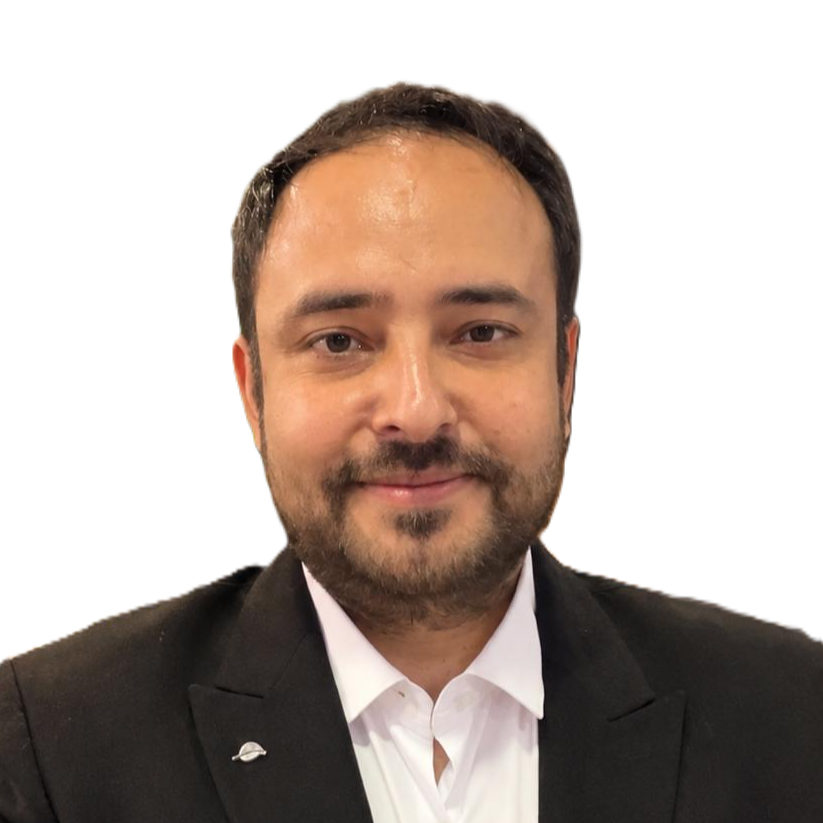
An Interview with Ahmet Gülümser on the Spanish Language
Ozan Dur: Hocam, could you introduce yourself to our readers?
Ahmet Gülümser: Greetings. I am Research Assistant Ahmet Gülümser. I am one of the first graduates (2022) of the Arabic Theology Program at Istanbul University. I completed this program with high honors. Shortly thereafter, I was appointed to Nevşehir Hacı Bektaş Veli University. In 2024, I completed my master’s thesis titled “The Spanish Inquisition During the Torquemada Era (1483–1498)” under the supervision of Prof. Dr. Nurettin Gemici. I am currently continuing my doctoral studies as a Research Assistant in the Department of Islamic History at Istanbul University Faculty of Theology.
Ozan Dur: Where and how did you receive your first foreign language education? Could you tell us a little about that process?
Ahmet Gülümser: My interest in languages actually goes back to my childhood. Kurdish was spoken in our home among family members, and as I started school, my Turkish improved considerably. By the time I reached high school, English became one of my favorite subjects. This motivated me to learn English during those years.
Istanbul University Faculty of Theology opened its Arabic Theology Program in 2017. Before that, the faculty had two programs—one in English and one in Turkish. When choosing a major, the Arabic program attracted my attention. I made my decision and became one of its first students. After beginning the preparatory program, the faculty administration selected several successful students and sent them to Jordan. I was part of that group. Thus, we had the opportunity to complete abroad the Arabic education we had started in Turkey. That experience showed me how valuable and important it is to learn a language in its native environment.
Ozan Dur: Could you describe your process of learning Spanish?
Ahmet Gülümser: In my second year of undergraduate studies, thanks to our professor from Baghdad who taught our Islamic history course, I decided to become a historian. He introduced us to the Islamic states in the West, such as the Umayyads of al-Andalus in Spain and the Aghlabids in Italy, and emphasized the need for more scholarly work on these subjects. I found it fascinating. For a while, I was torn between learning Spanish and Italian. Eventually, I chose al-Andalus and decided to study Spanish.
Shortly afterward, the pandemic began and lockdown measures were enforced. I can say that I spent the pandemic period studying Spanish. At first, I struggled because most of the resources I used were in English; there were very few Turkish materials available. But I persisted and eventually succeeded. I believe patience is indispensable in learning a language.
Ozan Dur: You speak English and Spanish. Did you use both languages in your master’s thesis?
Ahmet Gülümser: Yes. In addition to these two languages, I benefited from several Arabic sources as well.
Ozan Dur: Did you decide to specialize in Spain before learning Spanish, or after?
Ahmet Gülümser: I learned Spanish after deciding to specialize in the history of Spain. My goal was to work on Spain, and the first step toward that was learning its language.
Ozan Dur: You have a book titled “Spanish Verbs and Their Uses: 500 Verbs.” Could you tell us about how this book came to be?
Ahmet Gülümser: As we all know, there are relatively few Spanish-language resources available in Turkey. While studying Spanish, I often thought, “I wish there were a book showing verb usages within sentences.” A few years after advancing in the language, I had the opportunity to bring this idea to life. Thankfully, I have received very positive feedback so far.
Ozan Dur: English and Spanish are said to be similar. Do you mix them while speaking?
Ahmet Gülümser: Yes, sometimes we do mix them. But I believe this is inevitable during the language-learning process.
Ozan Dur: Could you compare Spanish and English in terms of difficulty and ease of learning for Turkish speakers?
Ahmet Gülümser: Since there are abundant resources for learning English in Turkey, it gives learners a significant advantage. The same cannot be said for Spanish. When we compare Spanish to other European languages, this becomes clearer. In our country, the number of German, French, and Italian speakers is higher than the number of Spanish speakers.
Ozan Dur: Which resources and websites would you recommend for those learning Spanish?
Ahmet Gülümser: I definitely recommend the works of İnci Kut and the Spanish grammar books published by Routledge. Beyond that, I suggest listening to Español con Juan and Spanish with Vicente. In terms of websites, I recommend the platforms I previously shared with you and which were published on your site:
(https://www.ilimvemedeniyet.com/ispanyolca-ogrenme-siteleri)
Ozan Dur: Of course, knowing Spanish is important for studies on Spain. But could you explain the importance of Spanish sources and the language itself?
Ahmet Gülümser: Knowing the language of the region you study is crucial. Many of the sources I used in my master’s thesis were in Spanish, and I understood this necessity more clearly through experience. Today, anyone who wants to specialize in a certain region or geographic area must inevitably know the language of that place. I frequently tell my students the same: learning an additional language beyond Arabic and English will elevate them academically.
Ozan Dur: Could you give us some information about Spanish studies and resources available in Turkey?
Ahmet Gülümser: As we mentioned earlier, there are fewer resources compared to other languages. However, in recent years, I have observed a noticeable increase in interest toward Spanish. This growing interest has naturally led to the emergence of new resources. In Turkey, İnci Kut is the most well-known and competent figure in this field.
Ozan Dur: Could you explain the impact of learning Spanish on your career and the domains where students can work after acquiring the language?
Ahmet Gülümser: Learning Spanish has had a significant impact on my career. In our field of theology, very few people know the language, which makes those who do quite sought after. For example, during the earthquake period, a few colleagues and I accompanied Spanish emergency response teams who arrived in Istanbul, helping transport them by military aircraft to Adıyaman and providing translation services. At that moment, I truly realized how important language skills are.
After learning the language, students can work in many fields—most notably media and various translation roles.
Ozan Dur: What aspects of Spanish surprised you, challenged you, or seemed easy to you?
Ahmet Gülümser: One thing that surprised me was the existence of grammatical gender—femenino and masculino—which is absent in English but present in Arabic as müzekker and müennes. Knowing Arabic made that part much easier for me. What I found difficult were the irregular verb conjugations, since many of them follow no set pattern and must be memorized through exposure.
Ozan Dur: Could you tell us a bit about your recent work?
Ahmet Gülümser: Certainly. Recently, our book on the Spanish Inquisition and a book chapter on Spanish missionary activity have been published. Soon, another book chapter on Islamic Studies in Spain—also known as Spanish Orientalism—will be released, God willing. I value this upcoming study greatly because it examines not only Spain but also several Western countries through contributions from expert scholars. I am happy to be part of such an important project. I hope it will be beneficial.
Ozan Dur: Thank you very much for accepting my interview request, Hocam. I hope this interview will be fruitful. What final advice would you like to give our students?
Ahmet Gülümser: I advise them never to give up while learning a language and to be patient. Many things that seem difficult at first become easier over time. When they persevere and finally achieve results, they will say, “I’m glad I didn’t give up at the beginning.” And that feeling itself is a reward.
Conclusion and Evaluation
We conducted an enjoyable interview with Ahmet Gülümser Hocamız regarding the Spanish language. He is proficient in Arabic, English, and Spanish, and he actively uses these languages in his academic work. He has also authored a study involving 500 Spanish verbs with example sentences. He had previously contributed to our website with content on Spanish and al-Andalus. I sincerely thank him for accepting my interview request. Hocamız especially emphasized perseverance, reminding us that if one does not give up, good things eventually come. Thank you for reading.
Ahmet Gülümser & Ozan Dur


Yorumlar
Yorum Yaz