
Altay Cem Meriç’s Recommendations on Language Learning
I am currently reading the widely acclaimed book Öğrenmeyi Öğrenmek by Altay Cem Meriç, and within it, the author offers valuable insights on how to effectively learn a foreign language. Since our website includes a foreign-language section, I would like to convey these recommendations to you in my own words. I respectfully salute our esteemed teacher and thank him for his contributions. I also wholeheartedly recommend this book to all young readers.
Altay Cem Meriç’s Advice for Language Learning
Altay Cem Meriç began learning Arabic as early as 2013 and managed to acquire the language proficiently within a year. He studied independently, without taking private lessons. Instead, he followed the radio lectures of a theology instructor who used a three-stage textbook integrating grammar and reading practice. Meriç studied from this material consistently, dedicating only 2–3 hours a day, and he made a point of learning every single word carefully.
Later, he purchased a sarf and nahiv (morphology and syntax) book and added a structured 1.5-hour daily reading program. Here, Meriç does something quite remarkable, dear readers: he stops reading fictional texts altogether. As someone who has been trying to learn foreign languages for years, I encountered this method for the first time. Instead of reading Arabic stories or simplified narratives, he turns directly to hadith literature, learning vocabulary from authentic texts. In doing so, he simultaneously studies both hadith and Arabic. He also notes that this is an underdeveloped area and suggests that if scholars prepare books in this format, they would be of great benefit. Indeed, resources built around “Learning Arabic Through Hadith” could be a promising contribution.
Meriç applies a similar method while learning English. He chooses Aristotle’s Metaphysics as his primary text and explains his approach as follows:
“I had the book bound in such a way that the left-hand page contained the text and the right-hand page was left blank. I compared the original with translations whenever I encountered difficulties, and I used the empty page to take notes on philosophical nuances.”
This represents a highly effective method, offering a rich intellectual experience. Readers may also try it and continue using it if they find it suitable.
Important Note: Dear readers, one must already have reached a certain proficiency level in the language to be able to read books.
Meriç emphasizes that language learning is a long-term process. Yet, once the language is acquired, learners will experience a sense of reward and satisfaction—although this feeling may not arise until the skill is mastered. Language learning is a long journey that requires patience, and one should focus on reading content that sparks personal interest. Doing so not only makes the process more enjoyable but also accelerates progress, with God’s permission.
One of the key points Meriç highlights is consistency. After learning Arabic within a year, he never abandoned the language; instead, he continued reading daily. He could easily have said, “I already know this language and no longer need to study.” But he did the opposite. For over ten years, he has continued to work with Arabic regularly. This steady dedication is what allows a person to reach the level referred to in our tradition as Râsihûne fi’l-ilm—those deeply rooted in knowledge.
Meriç also notes that language acquisition is largely a subconscious process. Excessive focus on grammar, or what he calls “exaggerated grammatical precision,” is a conscious effort that can be unhelpful and sometimes even harmful. For those learning a language, grammar should function like salt in a meal—essential, but only in appropriate quantity. Without salt, the food has no flavor, but too much salt ruins the dish.
Meriç further argues that language learning should not become an end in itself. A language is a tool—an instrument for gaining knowledge. He also describes Arabic as a vast “climate” that requires specialized study depending on the field. For example, the vocabulary used in hadith and Qur’anic studies differs from that used in theological or philosophical texts. Each discipline has its own terminology, which must be studied separately. This is also true in Turkish: someone reading economics for the first time will naturally struggle due to unfamiliar terminology.
He concludes this section with the following profound observation:
“The number of words a person knows is the greatest indicator of their intellectual capacity. For it is nearly impossible to know many words without having learned many things.”
I wished to share this section with you in my own words, dear readers, particularly because I aim to transform our website into a center for foreign-language learning. We extend our gratitude to Altay Cem Meriç for his insight and dedication. May he continue his work in good health. We sincerely appreciate his contributions.
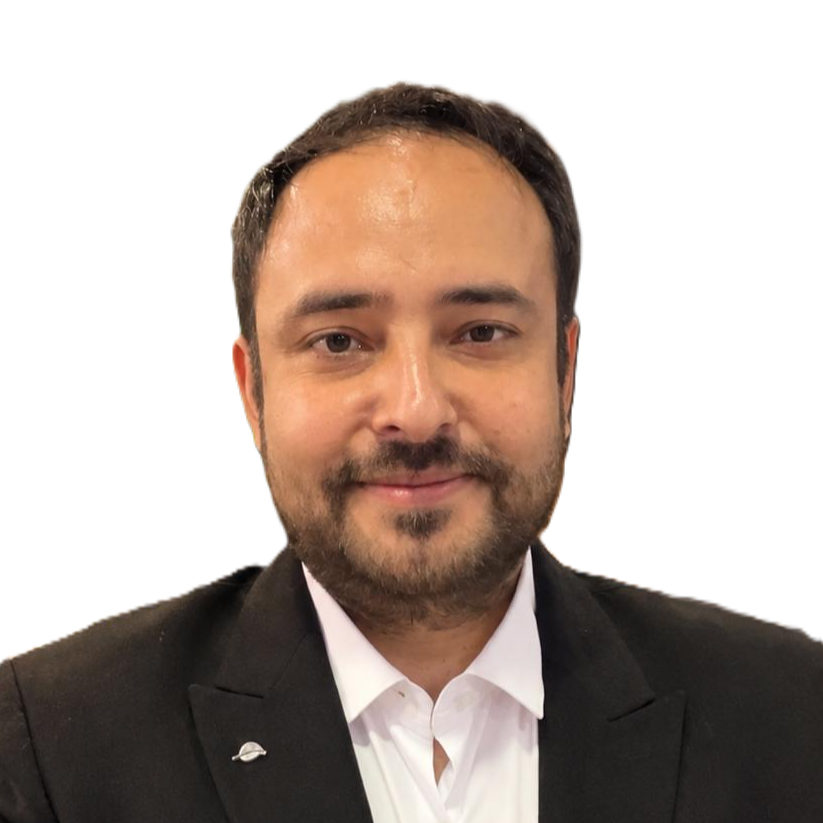
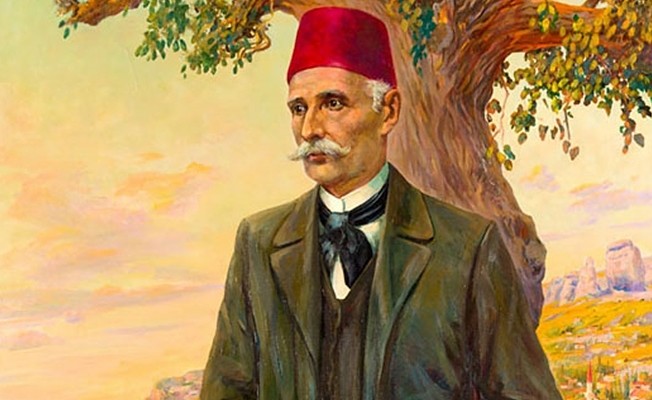
Altay Cem Meriç
Öğrenmeyi Öğrenmek – Tin Publishing (3rd Edition)

Yorumlar
Yorum Yaz