
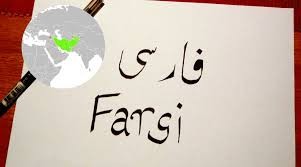

Story of the Turks with Persian
Turks and the Persian
Persian is a language that Turks encountered especially in the post-Islamic period. It is frequently emphasized that we learned Islam from Persian-speaking Sunnis. This also caused our religious terminology to pass from Persian. Geographically, Iranians take pride in the claim that “we have been present in this land since history.” Turks arrived in Anatolia in the 1000s. Especially during the Seljuk period, great interest was shown in Persian, and Persian was carried into Anatolia. Now let us begin to address the importance of Persian for the Turks:
Mehmet Mazlum Çelik states in his article in Independent Türkçe:
“When the numerical quantity of works written in the Seljuk and Ottoman periods is taken into account, the number of Arabic words may be higher than that of Persian; but when we look at the usage among the people and its reflection in the field of literature, it can be said that Turks were more under the influence of Persian” (Çelik, n.d.).
As Mazlum also notes, Turks and Persian have nourished one another throughout history. Likewise, there is also a partnership between Arabs and Turks. However, when it is examined, Turkish has borrowed the most words from Arabic. It is said that there are around 6,467 Arabic words. From Persian, around 1,500 words were taken. In terms of literature, Persian has a clear superiority; Arabic is considered the key to religious sciences. Both languages, in this sense, have been objects of interest. The Ottomans relied solely on Arabic and Persian for exactly 474 years (1299–1773). In 1773, French lessons were included in the curriculum of the Mühendishane-i Bahr-i Hümayun (Özkan, 2017).
Since the Ghaznavids and Seljuks, Persian has occupied a central position. Even today, in Iran, Tajikistan, and Afghanistan, some Turks continue to write works in Persian. Nine of the thirty-six Ottoman sultans had a divan. Those who had a Persian divan include Cem Sultan, Sultan Selim I, Şehzade Bayezid, Sultan Murad III, and Süleyman the Magnificent. Even the word padişah is Persian. Therefore, for historical reasons, Persian has been important for the Turks and continues to maintain its importance. Seljuk and Ottoman sultans grew up with Shahnameh characters.
Ottoman sultans grew up with Shahnameh characters. They identified themselves with the Shahnameh. The Ottomans embraced Arabic and Persian to such an extent that they did not display nationalism in this matter. Especially the stories about Alexander in the Shahnameh were loved so much that a tradition of writing Iskendername emerged. Moreover, during the Seljuk and Ottoman periods, a bureau known as Shahnameh-writing was established, and works such as simplifying the text were carried out there. The Shahnameh was written in classical Persian and its language was dense. It needed to be further simplified. In the Shahnameh, Afrasiyab represents the Turks; Iranians and Turks are depicted as two rival peoples. Furthermore, Afrasiyab is portrayed as a negative character (YouTube, n.d.).
Ferdowsi used very few Arabic words in the Shahnameh. It is said that his aim was to revive Persian. In his era, Persian was in a state of “decline” (Çökme, batma) (Moghadasi, n.d.). He dedicated himself to reviving Persian. He presented his work to Mahmud of Ghazni, and according to one account, the poets in the palace belittled Ferdowsi. The significance of his work was understood only long afterwards. The Seljuks, Ilkhanids, and Timurids all embraced the Shahnameh. When Iranians gained national consciousness, the first thing they did was to embrace Ferdowsi. Even today, the Shahnameh is an inseparable part of Iranian national culture. Even very small children know verses from the Shahnameh. Events dedicated to the Shahnameh are held every year in Iran (Iranarasane, n.d.).
Iranians see themselves as the true representatives of the East and consider themselves heirs to a great empire (Iranarasane, n.d.). They welcome the acceptance of Persian by other nations with joy. It is known that Persian spread across Central Asia, the Middle East, and India. Those who learn Persian generally feel that the language has a certain charm. Iranians call Persian a “national treasure.”
The Ottomans embraced Arabic and Persian to such an extent that they made these two languages inseparable parts of their civilization. They almost never considered these languages foreign. Although the learning of Arabic was more widespread, the learning of Persian was also of considerable degree. Persian was taught in the Enderun. It was considered a cultural and bureaucratic language. The Siyasatname of Nizam al-Mulk was originally written in Persian. Although there were Sunni-Shi‘i conflicts in history, the Seljuks and Ottomans did not look unfavorably on Persian because of these conflicts, especially at the governmental level. Every five centuries, a severe Sunni-Shi‘i struggle has taken place in the region: the Seljuk-Fatimid conflict in the 11th century, the Ottoman-Safavid conflict in the 16th century, and the Saudi-Iranian rivalry in the 21st century (Dağ, n.d.).
Our religious terminology has passed from Persian. Words such as peygamber, abdest, oruç, namaz entered Turkish from Persian. Âb means “water,” and dest means “hand.” Iranians say vuzū gereftan for taking ablution (وضو گرفتن). Peygamber means “message bearer.” Peygam means “message,” while ber means “carrier.” The word oruç comes from rūze, which means “day.” Namaz is also Persian. We say “namaz kılmak” (to perform prayer), Iranians say “namaz khāndan” (to read prayer).
A significant portion of the names in our beautiful Turkish language also come from Persian. Dilara, Dilber, Suzan. In Dilara, dil means “heart,” while âra is the present tense of the verb ârāstan meaning “to adorn,” thus Dilara means “heart-adorning.” In Dilber, dil again means “heart,” while ber is the present tense of the verb bordan meaning “to carry.” In the word Suzan, suz is the present tense of the verb suxtan meaning “to burn,” while -an forms an agent noun such as “burner.”
Some of the days of the week also come from Persian. Iranians count days as “first day, second day.” Yek şenbe is the first day, do şenbe is the second day… Çehar şenbe is the fourth day, penç şenbe is the fifth day. These passed into our language as çarşamba and perşembe, meaning fourth day and fifth day. In Arabic as well, days follow the same system. Friday is “juma” in nearly all Muslim languages.
The following suffixes in Turkish come from Persian: -ane, -dar, -zede, -kâr, be-, -keş, -amiz, -zen, -baz, -istan, -perest, -çe, -ger, -rân, -şinas, -güzer, -ki, hem-. Hundreds of Turkish words have been formed with these suffixes. -istan is mostly used in country names: Pakistan, Afghanistan, Yunanistan, etc. -istan means “place of settlement.” Pak means “pure,” so Pakistan means “land of the pure.” When Persian words entered Turkish, some phonetic changes occurred: “d” becomes “t,” “n” becomes “m,” “b” becomes “p.” The Persian word cünbüş became cümbüş in Turkish. Bāzār became pazar. The suffix -dâr means “having, possessing.” Bayraktar means “one who has a banner.” It is possible to multiply such examples (Istanbul University, n.d.).
In the field of Sufism, Persian has an indispensable place. The word dervish comes from Persian and means “one who goes door to door.” The word dost also comes from Persian and has a spiritual connotation. Nimet Yıldırım, on Iran and Sufism, states:
“In all of Persian literature, no movement has influenced literature as powerfully as hamāse and, after that, Sufism. The most important and strongest themes of Persian literature, with their highest-level examples, are either related to hamāse and its associated themes or to Sufism. Both genres are based on the rich cultural heritage of Persian literature whose roots extend far back in time” (Yıldırım, n.d.).
It is understood that since ancient times, Sufism has been an indispensable phenomenon in Iran. They disseminated it through literature and transmitted it to generations through poetry. Sufism also has an important place among Turks, and those who wish to study this area inevitably encounter Persian.
After Arabic and French, the largest number of loanwords in Turkish come from Persian. One of the common points between Persian and Turkish is that both have been heavily influenced by Arabic. Additionally, geographic proximity and the fact that Iran was ruled by Turks for nearly 1,000 years enabled both languages to spread widely. Even today, many Persian and Russian words exist in Azerbaijani Turkish. These are not coincidental. Persian spread to Anatolia through the Seljuks and to the Indian region through the Timurids. The Mughals used Persian. In Modern Turkish, there are more than 6,000 Arabic words and around 1,300 Persian words (Istanbul University, n.d.).
It is said that there are approximately 1,300 shared words between Persian and Turkish (modern). Only about 50 of these words have not undergone phonetic change. This means that if Persian is not learned from an expert, pronunciation errors may occur. It is correct to begin with listening, and reading practice can follow. For example, the word ateş in Turkish is âteş in Persian. If it is assumed to be the same and learned through Turkish, pronunciation problems may arise.
Best wishes, young people…
Ozan Dur
Türkiye based Middle East Researcher
References
Çelik, M. M. (n.d.). Dilimizden Yalnızca Farsça Kelimeleri Çıkarsak Ne Olurdu? Independent Türkçe.
Dağ, A. E. (n.d.). Şii-Sünni ilişkileri. İnsamer.
Istanbul University. (n.d.). ET000499.pdf. http://nek.istanbul.edu.tr:4444/ekos/TEZ/ET000499.pdf
Iranarasane. (n.d.). Shahnameh-related article. https://iranarasane.ir
Moghadasi, N. (n.d.). Shahnameh: Its necessity for modern Iran. https://drnasermoghadasi.com
Özkan, S. H. (2017). Osmanlı Devletinde Eğitim Dili ve Yabancı Dil Meselesi. Eğitim-Bir-Sen, 39.
YouTube. (n.d.). Şehname lecture video. https://www.youtube.com/watch?v=_JWkawyEFas
Yıldırım, N. (n.d.). Article on Persian literature and Sufism. https://arastirmax.com
Translated from Turkish by ia


Yorumlar
Yorum Yaz