
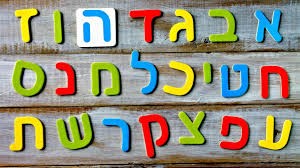

Story of the Hebrew
Jews and Hebrew
In the eyes of the Jews, Hebrew is a sacred language. For the Jews, Hebrew was the language of God, of the first human, and—had the Tower of Babel not been destroyed—of all humanity. The Jewish perspective on Hebrew is similar to the Muslim view of Arabic. Throughout history, Jews used Hebrew in their worship. Nevertheless, we know that until modern times they could not pray in Hebrew; they prayed in Yiddish, Ladino, or the languages of the countries in which they lived. This was because Hebrew was not in a condition to meet their daily needs. After the destruction of the Temple, Hebrew was abandoned, and this abandonment was considered a great sin. In an award-winning book, it is stated that when Jews abandoned Hebrew, their state collapsed, and when they reclaimed it, they regained a state. This reveals how important Hebrew is for today’s Jews.[1]
Jewish intellectuals used Hebrew for many years as a liturgical—that is, literary—language. They did not speak it, but they wrote it. Therefore, we cannot say that Hebrew was completely abandoned. Alongside Hebrew, Jews also produced works in Yiddish, a mixture of German and Hebrew. During the Haskalah, or the Jewish Enlightenment, some Jewish writers attempted to revive Hebrew. The revival of Hebrew had begun even before Eliezer Ben Yehuda, and Ben Yehuda would dedicate his life to this effort and prove that Hebrew could be spoken as a living language.[2] He conducted an experiment on his son, Itamar Ben Avi, speaking only Hebrew with him. His son began speaking Hebrew at the age of 4–5, and the project succeeded.[3] Even Herzl believed that Hebrew would be useless. “Who could ask for a train ticket in Hebrew?” he said. Yet today, around 4–5 million Jews speak Hebrew as their mother tongue, and history seems to have proven Herzl wrong. Jews are able to meet most of their needs.[4]
The part that concerns us most and affects our present is the situation in the modern period. Hebrew was registered as an official language by the British Mandate in 1922. These official languages were English, Arabic, and Hebrew. The acceptance of Hebrew as an official language contributed to its spread. The Zionist elites had set their sights on Hebrew. Its greatest rivals were Yiddish and foreign languages. The most serious threat came from Yiddish. It is said that before the Second World War, the number of Yiddish-speaking Jews was around 12 million. A significant portion of these 12 million Jews would perish at the hands of the Nazis. The survivors fled to the United States and Palestine, and Yiddish was abandoned in these places as well. Yiddish was not given the importance it deserved, and today its speakers are counted only in the hundreds of thousands.
Before becoming prime minister, Ben-Gurion took part in efforts to revive Hebrew and even formed a team. Ben-Gurion was a figure who knew the Torah and Judaism very well. During his time, Hebrew became firmly established. Jews who made aliyah—that is, immigrated to the region—chose Hebrew names under Ben-Gurion’s directives. Ben-Gurion himself chose the name “Ben-Gurion,” which means “lion cub.” These names generally symbolized masculinity and strength. This tradition continued later on.
The Zionist elites envisioned what could be called a melting pot. By this, they meant melting all incoming Jews into a single pot. In other words, they wanted to create one nation. Acting with the slogans “one language and one people,” they caused other languages to lose prominence. Yiddish, Ladino, Russian, Arabic, Persian, and the languages spoken by Jews in other countries were forgotten. Jews even mocked these languages and those who spoke them. Society became stratified, and those who used languages other than Hebrew became the object of ridicule. Jews called this Mediniyut ha-Lašonit (linguistic policy).[5] This caused, for a long time, the disappearance or neglect of languages other than Hebrew. On the other hand, Jews were united under a single linguistic identity. This language also made the occupation of the region easier.
Hebrew also legitimized Jewish claims over the land. The giving of the Holy Land to the Jews is recorded in the Torah, and the Torah was written in Hebrew. Thus, there was an extraordinary connection between the language and the land. This bond held an indispensable place in the Jewish mind. It is useful to know the following expression from Jewish prayers, uttered in Hebrew: “If I forget you, O Jerusalem, may my right hand forget its skill.” This expression, too, was in Hebrew.[6]
Just as Muslims are attached to Arabic, Jews are equally attached to Hebrew. The language of the People of the Book, Hebrew, shows great similarity to Arabic. Arabic (especially the Palestinian dialect) is one of the official languages of present-day “Israel,” but it has little chance against Hebrew. It is said that Arabs’ interest in Hebrew is greater than Jews’ interest in Arabic.[7] Since Hebrew is the language of higher education and because job opportunities require it, Palestinian Arabs learn Hebrew one way or another. We must analyze this situation carefully.
Today, Hebrew is declining in the face of English. English, a global language and the modern lingua franca, threatens all languages. In business, academia, and all areas of life, people strive to learn English. The situation is the same in Israel, and the number of English speakers is quite high. While studying Hebrew at the University of Haifa on Mount Carmel, everyone attempted to speak English with us. Culturally, it is said today that Hebrew should fear English. Recently, interest in the Palestinian dialect of Arabic has risen because of TV series such as Fauda, yet Arabic still does not receive the value it deserves in the occupied territories. Arabs and the Arabic language, being the region’s original inhabitants and original language, must dominate in every sense. If Hebrew exists today, it owes its survival in some sense to Arabic.
Sources
William Safran: Language and nation-building in Israel: Hebrew and its rivals.
אילנה שוהמי ודב ספולסקי: מחד-לשוניות לרב-לשוניות? מדיניות החינוך הלשוני בישראל.
Taha Kılınç: Dil ve İşgal.
יופי של עברית: אבשלום קור.
Footnotes
[1] The fact that this book received an award and makes such assertions without a strong source base is significant.
[2] I recommend reading Taha Kılınç’s book Dil ve İşgal.
[3] I recommend watching the play I translated from Hebrew that explains this situation: https://www.youtube.com/watch?v=pLjUnx4TsmU&t=508s
[4] I did not say they could meet all their needs, because the language has not yet fully developed. Work is still ongoing, and the language continues to evolve. Some words still lack equivalents, and efforts continue on this issue.
[5] Single-language policy.
[6] Hebrew: אם אשכחך ירושלים תשכח ימיני
[7] I refer to the 1948 Palestinian Arabs living in “Israel.”
Not: This article was first published in the magazine Dördüncü İklim. I had the honor of publishing in the same magazine with young people who care deeply about Jerusalem. I offer my thanks to my teacher Habip and the other friends.
Ozan Dur
Translated by ia from Turkish


Yorumlar
Yorum Yaz