
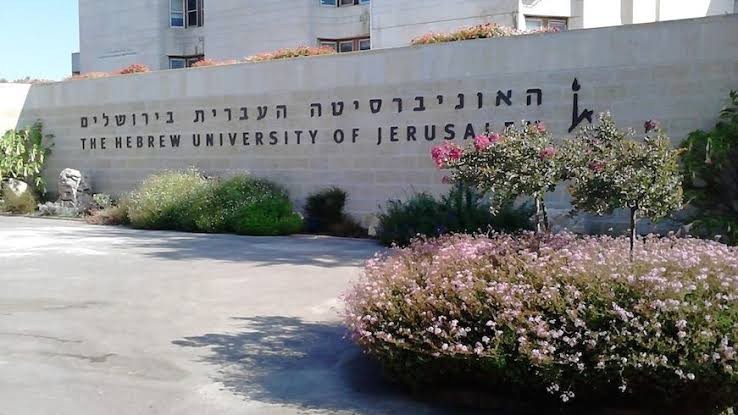

This article examines the institutional and intellectual foundations of the Zionist project before the establishment of Israel in 1948. Focusing particularly on the Hebrew University of Jerusalem and Mount Scopus, it explores how educational institutions, language organisations, healthcare facilities, the press, and scientific centres contributed to the development of Jewish national identity and state-building. It argues that Israel’s emergence was supported by a long-term institutional strategy that preceded political sovereignty and military independence.
THE INSTITUTIONAL AND INTELLECTUAL FOUNDATIONS OF THE ZIONIST PROJECT
Introduction
The establishment of Israel was not, contrary to common belief, merely the result of military and political initiatives. The Hebrew University of Jerusalem, whose foundations were laid on Mount Scopus before 1948, together with the institutional infrastructure developed during the Yishuv period, helped construct the intellectual, academic, and spatial legitimacy of the Zionist project. This article examines the role of pre-state institutions in Israel’s state-building process and the contested history surrounding Mount Scopus.
Historically, the formation of a state has never been solely the outcome of military and political manoeuvres. When the establishment of Israel is examined, it becomes evident that an institutional infrastructure encompassing education, science, language, the press, and healthcare was carefully constructed long before political sovereignty was declared. These initiatives, undertaken during the first half of the twentieth century, not only created an administrative framework but also radically transformed the Jewish community’s social outlook, self-perception, and relationship with the land.
1. Intellectual Seeds and Proto-Zionism: The Vision Shaped at Katowice
The proto-Zionist—or early Zionist—period occupies an important place in Israel’s institutional history. One of the most critical turning points of this period was the Katowice Conference of 1884. During this meeting, which holds a prominent place in Zionist historiography, the idea of establishing a university in Palestine was proposed at a time when neither a political map nor international support for such a project existed. As Halil Çakmaktaş explains in detail in his work The Lovers of Zion Movement, the earliest foundations and broader vision of Zionism began to take shape at this conference. The aspiration expressed at that first gathering became a concrete reality within the relatively short period of approximately thirty years.
1.1. A Historical Interlude and the Changing Custodianship of Civilisation
The institutionalisation of a vision within thirty years should not lead us to adopt a defeatist assumption such as, “The West or Israel is always ahead, while Muslims are incapable of making progress.” History does not move along an uninterrupted linear path; the civilisation of al-Andalus provides one of the clearest examples of this reality. There were periods in Spain when Christians learned Arabic instead of Latin and even converted to Islam. As indicated by the divine principle, “Such days We alternate among the people” (Qur’an, Āl ʿImrān, 3:140), civilisation and power have continually changed hands throughout human history.
2. Scientific and Educational Mechanisms of State-Building
Several strategic institutions designed to support the social fabric and administrative outlook of the future state began operating decades before political independence was declared.
Technion – Israel Institute of Technology (1912)
Founded in Haifa, the institute was established to develop the engineering, architectural, and technological infrastructure required by the emerging society.
The Hebrew Language Academy and Herzliya Hebrew Gymnasium
The Vaad HaLashon—the Hebrew Language Committee, which later became the Academy of the Hebrew Language—was founded by Eliezer Ben-Yehuda in 1890. It transformed an ancient language that had largely ceased to function as an everyday spoken language into one capable of responding to the needs of the modern world. The academy coined new terms in fields such as science, mathematics, and daily life. Meanwhile, the Herzliya Hebrew Gymnasium, established in 1905 as the first secondary school in which Hebrew served as the principal language of instruction, taught these words to younger generations and helped transform Hebrew into a living form of social cohesion.
The Hebrew University of Jerusalem (1918)
The university was established on the grounds of the Grey Hill Estate, which had been acquired through the efforts of Chaim Weizmann shortly before the First World War. It subsequently became one of the cultural and political centres of the Zionist movement. Figures such as Albert Einstein, Sigmund Freud, and Martin Buber participated in the institution’s establishment and administration. The university was therefore regarded not merely as an educational institution but also as a “symbol of the revival” of the Jewish people. Since its founding vision sought to create an institution open to people of every religion and ethnic background, the university continues to be preferred by a considerable number of Palestinian students today.
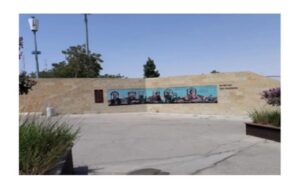
Photographs of the university’s founders are displayed opposite the campus.
Albert Einstein, Martin Buber, Sigmund Freud, Judah Leon Magnes, Haim Nahman Bialik, and Ahad Ha’am. It is even claimed that Einstein wrote his theory of relativity here.
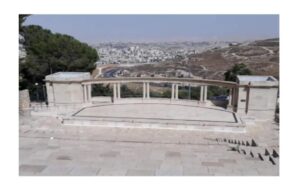
The university’s opening address was delivered here.
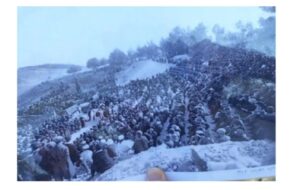
The historic opening ceremony of the university.
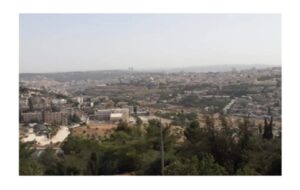
The view of the Dome of the Rock from the university.
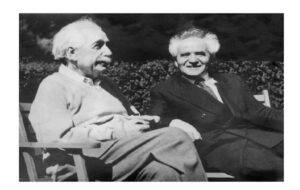
Einstein and Ben-Gurion.
The Weizmann Institute took its name from the renowned chemist Chaim Weizmann. Weizmann was both a distinguished scientist and an active figure in Zionist diplomacy. His discoveries in chemistry played a critical role in meeting the Allies’ need for explosives and synthetic raw materials, particularly during the First and Second World Wars. He later became the first president of Israel. Nevertheless, rather than the symbolic authority associated with that office, it was the scientific outlook he helped cultivate that became embedded in the foundations of the state.
3. Mount Scopus (Har Ha-Tsofim): From a Cultural Symbol to a Strategic Objective
Mount Scopus—known in Hebrew as Har Ha-Tsofim, in Arabic as Jabal al-Masharif, and in Turkish as “İzleme Tepesi,” or “Observation Hill”—is the site on which the Hebrew University of Jerusalem was constructed. It occupies a highly symbolic position from both historical and geopolitical perspectives.
3.1. Historical Background
During the Roman period, when Jews were prohibited from entering Jerusalem, pilgrims and other members of the Jewish community observed the city and the destroyed Temple area—the present-day Al-Aqsa Mosque compound—from this hill. Upon seeing the city, they would tear their garments as a sign of mourning. The Roman general Titus, who besieged and destroyed Jerusalem in 70 CE, also established his military headquarters on this hill.
The 1925 Opening Ceremony and Lord Balfour
Speaking at the university’s official opening in April 1925, Lord Arthur James Balfour described the historical significance of the location in the following words:
“This was the hill from which the Roman destroyer of Jerusalem directed the siege that brought the great period of the Jewish people to an end. Could there be a more historic place? From this hill, you can see the beginning; from here, you can see the end—or what appeared to be the end—of the Jewish community…”
A Priority Beyond the Sacred Sites
Over time, the university and the Mount Scopus ridge became national symbols whose importance even surpassed that of sites regarded as religiously sacred. During the proceedings of the Peel Commission in 1937 and the Woodhead Commission in 1938, the Jewish Agency, under the leadership of David Ben-Gurion and Chaim Weizmann, was prepared to abandon its claims to Jerusalem’s Old City—including its sacred sites—but insisted that the isolated Mount Scopus area remain within Jewish territory.
As Menachem Ussishkin stated, “Mount Scopus, with its thousands of students and hundreds of professors, will become the cultural centre of the Jewish people.” Indeed, during the 1948 war, Haganah forces accepted surrender in the Old City while continuing to defend their positions on Mount Scopus until the very end.
4. An Educational Experience: Campus Life, the Library, and Stages of Language Learning
The Hebrew University of Jerusalem campus is noteworthy for both its physical architecture and institutional facilities. The campus rises immediately above the Sheikh Jarrah neighbourhood, while the Palestinian village of Issawiya is situated just below it. Throughout the historical process, the Israeli administration placed considerable pressure on Issawiya’s residents, including closing roads leading to Hadassah Hospital. Such measures obstructed local people’s access to healthcare services.
The campus is also located near a historic cemetery containing the graves of approximately 2,600 British soldiers who died during the First World War.
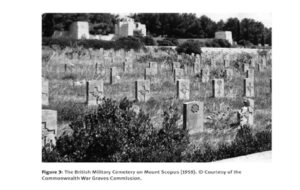
The historic British military cemetery.
One of the most striking structures on the campus is its synagogue, whose windows directly overlook the Dome of the Rock. The campus also housed the National Library of Israel. The library’s advanced digital scanning facilities—made available to academics and students within specific page limits—together with its spacious recreational areas and social spaces where students can spend the entire day, are highly developed.
After reaching the Dalet level in Hebrew and becoming capable of following academic courses such as “Jewish Environment and Society,” I used the following expression in order to show my level of Hebrew and Israeli culture.
“Mi Moshe ad Moshe, lo kam ke Moshe.”
“From Moses to Moses—that is, from the Prophet Moses to Moses Maimonides—there arose none like Moses.”
Listening to lectures and understanding concepts in a foreign language, particularly at an academic level, requires considerable intellectual effort. Although early classes, exhaustion, or the occasional complacency of student life may prevent one from achieving the desired grades, the ability to follow courses in Eastern languages such as Persian, Arabic, and Hebrew opens the door to studying the region through its own sources.
5. The Transformation of Social Mentality and Symbols
The Zionist movement simultaneously redefined Jewish identity through the institutions it established.
The “Master–Slave” Image and the Alliance Schools
From the nineteenth century onwards, the French-based Alliance Israélite Universelle schools helped transform Jewish society from the European stereotype of an “impoverished, passive, inferior race responsible for killing God or the king” into a community of qualified individuals who spoke foreign languages and occupied positions in strategically important fields. Over time, this transformation evolved into forms of political alliance supported by Evangelical groups.
Masculine Names and the Metaphor of Power
The transformation of social mentality was also reflected in the selection of names. The names adopted by newly founded cities and political actors emphasised strength, land, and nature. Tel Aviv, for example, means “Hill of Spring,” while the word tel is common to both Arabic and Hebrew. Yerushalayim, the Hebrew name for Jerusalem, may be interpreted as the “City of Peace”—Ir shel Shalom. The founding leader of the state, David Green, changed his surname to Ben-Gurion, a name associated with the meaning “lion cub.”
Chemistry, the Culture of Cleanliness, and the Mikveh
Israel’s prominent position in the chemical industry and the market for cleaning products cannot be explained solely by industrial development; it also has religious and sociological foundations. The mikveh tradition—the ritual bath or pool of purification prescribed by Jewish law—requires the use of specially constructed pools for ritual purification, including preparations associated with the Sabbath. This culture of hygiene and purification helped create a social foundation for the development of the chemical and cleaning industries.
6. State Mentality, the Security Paradigm, and Geopolitical Reality
An examination of Israel and diaspora Jewry reveals a noteworthy difference: Jewish communities in the United States have often achieved greater success in academic, artistic, and social fields than their counterparts in Israel. One of the principal reasons for this difference is Israel’s security-centred state mentality. Since its establishment, Israel has been compelled to allocate a considerable proportion of its budget and human resources to military expenditure and the defence industry.
Comparative Examples
Following the Second World War, Germany, whose military capacity was restricted, directed much of its energy towards education, scientific research, and social development, eventually becoming a major economic power. In Türkiye, by contrast, people from poor and middle-class backgrounds have generally preferred professions that provide employment security. Consequently, the social sciences have often remained secondary. This tendency has also been reinforced by the historical Turkish self-perception of being a “military nation.”
The “Villa in the Jungle” and Western Support
One of the best-known metaphors used to describe Israel’s position in the Middle East is the “villa in the jungle,” or “a European society outside Europe.” As Tom Segev discusses in detail in The Americanization of Israel, Western ideologies and lifestyles were integrated into this geography through state institutions in a calculated manner, rather than being imposed upon society through the forms of direct coercion associated with communist regimes.
Military Superiority and Geopolitical Balances
One of the fundamental principles of geopolitics is that the greater the number of a country’s neighbours, the higher its exposure to conflict and security risks. Since its establishment, Israel has existed within such a security environment. Its military superiority in the Arab–Israeli wars and other regional conflicts does not originate from any mystical source. Rather, it stems from Western—and particularly American—support, the continuous provision of technological superiority, and its dominance in air power.
As long as the balance of power remains in favour of the West, it has not been possible for regional actors to disrupt this structure independently.
Conclusion: Institutional Coherence
The Mapai Party (1930), Hadassah Hospital (1912), the newspapers Haaretz (1919) and Davar (1925), and armed organisations such as the Haganah, Irgun, and Lehi were all institutions that functioned as pre-established organs of the state that would eventually be declared in 1948.
Israel’s state-building process was the product of a long-term institutional strategy in which universities, language academies, libraries, and mass communication organisations were founded well before decisive military and political developments. The fact that four prime ministers and four presidents of Israel studied at the Hebrew University of Jerusalem—with Ariel Sharon, for example, studying history and Middle Eastern studies there—constitutes one of the clearest demonstrations of this institutional continuity.
Ozan Dur




Yorumlar
Yorum Yaz