

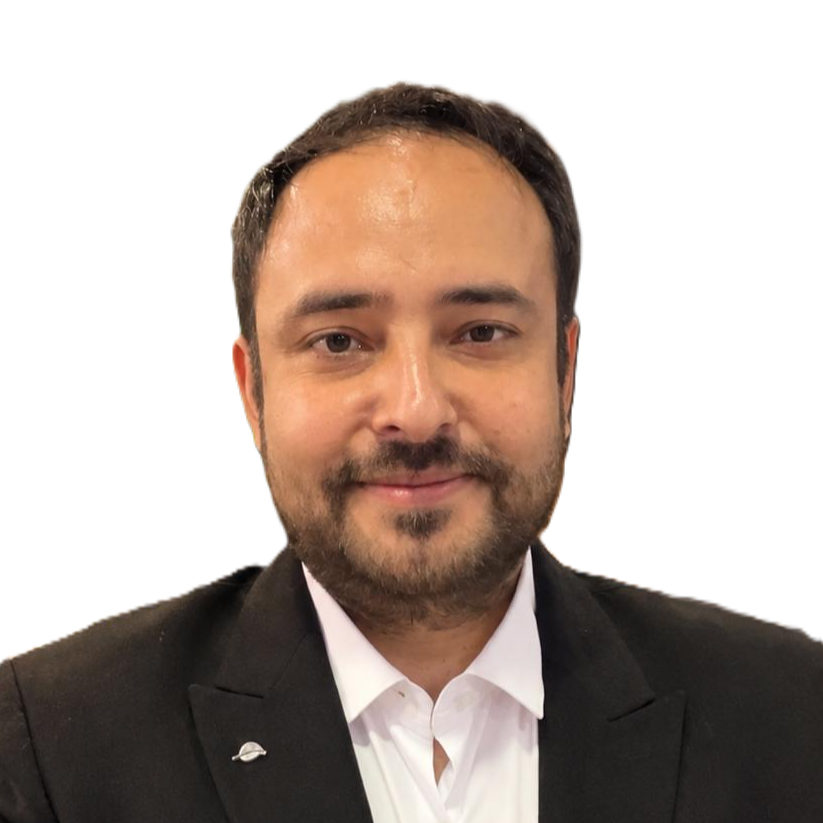
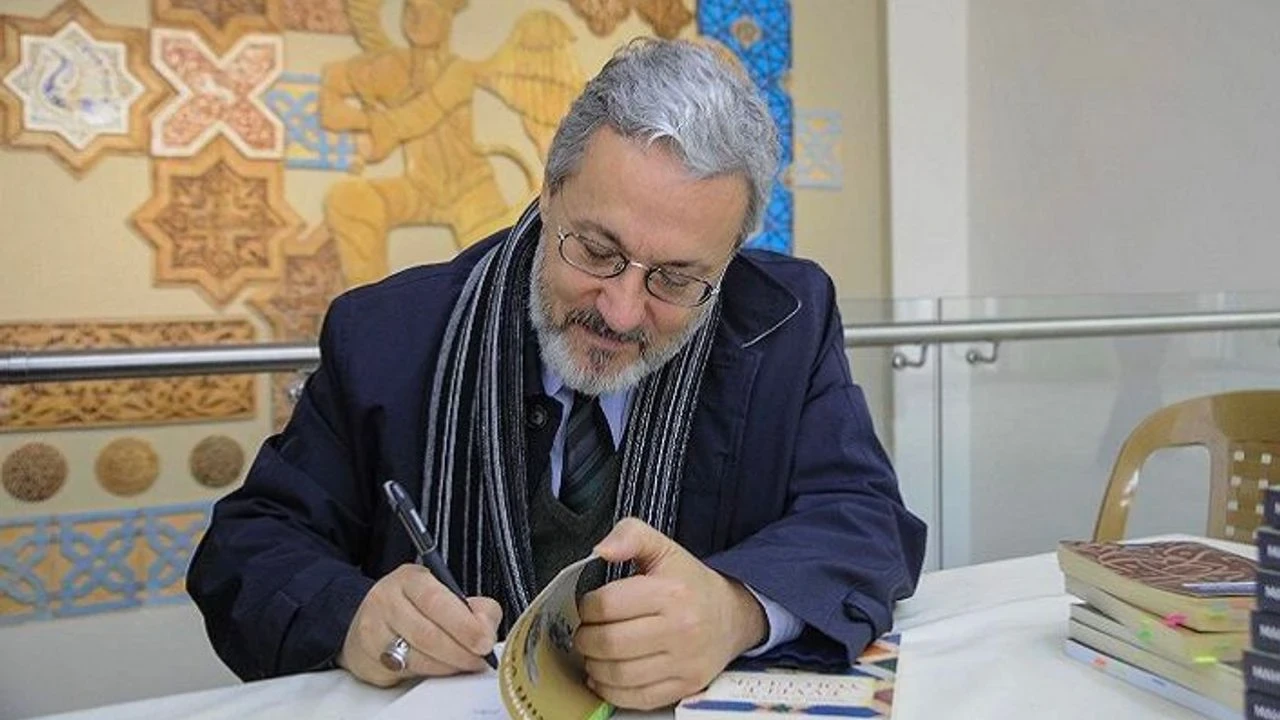
In an insightful interview conducted by Ozan Dur for İlim ve Medeniyet, professional writer, polyglot, and musicologist Semih Uçar shares his unique approach to language learning, personal discipline, and productivity.
Ozan Dur: Semih Uçar is a well-known polyglot and teacher recognized by both our readers and a wider audience in Türkiye. He has written valuable and high-quality books in this field, and his translations have been published by some of Türkiye’s most respected publishing houses.
He is also one of the most widely followed polyglots on social media. He continues to devote himself to one of the activities he loves most: writing.
Through his books and articles, he has made the process of language learning easier to understand and has challenged many of the excuses people make for why they supposedly cannot learn a language. Those who read his books and articles will clearly see this.
We have previously published several of his valuable articles on our website.
Professor, İlim ve Medeniyet has also gradually developed into something of a language centre. In several language-related fields, it has become one of the more frequently visited websites.
It therefore felt like a major omission not to have an interview with such a well-known figure in this field as Semih Uçar.
First of all, thank you very much for accepting my interview request.
How are you, Professor? What have you been working on recently? Are there any new book projects on the way? You have a very large following, so could you tell us a little about your current work?
Semih Uçar: You are very kind, Ozan Hocam. Thank you very much.
As you know, I am a professional writer.
In fact, the amount of work I produce for writing projects that do not carry my own name is far, far greater than the number of books published under my own name.
I currently have three books published under my name.
My fourth book was completed at the end of 2024. God willing, it will be published in the autumn of 2025 by Koridor Publishing, which also published Dil Yolcusu. We signed the contract a few months ago.
At the moment, I am working on my fifth book.
In my first book, Kim Öldürdü İçindeki Öğrenme Aşkını? (Who Killed the Love of Learning Within You?), which I wrote together with Tuğba Akbey İnan, and in my third book, Dil Yolcusu (The Language Traveller), I focused on language learning.
In my second book, Kendimden Uzaklaşıyorum Sonra Tekrar Kendime Kavuşuyorum (I Move Away from Myself, Then Find Myself Again), I told the story of my own life while trying to answer questions such as how to succeed in life and how to find meaning.
In my fourth book, rather than discussing language learning in general, I focused separately on the ten languages I had learned.
My fifth book, meanwhile, explains how I have been able to maintain such a high level of productivity across several different fields.
This latest book is entirely centred on productivity.
Ozan Dur: What was the first foreign language you learned, Professor? Could you tell us about your earliest experiences?
Semih Uçar: After the English classes I had at school, the first language I learned independently was German.
I began learning it at the age of seventeen, and only one year later I became a court and police interpreter in Germany.
That experience became one of the most important steps on my path toward multilingualism.
It allowed me to recognize how inefficient the language education provided in schools and courses often is.
I also experienced something important: in language learning, the less time a person gives himself to complete a task, the more effectively he may sometimes progress.
See, for example, Parkinson’s Law.
Ozan Dur: Which polyglot or academic influenced you most in the field of language learning?
Did you begin learning languages because you had already decided to become a polyglot, or did circumstances gradually lead you in that direction?
Semih Uçar: I have been inspired by many polyglots.
In each of them, I saw different possibilities for language learning.
I took the subtleties I observed in their approaches and combined them with my own intensive experience of learning languages, gradually constructing my own language-learning system.
That process has continued for twenty years of active language learning, and I am still adding new bricks to the structure every day.
However, I would particularly like to mention the Slovak polyglot Lýdia Machová, the Canadian polyglot Steve Kaufmann, the Italian polyglots Luca Lampariello and Emanuele Marini, and the British polyglot Richard Simcott.
By the time I decided to make multilingualism a way of life, I had already read advanced-level books in several languages.
As I explain in Dil Yolcusu, the greatest influence on my decision to move beyond an “amateur” perspective and become a “professional” language traveller—to make multilingualism a way of life—was the intense interest other people showed in my writings about language learning.
That interest helped me see what I was doing as meaningful work.
I then devoted my life to learning and teaching languages.
From an Adlerian perspective, it is very difficult to find meaning in work unless we feel that what we do contributes something to society.
Ozan Dur: What techniques do you use when learning a new language, Professor?
You have written that you can use different methods for different languages and have emphasized in your books that there is no single correct way to learn a language.
Many young people study foreign languages for years but still fail to achieve the results they want.
Yet, as far as I understand, you learned more than twelve languages in a relatively short period of time.
What distinguishes you from others when you begin a new language?
Semih Uçar: So far, including Turkish, I have read advanced-level books in fourteen languages.
By “advanced-level,” I mean philosophical and literary texts.
I have inevitably used different methods and techniques in each language.
In fact, at every different stage of each language, I have again had to use different methods.
That is one of the things I find most fascinating about language learning.
I regard language learning almost as a creative act.
It would be very difficult to explain all the techniques I use here.
First, in addition to the techniques I developed myself, I have used and continue to use far too many methods to fit into a single article.
Second, the appropriate technique depends on the learner’s previous language-learning experience, the language being studied, the pace of the learner’s life, and many other factors.
For this reason, I recommend the hundreds of articles on my Instagram account and my book Dil Yolcusu.
But as I say in Dil Yolcusu, one of the most beautiful aspects of language learning is this:
You can use the least efficient methods in the world, but if you continue learning seriously for a long time without quitting and remain persistent, you will eventually reach your goal.
This is not necessarily possible at the highest levels of areas such as music or sport.
But in language learning, persistence can take you very far.
If you do not persist, however, even the most effective techniques will naturally fail.
For this reason, the first question a language traveller should ask is:
“How can I remain consistent in this process?”
In Dil Yolcusu, I provide countless answers to this question through examples from my own life.
Ozan Dur: Which languages did you find easiest and most difficult to learn, Professor?
And did you also make mistakes while learning languages before developing your own methods, just as the rest of us do?
Semih Uçar: Bosnian was the first Slavic language I learned, so almost everything about it was new to me.
I remember being somewhat surprised at the beginning.
By contrast, because I had already learned other Romance languages before Spanish, I did not find Spanish particularly difficult.
The same thing happened with Portuguese, the language I most recently focused on.
I did not find Portuguese especially difficult either.
In fact, it became so easy that I read Mason Currey’s Daily Rituals in Portuguese before I had formally studied Portuguese at all.
Without having learned Portuguese first...
However, as I explain in Dil Yolcusu, this can also be dangerous ground for a language traveller.
We often fail to take seriously the languages we find easy.
For example, the quality of my Serbian learning process was much better than my Spanish.
I learned Serbian much faster than Spanish.
Ozan Dur: Professor, I know that you are an exceptionally hardworking person.
How did you develop your motivation and working discipline, and how do you maintain them?
Semih Uçar: I entered the state conservatory at the age of twelve.
From that day onward, I practised the oboe for hours every single day.
Every day.
Weekdays, weekends, summer, winter, holidays—it did not matter.
I practised for hours.
The amount of effort required to become an internationally recognized musician can perhaps only be compared with the effort required of Olympic athletes.
Because of this background, I had already gained enormous experience in working hard without stopping from a very young age.
Later, especially after I began studying in Germany, productivity itself became almost an obsession for me.
I read, thought, and wrote extensively about the psychology of productivity.
I constantly threw myself into cold water, so to speak, and conducted experiments on myself.
For example, in addition to becoming an internationally active musician and teacher and reaching the level where I could read advanced books in fourteen languages, my output as a professional writer is probably close to a record in Türkiye within my particular field.
Of course, I cannot establish that with absolute certainty.
But when I speak with other professionals in the field, I see that this is very probably the case.
And I am not even counting my book translations, the intensive language lessons I have taught, or the other professional work I carried out for many years.
In short, just like multilingualism, this level of productivity is not something that happens by accident.
If you want to produce at a record level, you must build your life around that work.
As the great Rilke says in the wonderful book I translated into Turkish, Letters to a Young Poet, you must construct your life around the work itself.
Ozan Dur: Professor, you also have a very long background in music.
You played the oboe for many years and even studied abroad in this field.
How did you decide to move from music into language learning?
As far as I know, you also never completely abandoned music.
Do you still play the oboe?
Semih Uçar: I entered the State Conservatory in Türkiye at the age of twelve.
From the age of seventeen onward, I continued my education in Germany at some of the most respected schools in the world in my field.
By the time I was twenty-five, I had been invited to Japan to teach and perform together with German professors.
Recordings I made at SONY studios were released in Japan.
Likewise, many of my recordings were also broadcast on German State Radio.
My professional work in languages began when I was eighteen and living in Germany.
I worked there as an interpreter.
In my early twenties, I also began working professionally as a writer and book translator.
During the same years, I began teaching languages.
So my work in music and languages developed in parallel from the age of eighteen onward.
If one considers, with reference to Canetti, that I have been a kind of “book-person” since primary school—and I tell this story in detail in Kendimden Uzaklaşıyorum Sonra Tekrar Kendime Kavuşuyorum—then perhaps it is not so surprising that I gradually moved toward language and writing.
I have ended my professional performing career in music.
I have not given concerts for several years.
However, I continue my work in musicology.
Ozan Dur: Professor, I have personally learned a great deal from you about language learning.
Your contribution is impossible to repay; thank you for all your efforts.
You have also written many scientifically informed articles and made important contributions to this field.
As the final question of this interview, I would like to ask:
Do you have plans to learn new languages in the future?
What are your future goals concerning languages?
Semih Uçar: If God grants me a long enough life, I would like to be able to read books in twenty languages before I die.
Curiously, however, as the number of languages I know increases, my desire to learn additional languages does not increase—it decreases.
Spending more time with the languages I already know is becoming increasingly attractive to me.
Five years ago, for example, I would never have imagined that I would feel this way today.
Until about five years ago, constantly learning a new language seemed far more attractive.
I feel very fortunate to have fellow travellers like you on this path of languages, Ozan Hocam.
Thank you for the very valuable contributions you have made to our language-learning world over the years.
Ozan Dur: I would like to express my sincere gratitude to Professor Semih for accepting my interview request.
I would be very happy if we could introduce him to more people through our website and reach a wider audience.
I hope this interview receives great interest and reaches many readers.
I also hope that Professor Semih continues for many years, in good health and prosperity, to perform the activities he loves.
Below, I have included a short biography of Professor Semih together with information about his books.
I recommend all of his books and translations to our readers.
A Short Biography of Semih Uçar
Who Is Semih Uçar?
Short Version
Semih Uçar is a musician who has given lessons and concerts at some of the world’s most respected musical institutions across a vast geographical area stretching from Germany to Japan, from China to Denmark, Austria, and Greece.
A CD of his work was released in Japan, and recordings produced at SONY studios have been used around the world as demonstration music for the company’s high-resolution audio equipment.
Alongside music, Uçar feels equally at home in writing, literary translation, and foreign languages.
For many years, he has worked intensively as a professional writer in several languages.
He has translated authors such as Franz Kafka, Stefan Zweig, and Khalil Gibran for some of Türkiye’s most respected publishing houses.
He has also worked as an editor on numerous translated and original books.
He has read books in twelve languages and is a polyglot capable of comfortably understanding more than twenty languages.
Taking his passion for language learning one step further, Uçar has made it one of his life goals to help other people reach advanced levels in foreign languages within relatively short periods of time.
As a language coach and teacher, he has directly contributed to the language-learning journeys of thousands of people from many different countries and nationalities around the world.
Born in Bursa, Uçar completed two undergraduate degrees, a master’s degree, and a doctorate at internationally recognized institutions such as the Franz Liszt University of Music Weimar and the Hanns Eisler School of Music Berlin.
He has taught in countries including Türkiye, Japan, and Germany.
Uçar also conducts his commercial activities through his own companies.
He is the co-author of Kim Öldürdü İçindeki Öğrenme Aşkını?
His second book, Kendimden Uzaklaşıyorum Sonra Tekrar Kendime Kavuşuyorum, was published in April 2022.
Books by Semih Uçar
Original Works
Semih Uçar: Kim Öldürdü İçindeki Öğrenme Aşkını? – Cezve Kitap, 2020.
Semih Uçar: Kendimden Uzaklaşıyorum Sonra Tekrar Kendime Kavuşuyorum – Nesil Yayınları, 2022.
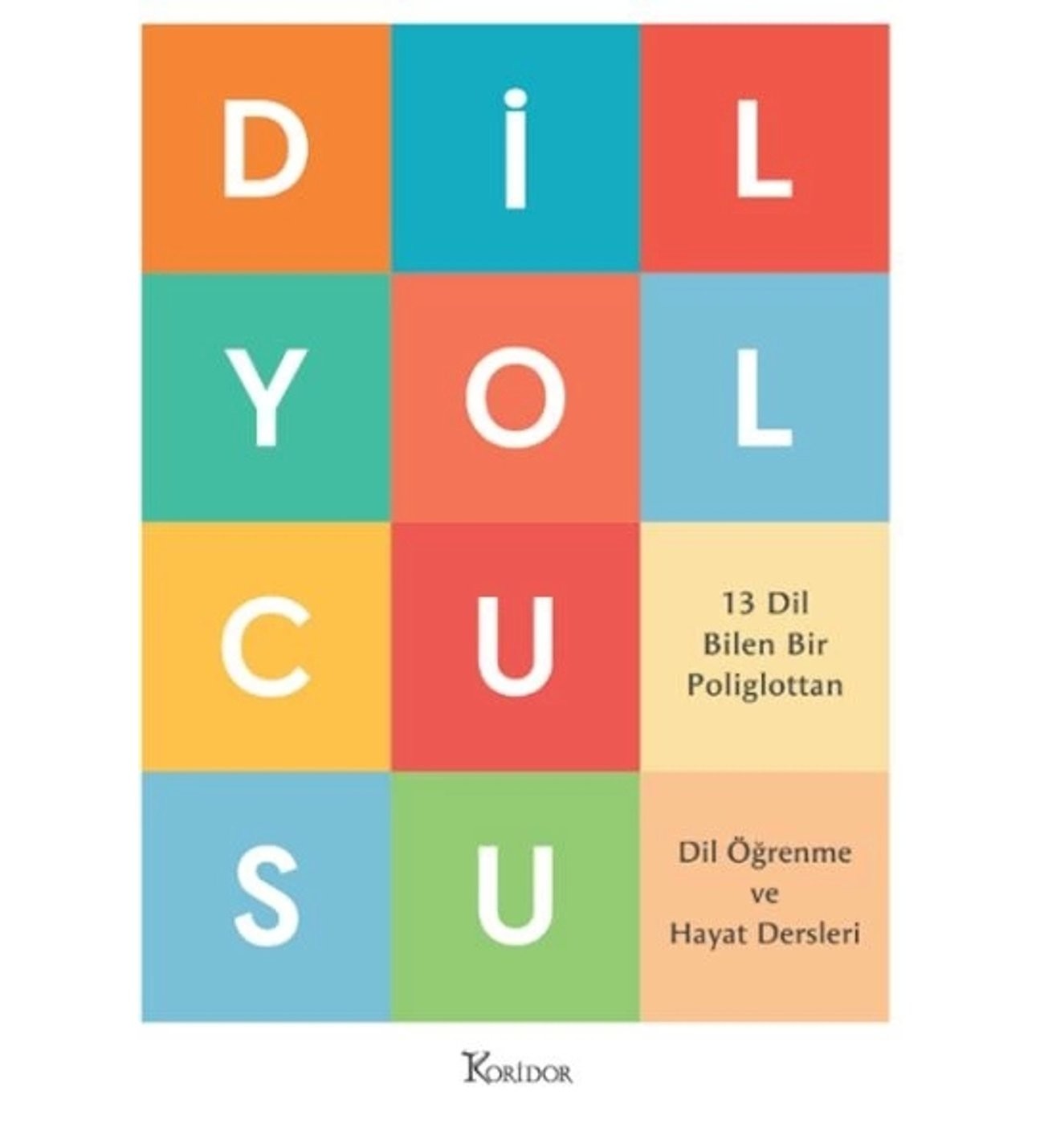
Semih Uçar: Dil Yolcusu: 13 Dil Bilen Bir Poliglottan Dil Öğrenme ve Hayat Dersleri – Koridor Yayıncılık, 2024.
Translated Works
Franz Kafka: Ottla’ya ve Ailesine Mektuplar – Nora Kitap, 2016.
Rainer Maria Rilke: Bir Genç Kadına Mektuplar – Nora Kitap, 2016.
Rainer Maria Rilke: Genç Şaire Mektuplar – Nora Kitap, 2016.
Rainer Maria Rilke: Auguste Maria Rilke – Nora Kitap, 2016.
Franz Kafka: Babaya Mektup – Nora Kitap, 2016.
Rainer Maria Rilke: Cézanne Üzerine Mektuplar – Nora Kitap, 2017.
Heinrich Heine: Almanya’da Din ve Felsefenin Tarihi Üzerine – Ayrıntı Yayınları, 2017.
Franz Kafka: Dönüşüm – Nora Kitap, 2017.
Heinz Helle: Bizsiz Dünya – Kafka Kitap, 2017.
Stefan Zweig: Satranç – Doğan Kitap, 2019.
Franz Kafka: Milenaya Mektuplar – Doğan Kitap, 2021.
Ulrich Michels and Gunter Vogel: Müzik Atlası – Alfa Yayınları, 2021.
Khalil Gibran: Ermiş – Doğan Kitap, 2021.
Leopold Ritter von Sacher-Masoch: Kürklü Venüs – Ayrıntı Yayınları, 2022.
Yorumlar
Yorum Yaz