
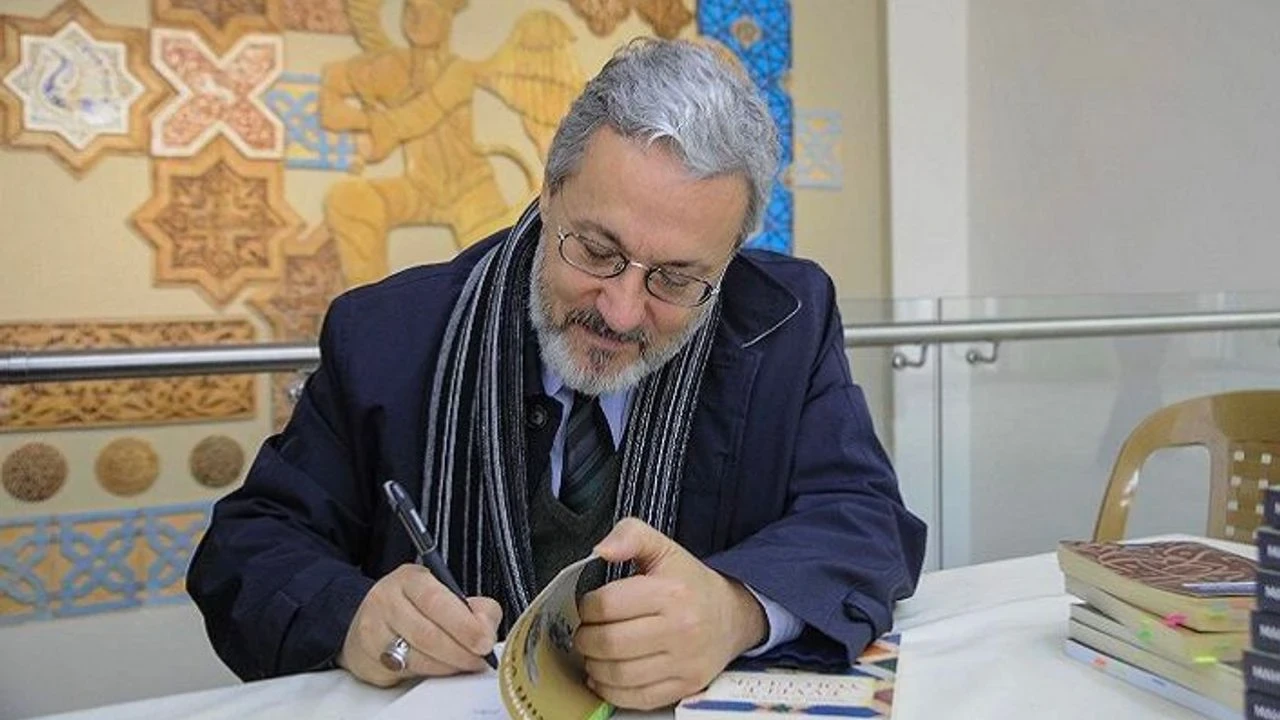

In reflecting on what drives true success and scholarly accomplishment, the life journeys of Professor Mahmut Erol Kılıç and Professor Zahide Tuba Kor provide profound guidance. Both figures exemplify how dedication, intellectual curiosity, and high ideals enrich our broader intellectual landscape.
For the past few days, I have been listening to the life stories of Professor Mahmut Erol Kılıç and Professor Zahide Tuba Kor.
I noticed several common points in both of their lives.
While thinking about success, it would have been incomplete not to mention the lives of these two teachers.
Our own society also produces highly successful people who make serious contributions to the worlds of knowledge, scholarship, and intellectual life.
Mahmut Erol Kılıç: Consistency and the Pursuit of Knowledge
Professor Mahmut Erol Kılıç is one of the prominent figures in the fields of Sufism and spirituality.
His ancestors were connected with the Qadiriyya Sufi order.
His own education also began with religious studies.
He received Qur’anic education while he was still a child.
During his high school years, he and his friends thought:
“If we are going to serve this country, we must become well-equipped and well-educated people.”
One of the most admirable qualities I see in Professor Mahmut Erol’s life is consistency.
He does not leave unfinished what he begins.
If he had abandoned the things he started, I honestly do not know whether he would have reached the material and spiritual blessings that Allah later granted him.
He is a remarkable example of perseverance.
He learned Classical Arabic.
Classical Arabic education is difficult and demanding.
Attempting such a serious undertaking at an early age, while still in high school, and refusing to abandon it requires great effort.
His determination is genuinely admirable.
If we begin something and Allah grants us enough life to continue, we should try not to abandon it halfway.
We should carry it through to the end.
Professor Mahmut Erol’s life is one of the clearest examples of this principle.
He also began studying English during high school.
Among his group of friends, he was the only one who continued all the way to the final level of the English course.
At the same time, they began practising sports.
Once again, through consistency, Professor Mahmut Erol continued until he earned a black belt.
I believe we should also recognize Allah’s help in this.
Allah granted him qualities such as perseverance, determination, and endurance.
Professor Mahmut Erol also attached great importance to the traditional Islamic sciences.
He attended lessons given in mosques by some of the leading scholars of his time.
He participated in lessons on works such as Gulistan, Ihya, and Hidaya.
He also learned Persian and possesses knowledge of Ottoman Turkish.
Because he had invested so much in his own intellectual development, professional opportunities naturally began to come to him.
He chose the position that he regarded as the most appropriate and useful.
Today, his writings on Ibn Arabi and Sufism are extremely valuable.
May Allah grant our teacher a long and blessed life and continued success.
Two things in particular stand out in his story:
first, the intention to become a well-equipped person;
and second, possessing a great ideal such as serving one’s country.
Alongside these comes consistency—fulfilling the requirements of one’s education, continuing until the end, and completing what one has begun.
We can clearly see all of these qualities in the life of Professor Mahmut Erol Kılıç.
Zahide Tuba Kor: Turning Crisis into Opportunity
The second person whose life I would like to mention is Professor Zahide Tuba Kor.
I attended several courses she offered and tried to complete the reading assignments she gave.
What we see in her is a teacher deeply devoted to her students.
She could have continued along a conventional academic career and reached important institutional positions.
Instead, she chose to devote herself to knowledge, education, and students.
Professor Zahide was also one of those affected by the political and educational restrictions associated with the February 28 period in Türkiye.
Yet she did not give up.
It is almost as though she refused to waste even a single second.
She constantly searched for courses, programmes, and opportunities through which she could improve herself.
During this process, her path crossed with BİSAV, which came to occupy an important place in her intellectual life.
Like Professor Mahmut Erol, Zahide Hoca also attached great importance to both religious studies and foreign languages.
She studied English during the preparatory year of high school and developed a strong command of the language there.
A Crisis That Opened Another Door
The university entrance coefficient policies implemented during the February 28 period indirectly gave us Zahide Tuba Kor as we know her today.
Through the language track, she entered the field of International Relations and eventually made the contributions that she continues to make to our academic and intellectual world.
Professor Zahide emphasizes that crises are not entirely negative.
They can also contain opportunities.
At one point, she wished to do something for the children of Jerusalem.
Later, that wish became a reality.
She could easily have become a conventional academic, but she says:
“There is no soul in academia.”
Her point is that if you want to create lasting work, you must put your soul into what you do.
She originally came from a quantitative educational background and at one stage thought that she would not be able to study history.
Yet she later added an important observation:
A person gradually becomes capable of whatever he or she consistently spends time doing.
Zahide Tuba Kor and Learning Arabic
Professor Zahide also gives valuable advice about Arabic education.
Her first priority was to find a good teacher.
Once she found the right teacher, she even left her job and devoted herself to Arabic.
She did not feel adequately equipped in her own field without knowing Arabic.
She is critical of an approach to Arabic education that focuses almost entirely on grammar.
According to her, the language should be learned in a way that develops all four skills:
reading, writing, listening, and speaking.
She also emphasizes another important principle:
“You must devote a period of your life to the language.”
Professor Zahide has a talk on YouTube in which she tells her own life story and explains these experiences in greater detail.
The Common Qualities I Saw in Both Teachers
I noticed striking similarities between these two teachers.
Both displayed:
consistency,
the determination to complete their studies,
sacrifice,
a strong interest in religious knowledge,
the desire to learn Arabic and English,
and above all,
a constant desire to educate and improve themselves.
I wanted, briefly, to introduce these two valuable teachers to my younger friends.
We should recognize the value of our teachers while they are still alive.
As Professor Mahmut Erol says, we possess a magnificent spiritual history.
One of his major intellectual efforts is to reconnect modern people with that tradition.
Professor Zahide, meanwhile, is one of our valuable teachers who seeks to guide young people and help them find their own paths.
Their lives remind us that success is rarely the result of a single extraordinary moment.
More often, it is the result of years of small sacrifices, continued study, discipline, language learning, and refusing to abandon the path halfway.
Ozan Dur

Yorumlar
Yorum Yaz