
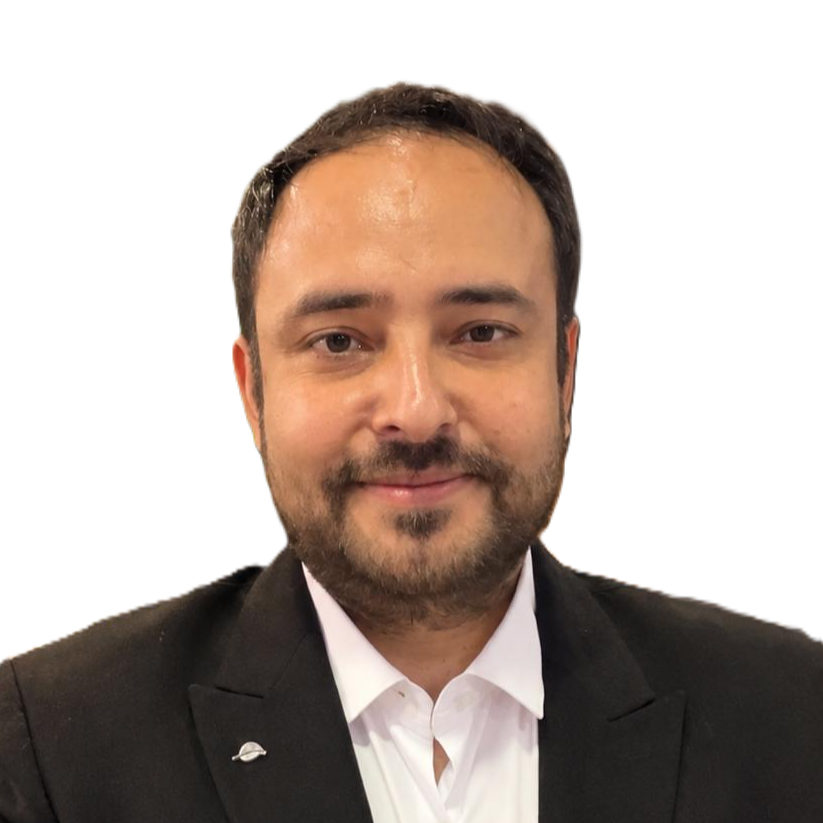
In this comprehensive interview, Ozan Dur converses with polyglot scholar Emin bin Salim—a native of Madagascar, graduate of Istanbul 29 Mayıs University, and master's student in International Relations—who shares his remarkable linguistic journey of mastering eight languages, with a particular focus on the depths and nuances of Arabic.
his article is dedicated to our friend Emin’s father and to our friend Cengiz. If you feel inclined, we kindly ask you to recite al-Fatiha for them.
Ozan Dur: Brother, could you introduce yourself to our readers?
Emin Bin Salim: Al-hamdu lillahi Rabb al-‘alamin, wa’s-salatu wa’s-salamu ‘ala Rasulina Muhammadin wa ‘ala alihi wa sahbihi ajma‘in, wa man tabi‘ahum bi-ihsanin ila yawm al-din, amma ba‘d.
All praise and gratitude belong to Allah alone. May peace and blessings be upon His trustworthy Prophet Muhammad, upon his family, his Companions, those who follow his path, and those who live righteously.
We are going to speak about Arabic, and perhaps my opening has already made that clear. But before beginning, I would like to introduce myself briefly.
I have given two interviews before. For those encountering me for the first time through this interview, my name is Emin bin Salim.
I am from Madagascar.
I attended high school in Türkiye. After graduating, I studied theology at Istanbul 29 Mayıs University, and, praise be to Allah, I graduated from there.
I am now pursuing a master’s degree in International Relations and Political Science. I am currently in my second year and working on my thesis.
I know eight languages.
I know five of them at a good level, while I am still developing the remaining three.
First, I learned Malagasy, which is my native language.
At school, I learned French.
French is not necessarily spoken extensively in everyday life throughout Madagascar, but because our country was once a French colony, we have still not completely separated ourselves from the effects of that colonial period.
French is therefore effectively my second language.
It is still used in many areas, even though ordinary daily life is not entirely conducted in French.
After coming to Türkiye, I had to learn Turkish.
So Turkish became my third language.
After Turkish, I began learning Arabic and English at approximately the same time.
I would say Arabic became my fourth language.
At the period when my Arabic was becoming firmly established, my English had not yet reached the same level.
Later, I improved my English.
After that, I began German.
Then I continued with Japanese.
After Japanese, I started learning Persian.
I know the first five languages at a good level.
My German is currently around B2.
My Japanese has also recently reached approximately B2.
My Persian still needs development and is around A2.
I have studied the grammar, but I need to improve my vocabulary and general familiarity with the language.
I took a break from Persian for a while and could not focus on it as much as I wanted.
Persian pronunciation can be difficult in a different way from Arabic. Even though the grammar is relatively easy, if you are not accustomed to hearing the language, it can be difficult to predict how words are pronounced.
There are many consonants, and the written form does not always make pronunciation immediately obvious.
Since our discussion today is about Arabic, my opening was also deliberately Arabic in style.
Arabic has traditional forms of address and opening formulas.
When a speaker begins a formal speech, he may start in a style similar to the one I used.
This is generally associated with religious speech, but it is also part of Arabic rhetorical culture.
Someone strongly influenced by Arabic culture may naturally begin speaking in this way.
That is why I preferred to start like that.
It has a religious background, but it also holds an important place in the historical tradition of Classical Arabic.
It is, in fact, a beautiful form of opening.
We have a similar tradition in Madagascar.
Perhaps we inherited some of it from Arabic culture.
The first major foreign visitors to Madagascar were Arabs.
Arab merchants arrived before Europeans and influenced Malagasy culture.
Even though Islam did not become the dominant religion practiced by the population, Arabic culture influenced many aspects of our society.
Even some of the names we use for the days of the week resemble Arabic.
For Monday, for example, we say something like Nasneyn.
Ozan: Approximately how many words are shared between Arabic and Malagasy?
Emin: Malagasy is generally considered to belong to the Austronesian language family and to have originated from communities that migrated from the Indonesian region.
I once looked into this myself.
The languages are not extremely close, but there are similar words.
There are probably at least fifty to one hundred shared or related words.
Considering the enormous geographical distance, even that degree of interaction is interesting.
Modern spoken Malagasy has also lost a considerable amount of its older vocabulary.
When we examine dictionaries, we find many words that are no longer commonly used in daily life.
A considerable amount of vocabulary is gradually being forgotten.
Our culture does not have a particularly strong literary tradition.
We do not have very large numbers of scholars, researchers, or academics.
A widespread culture of writing is also relatively weak.
Most of the population is poor.
During the colonial period, very little attention was given to developing these areas.
After independence, the country repeatedly experienced political instability and disorder.
There have not been many long periods of stability.
For this reason, language and scholarship could not receive sustained attention.
Arabic has influenced many cultures, including ours.
Arabic is truly a deep language.
People who want to learn several languages often rank it among the most difficult languages in the world.
Some say Chinese is the most difficult; others say Arabic.
Usually, the debate is between those two.
The closer someone’s native language is to Arabic, the easier Arabic will naturally become for that person.
But in terms of grammar, Arabic is difficult to compare with most other languages.
Ozan: Chinese grammar is actually easy too, brother.
Emin: Yes, its grammar is easy.
But the overall learning process can take as much effort as Arabic.
Arabic is genuinely one of those languages that can be called difficult.
So today’s subject may become rather deep.
Beginning Arabic
Ozan: When did you first begin learning Arabic seriously, Emin?
Emin: Since I grew up Muslim, Arabic has been familiar to me since childhood.
Children usually learn the Arabic alphabet at an early age.
Some begin at five or six years old, while some families send children even at four.
I think we started when we were around five or six.
My father prayed regularly, so we heard Arabic at home through prayers and religious expressions.
We heard phrases such as the kalima tayyiba.
My father even used to tell us that if we ever felt that we were dying, we should say:
Ashhadu an la ilaha illa Allah, Muhammadun Rasulullah.
I still remember him telling us this.
So I have had contact with Arabic since childhood.
However, fully learning Arabic took much longer because Arabic education in Madagascar is limited.
Ozan: There is madrasa education there, isn’t there?
Emin: Not in a system comparable to Türkiye.
Children learn the alphabet and progress to reading the Qur’an.
After that, there is usually not much systematic continuation.
So the foundation does not become particularly strong.
There is almost no serious Arabic-language education.
Ozan: Is Qur’an memorization, hifz, available?
Emin: Yes, people do memorize the Qur’an, but even then Arabic itself is taught only to a limited extent—perhaps about as much as English.
Ozan: Perhaps you could do some work on Arabic education in Madagascar one day, brother. You could take books such as Silsilat al-Lisan, Al-‘Arabiyya Bayna Yadayk, and Miftah there and begin a kind of usul al-jadid, a new method.
Emin: Yes, that could actually be a very good project.
But Madagascar is a large country, so this would need to be done with a team.
If I were to do it alone, I would probably need to settle in one particular region and carry out intensive work there.
I have known Arabic since childhood because we read the Qur’an there.
When I came to Türkiye, however, I did not immediately begin studying Arabic seriously.
Since childhood, I used to say:
“After we die, we will be speaking Arabic.”
Perhaps because of that mentality, I delayed approaching the language seriously.
I began studying it much more intensively in the eleventh grade of high school.
We had friends who had come from Africa.
Many came from West African countries such as Mali, Burkina Faso, Senegal, Gambia, and Morocco.
They often knew both French and Arabic.
I spent time with them.
When we were speaking French together, they would suddenly begin inserting Arabic words into their conversations, while I would simply remain “the French speaker.” [Laughs]
We were also taking Arabic classes at the Imam Hatip high school.
But the classes were not sufficient for speaking.
We mainly studied grammar and rules.
When I finally decided, “All right, I am going to learn Arabic too,” I did not struggle too much because I already had a foundation.
What I lacked was traffic—real use of the language.
These friends became an important motivating force.
Whenever I made mistakes, they corrected me.
This continued until the twelfth grade.
By then, I could speak around B1–B2 level, although without knowing the rules properly, because I mainly learned through conversations with friends.
When I took the Arabic preparatory placement examination at university, I openly told Professor Helalşah:
“I do not know the grammar very well, but I can speak.”
We even conducted the interview in Arabic.
He asked me:
“What are jarr and majrur?”
I said:
“I don’t know.”
Then he gave me a Turkish phrase:
“The director’s car.”
He asked me to translate it into Arabic.
I said:
Sayyarat al-mudir.
He replied:
“That is precisely the grammatical structure I was asking you about.”
I explained that I was not good at grammar but could speak.
I asked him to place me in the beginner class.
He said:
“But you can already speak. We are going to put you with the advanced students.”
I replied:
“The decision is yours.”
Many of my friends knew grammar but could not speak.
The preparatory programme lasted a full year, and during that year I was able to learn Arabic properly.
Our university made a major contribution in this regard.
Among all the languages I know, Arabic is the only language I learned with substantial formal course support.
Ozan: You learned the others mostly by yourself, right?
Emin: Yes.
My own independent effort played a greater role in the others.
But formal education contributed enormously to my Arabic.
May Allah reward our university and teachers such as Helalşah and Esma.
Remembering Cengiz
Ozan: Let us also remember one of our friends here. You remember him, don’t you? If you have a memory involving him, perhaps we can mention that too.
Emin: We attended high school together.
We were also in the same class at university.
Almost all my memories of Cengiz are good ones.
He was a very likeable person.
He could get along with almost everyone.
It was easy to be friends with Cengiz.
Ozan: I saw him in my dreams afterward as well, and I saw him in a very good state.
In one of my articles that received many views, I asked readers to recite al-Fatiha for him.
He wanted to learn Persian during the years when I had begun learning Persian.
He would ask me about words shared between Kurdish and Persian.
I later dedicated one of my articles about Persian to him and asked readers to pray for him.
Emin: He was a very good friend.
Very warm and likeable.
He strongly wanted to learn Arabic and worked hard.
He could speak it too.
Ozan: I learned one Arabic sentence from him, and I still remember it.
I once asked him:
“How do I say, ‘I want to stand here with you’ in Arabic?”
Cengiz was withdrawing money from an ATM at the time.
He told me:
Ana uridu an aqifa ma‘ak.
I have never forgotten that sentence since.
May Allah have mercy on him.
God willing, may we meet again in Paradise together with all our friends.
University and Madrasa Education
Ozan: In Türkiye, Arabic preparatory students often study in a madrasa alongside their modern university education. Were you also able to receive madrasa education?
Emin: Even if I had never attended a madrasa, I believe I would still have been able to speak Arabic because our university had one of the best Arabic programmes.
Even FSM was very good, but I do not think it was quite at the same level as ours.
Nearly all our Arabic instructors were Arabs.
So they spoke Arabic constantly in class.
Just imagine it:
from morning until evening, you are surrounded intensively by Arabic.
There was an examination every week.
Every two or three weeks, there was a major level-advancement examination.
During the preparatory year, the Arabic programme was extremely intensive.
Many of our friends began Arabic completely from zero.
By the end of the year, almost all of them could speak Arabic.
At that time, this kind of system could mainly be seen at our university and at FSM.
So even without madrasa education, I probably would still have learned Arabic.
At the madrasa, Muhammad Akbar and I were among the strongest students.
We attended because we wanted madrasa education, not because we absolutely needed it for conversational Arabic.
The type of education there was different.
In the madrasa, we became familiar with more classical terminology: jurisprudential, theological, doctrinal, and traditional technical vocabulary.
But for ordinary speaking, the university education was sufficient.
Does everyone need madrasa education in addition to university?
If a university does not possess a system like FSM or 29 Mayıs, then perhaps yes.
At some universities, students attended madrasas alongside their formal Arabic courses.
Ozan: Things have improved considerably recently. There is a book called Miftah al-‘Arabiyya, which is more developed and very well prepared. Young people are learning very effectively from it today.
Emin: We used Silsilat al-Lisan.
It was also used at FSM and many other institutions.
Because Arabic is such a vast language, teaching methods constantly need innovation.
Ozan: How far did you progress in the madrasa? How many years did you study?
Emin: We studied classical texts directly.
We studied Maqsud and ‘Izzi there.
We had already completed Amthila in high school.
I studied at the madrasa regularly for five years.
I graduated and received an ijazah.
I attended the İSM madrasa affiliated with the İlim Yayma Cemiyeti.
İSM stands for İlim ve Sanat Merkezi—Centre for Knowledge and Art.
They provide education in a madrasa located just behind the Valide-i Atik Mosque.
They also provide scholarships to successful students.
Ozan: Was it difficult to combine madrasa education with university?
Emin: It was tiring, but not extremely difficult.
The distance was a challenge.
Classes were normally held in the evenings after university because they knew the students attended school during the day.
I think we also had lessons on Saturdays.
It was intensive and tiring, but not unbearably difficult.
Why Is Arabic Difficult?
Ozan: Where do Arabic learners struggle most, and what advice would you give to someone starting completely from zero?
Emin: Arabic is a difficult language.
However, it is also an extremely systematic language.
If a student uses time effectively, it can definitely be learned.
Arabic is the most systematic language I have encountered.
I do not think I have seen another language that is more systematic.
Its grammar is highly developed, and there is an enormous amount of Arabic-learning material.
From the earliest centuries of Islam, it was obvious that people from many different nations would need to learn Arabic.
So our scholars made tremendous efforts to make the language teachable to non-Arabs.
They worked extraordinarily hard.
When I compare Arabic with other languages, I do not see the same richness of educational material.
Ozan: Perhaps English?
Emin: Even English does not have as much in this particular sense.
There are even poems written specifically to make Arabic grammar easier to memorize.
You do not really have an equivalent tradition in English.
English has textbooks, exercises, questions, and similar materials.
But the Arabic grammatical teaching tradition is much deeper.
Precisely because Arabic is difficult, a learner must use time effectively.
They must identify what is personally difficult for them.
Learning Arabic entirely alone may not be easy.
If someone already possesses a foundation, he should build upon it.
In my opinion, Classical or Standard Arabic cannot properly be learned without grammar.
A dialect can be learned without formal grammar.
Depending on which Arab country you live in, you can learn the local dialect naturally without studying grammar.
But Fusha cannot be mastered without grammar.
Even people who have studied Arabic grammar for years continue to make mistakes.
Arabic constantly involves matters such as i‘rab.
Someone who does not know these systems cannot reliably notice certain distinctions.
Arabic does not simply operate according to instinct.
It has a system.
Even major linguists debated these questions historically.
We know from Islamic intellectual history that Sibawayh, who is often called one of the fathers of Arabic grammar, was himself Persian.
He was born in Shiraz.
He learned Arabic from teachers and eventually mastered it more deeply than many native speakers.
He systematized many principles of Arabic grammar.
There is also a famous story of a debate between Sibawayh and another Arab grammarian concerning i‘rab.
According to the traditional account, Sibawayh was later understood to have been correct, but he was deeply distressed by what happened during the debate.
His student reportedly said that he eventually died from grief.
A learner therefore needs some real understanding of Arabic itself.
Motivation alone may not be enough.
People talk extensively about motivation when discussing language learning, and rightly so, because motivation is what moves a person forward.
But language learning is not easy.
Even learning a relatively simple language is not easy.
Ozan: Even Persian is not truly easy to learn, is it?
Emin: Persian grammar is not particularly difficult, but it still requires effort.
You either need strong motivation or you need to live in an environment that constantly pushes you toward the language.
So if someone has little connection with Arabic in everyday life, they need to evaluate their situation carefully and use a good system.
It is much easier if they study under someone’s guidance.
Doing everything alone is difficult.
Studying Arabic in Jordan
Ozan: Successful students at 29 Mayıs University were sent to Jordan. Were you also able to go?
Emin: Alhamdulillah, yes.
I was among the successful students and was able to go to Jordan.
My departure was delayed slightly.
The other students went a few days before me, so I travelled there alone.
Going to Jordan was genuinely useful.
We had completed our Arabic studies here, but in Jordan we were able to see how the language actually functions after you have learned it.
Ozan: Did you attend a university or an institute there?
Emin: Both.
During our stay, most of our lessons were at the university.
On weekends, we also attended an institute connected with our university.
But the programme was mainly university-based, and the university classes were sufficient.
The Jordan programme was very good.
Perhaps at the time we could not see what was missing, but looking back now, I can identify some areas that might have been improved.
I think more attention should also have been given to the local dialect.
We learned Fusha, but when we went outside, even taxi drivers sometimes laughed at us because our Arabic sounded too formal or classical for ordinary people.
If the programme had given us more practical local-language training, that would have been even better.
I also think a madrasa-like environment could have been useful in terms of how students spent their time.
You need direct contact with local students.
You need to create an environment in which students are constantly occupied with the language and culture.
That is how I would think about it now.
But travelling there was genuinely beneficial.
Simply being among the local population is extremely useful.
Jordanian Arabic is not very far from Fusha.
If someone has genuinely reached around B2, when they arrive in Jordan they will realize that the difference is not enormous.
Very fast speakers may initially be difficult to understand, but overall, living there is extremely beneficial.
Ibrahim Helalşah’s Arabic Teaching System
Ozan: Professor Ibrahim Helalşah has made, and continues to make, important contributions to Arabic education in Türkiye. Were you able to observe his teaching system?
Emin: Professor Helalşah is genuinely brilliant.
He is a pioneer in Arabic teaching.
His contribution to Arabic education in Türkiye is invaluable.
His system is extremely strong.
He created a model that could easily be implemented in many different countries.
He selects Arabs who have received proper Arabic-language education in Arab countries, brings the best of them to Türkiye, and integrates them into the system.
If another country adopted the same model, I think Arabic could become widely spoken there within a relatively short time.
The system is that good.
The major difference compared with many other programmes is that it does not focus exclusively on grammar.
A student may know grammar but still be unable to speak.
Sometimes the opportunity to speak is extremely limited.
In some places, even the teacher cannot really speak fluently.
The person knows grammar theoretically, but because it remains theoretical, it has almost no practical application in everyday life.
Professor Helalşah’s system is therefore very effective.
He teaches grammar and immediately makes students use it practically.
That is why the system works.
Ozan: I think he used to make students promise not to speak Turkish throughout the day.
Emin: Yes.
At least during the course, Turkish was normally forbidden.
Students were not allowed to speak Turkish during lessons.
It is actually a very good system.
What Makes Arabic Unique?
Ozan: Arabic is the most widely spoken Semitic language. At the same time, it has influenced many other languages, including Turkish. What surprised you most about Arabic after you began learning it?
Emin: Many things surprised me.
One of the biggest surprises was how precise Arabic can be.
One of our teachers used to say:
“There are no true synonyms in Arabic.”
When translated into another language, several Arabic words may appear to mean the same thing.
Arabic has many words that we might call muradif—apparent synonyms.
For example, there are hundreds of terms associated with lions and hundreds associated with camels.
Other languages may simply classify these as synonyms.
But in Arabic, the situation is more subtle.
Each word can carry a particular nuance.
Each has a specific context.
Every particular usage adds something different to the sentence or meaning.
This is partly because Arabic words generally possess an identifiable root.
Normally, Arabic words are analysed through roots consisting of three consonants.
Whether two-letter roots exist is a matter of debate, but most teachers emphasize triliteral roots.
Those three consonants carry a basic semantic field.
Words derived from the root generally do not move completely away from that original meaning.
There is usually some relationship between them.
That is why certain Arabic usages can be surprising.
Even the verb you use for someone moving into a sitting position can depend on whether the person was previously standing or lying down.
In many other languages, we do not pay much attention to such distinctions.
French does not usually make this kind of distinction.
English does not either.
Most of the languages I know do not.
Arabic can.
Consider the verbs jalasa and qa‘ada, for example.
Traditional explanations distinguish the circumstances under which each verb describes sitting.
That level of precision is interesting.
Ozan: Extremely subtle.
Emin: There are also words in Arabic that can only properly be used at certain times.
For example, badr refers specifically to the full moon.
That corresponds to particular nights around the thirteenth, fourteenth, and fifteenth of the lunar month.
So if someone says:
“I saw Ozan on a badr night,”
you immediately gain information about approximately when it happened.
In another language, someone might simply say:
“I saw my friend at night.”
But which night?
You have no idea.
Arabic eliminates some of these questions through the vocabulary itself.
Suppose I say:
“I met a student.”
In Turkish, you might ask whether the student was male or female because the word öğrenci can refer to both.
Arabic makes gender much more immediately visible.
Arabic also has vocabulary that can distinguish younger pupils from university students.
For example, when you hear tilmidh, you usually imagine a school pupil rather than a university student.
For this reason, I think Arabic is one of the languages most capable of creating a highly detailed picture of reality in the mind.
The words and forms you use often try to bring the expression closer to the actual situation.
Many other languages leave much of this information unstated.
You have to ask:
“Was the person male or female?”
In Arabic, the sentence itself may already answer the question.
The same applies to time, condition, and other details.
If I say that I saw a camel in some languages, I may need to specify whether it was male or female.
But in Arabic, the noun itself may immediately indicate this.
If I say:
Ra’aytu naqata.
you understand that I saw a female camel.
That kind of precision is less common in many other languages.
Arabic is therefore one of those languages that can make even English speakers say:
“Oh no.”
It is probably the language closest to mathematics in terms of the feeling it gives learners.
Learning Arabic can sometimes feel like doing mathematics.
If this element comes next to that element, the result is this.
If another element appears in a particular position, the form changes accordingly.
There is a system.
In English, for example, you learn the alphabet, but when you encounter a word, you still often have to know how native speakers pronounce it.
The spelling system does not consistently tell you the pronunciation.
Some grammatical systems in other languages essentially tell you:
“This is simply how we say it. You must say it this way too.”
Is there an explanation?
Sometimes there is not.
German also contains examples of this.
Plural formation sometimes happens one way and sometimes another.
You ask:
“Why does it change like that?”
And people effectively say:
“We don’t know. That is simply how we say it.”
So you also have to say it that way.
Arabic has some sama‘i—forms learned through usage rather than productive rules—but comparatively much of the grammar is rule-based.
Perhaps eighty or ninety percent follows recognizable patterns with remarkable consistency.
Is There a Lazy Way to Learn Arabic?
Ozan: Is there a lazy way to learn Arabic?
Emin: There both is and is not.
There is, because Arabic is still a human language.
It has a system, and that system is generally not completely removed from natural language.
So in that sense, yes.
But I also say no because Arabic remains difficult.
It is highly systematic, which means that if someone does not maintain regular contact with the language, learning it lazily becomes very difficult.
It may take much longer.
When I say a “lazy method,” I mean something suitable for periods when a person cannot make enormous effort.
Perhaps someone is extremely busy with work.
Perhaps they are depressed.
Perhaps their personality or cultural environment does not encourage intensive study.
For some languages, a more passive approach can still work.
Arabic does not seem to be one of the easiest languages for that.
You need more time and more contact.
And even regular contact is difficult because most Arabs speak dialects in everyday life.
If your goal is Fusha, ordinary street interaction alone will not teach it to you.
However, if someone watches Arabic cartoons such as Detective Conan from morning until evening for one, two, or three years, perhaps they could learn a great deal.
But the exposure would need to be constant.
And they would still need to study some Arabic grammar alongside it.
A child could learn naturally.
Adults, however, do not seem to absorb words as effortlessly as children.
How Many Hours a Day?
Ozan: How many hours per day would you recommend for a student who wants to learn Arabic?
Emin: It depends on the person.
But the most important thing in Arabic is the foundation.
Once you have built the basic grammar properly, later knowledge can be added much more easily.
This is one of the differences between Arabic and Persian.
Once I brought my Arabic to B1–B2 level, I became increasingly capable of predicting how words should be pronounced.
Almost everyone develops that kind of intuition.
You look at a word without vowel marks, and although you cannot see the vowels, certain patterns simply do not fit.
Except for unusual cases, you can generally read it.
You begin predicting the pronunciation.
Persian does not work quite so easily in this respect.
Arabic possesses such a large structured vocabulary that once the patterns become familiar, they help you.
If Arabic worked like Persian in pronunciation, Arabic would probably be even more difficult.
That is why the foundation is so important.
When someone possesses a good foundation, everything becomes easier.
Arabic and Chinese
Ozan: Recently, I have been looking at Chinese, and I honestly do not think it is as impossible as people say.
Chinese may be even more difficult than Arabic in certain respects, and mastery requires a long time.
Arabic also takes longer to learn than many languages, but some people treat Arabic as if it were impossible and therefore avoid it completely.
What would you say to them?
Emin: The most important question is this:
when someone learns a language, they should ask why they are learning it.
If the only purpose is to look like a polyglot, then I do not think that person necessarily needs Arabic.
In the time you might spend learning Arabic, you could perhaps learn two or three easier languages.
Why you are learning it matters.
Your environment matters.
The work you intend to do matters.
And for a Muslim, I believe there are additional reasons to learn Arabic regardless of its difficulty.
If the Qur’an had been revealed in Chinese rather than Arabic, then Muslims would still have had to learn Chinese no matter how difficult it was.
So we should ask who the learner is and why that person wants to learn the language.
Ozan: Should a Muslim learn Arabic?
Emin: In the past, I might have said that if someone lived in a world that was not so globally connected, learning Arabic would be preferable but not necessarily essential.
But today, I think a Muslim really should learn it.
There is almost no excuse anymore.
In this period, yes, I would even regard completely refusing to learn it as a serious shortcoming if the person genuinely wants to understand religion and develop intellectually.
Listening to the Qur’an while actually understanding it is something entirely different.
It is almost impossible to describe.
Sometimes you may notice something in a verse that even an Arab teacher listening casually may not immediately reflect upon.
That direct understanding is extremely valuable.
There are now enough materials.
There are enough courses.
The world is globalized.
There are Arabic speakers everywhere.
People also need languages for trade, work, professional networks, and reaching different audiences.
So particularly for a young Muslim, I think avoiding Arabic today is a major missed opportunity.
An elderly person may naturally have valid excuses.
But if someone is young, I would tell them:
learn Arabic before learning something like Italian—unless, of course, you specifically work with Italians, study in Italy, or have a direct practical need for Italian.
Otherwise, how much practical benefit will Italian provide?
Perhaps you will watch films.
Perhaps you will speak with tourists.
Türkiye does receive Italian tourists, but most ordinary people are not spending their lives talking with tourists.
I should emphasize that this is my personal view.
I believe motivation and necessity should always be evaluated carefully in language learning.
Learning a language requires serious effort.
If you truly want to learn one, you need to choose carefully.
How Many Englishes Is Arabic Worth?
Ozan: How many times learning English is learning Arabic worth?
Emin: Five.
Arabic is worth five Englishes.
English almost has no grammar compared with Arabic, brother.
I say five because if someone begins Arabic without taking the correct steps, the amount of effort they spend could perhaps have been enough to learn several other languages.
If another learner works systematically, that person could probably learn several languages in the same amount of time.
You could learn Bahasa Indonesia.
You could learn Persian.
There are languages like these.
In the same period, you might learn several of them.
Ozan: Then perhaps our headline should be: “Learning Arabic Is Worth Learning English Five Times Over.”
Emin: And today you also encounter another reality:
Arabic dialects themselves are very different.
For example, even I struggle to understand the dialects of Tunisia, Algeria, and Morocco.
I do not understand them word by word.
I generally understand them sentence by sentence.
Today, I can comfortably understand Egyptian Arabic.
I can understand Libyan Arabic.
I usually understand Syrian Arabic, although it depends on the individual speaker.
I understand Lebanese Arabic.
I understand Gulf Arabic.
That is already more than five varieties.
But I still need to learn Tunisian, Algerian, and Moroccan Arabic more deeply.
So in that sense, Arabic is almost worth at least five languages by itself.
Arabic in Times of Crisis
Ozan: The Arab world is struggling with many crises, and in this environment Classical and Standard Arabic may not always receive the attention it deserves.
What do you think about this?
A video circulated on social media a few years ago.
Children were shown a photograph containing an Arabic word.
According to the video, none of the Syrian children could read it.
The word written on the paper was “Allah.”
They could speak Arabic, but they apparently could not read Arabic.
They had not learned Fusha or literacy properly.
What would you say about this?
Emin: I would give Palestinians as an example.
Palestinians continue making serious efforts in education even while living in tents.
There are even people completing doctorates during periods of terrible violence.
There are people defending their theses.
In this regard, perhaps Palestinians themselves provide one of the strongest examples.
They live under extremely difficult conditions.
What matters is that knowledge can still be pursued even during war.
The video you mentioned seems a little strange to me.
Even Arab Christians use the word Allah.
Perhaps that situation was particular to those specific children.
Maybe they had left Syria when they were only two years old.
Children of five or six normally encounter words such as Allah and Muhammad.
Even in Türkiye, children who do not know Arabic recognize the written form of Allah.
So perhaps those children had left at a very young age.
Arabic in Madagascar
Ozan: Do Islamic scholars and religious teachers in Madagascar know Arabic, and do they attach importance to it?
I suspect Turkish readers know very little about the position of Arabic in Madagascar.
What can you tell us about Arabic in your country?
Are there Arabic-origin words in Malagasy?
Emin: Many Arabic-origin words have been forgotten.
Arabs taught our people the names of months and days.
Today, however, people mostly use French names for the months.
In some older texts I have read, Arabic-origin vocabulary still appears.
Even some terms connected with astrology or zodiac signs retain Arabic influence, although ordinary people no longer realize it.
These words are not commonly used in everyday speech.
You mainly encounter them in written sources.
So there may actually be far more Arabic influence than people realize, but because those words are no longer regularly used, they have gradually been forgotten.
The Place of Grammar in Arabic
Ozan Dur: Where should grammar be placed in Arabic education?
People ask this very often, so I wanted to ask you as well.
How should grammar be learned and taught?
Emin: Fusha cannot really be learned without grammar.
You cannot even properly read books.
Arabic allows far more flexibility in word order than many other languages.
Words can appear at the beginning, middle, or end of the sentence.
In many languages, you cannot move sentence elements around so freely.
Many languages are highly fixed in structure.
There is a standard pattern, and they rarely move far from it.
Arabic is different.
You can place the subject later.
You can change the order.
But if someone has never studied i‘rab, they may become confused.
Consider:
Daraba Zaydun ‘Amran.
and another sentence with a rearranged order.
Without understanding grammatical endings, a learner may have difficulty identifying who struck whom.
So proper Fusha really cannot be separated from i‘rab if you want to speak and read correctly.
If someone absolutely dislikes grammar, I would advise them to learn a dialect directly.
Going from Fusha to a dialect is relatively easy.
Going from a dialect to Fusha is much more difficult.
It is like jumping down from a high place compared with trying to jump from the ground all the way up to that same height.
Ozan: Would you recommend learning Arabic from books such as Silsilat al-Lisan and Al-‘Arabiyya Bayna Yadayk?
Emin: Yes, I recommend them.
Arabic Compared with Other Languages
Ozan: Compared with other languages, what similarities and differences does Arabic have?
Emin: Arabic is not particularly similar to most languages.
Hebrew is probably one of the closest living languages.
Amharic may also have similarities, although I do not speak Amharic.
Among the Semitic languages, there may not be another living language with the same breadth and vitality as Arabic.
Ozan: Hebrew does not have nearly as many speakers either.
Emin: Amharic also seems to have moved further away from Arabic.
There may be similar words, but later pronunciation changes and structural differences have developed.
Someone who actually knows Amharic would need to make that comparison properly.
I am not an expert on that subject.
Otherwise, Arabic is very different from most languages.
It is extremely flexible.
For example, forms corresponding to:
“Zayd struck Amr.”
“Amr was struck by Zayd.”
“Zayd, he struck Amr.”
“Amr, Zayd struck.”
can be reorganized in several ways in Arabic.
The emphasis and nuance may change slightly, but the sentences can remain grammatically correct.
In Turkish or English, when you move the words around like that, the structure and emphasis change much more dramatically.
Arabic allows far greater freedom.
I therefore do not think there are many languages truly similar to it.
Even writing from right to left is relatively uncommon today.
When I look at Japanese script, I sometimes think right-to-left writing might actually fit certain aspects of its visual structure better, yet for some reason modern Japanese is commonly written from left to right in horizontal text.
Moving from Intermediate to Advanced Arabic
Ozan: What would you recommend to someone who wants to move from intermediate Arabic to an advanced level?
Emin: Read a great deal.
Especially novels.
Read novels and the Qur’an.
There can be many mistakes even in modern novels, so reading should still be done carefully.
Arabic in the Contemporary World
Ozan: What would you say about the place of Arabic in today’s world?
Do you think young people should learn at least one Eastern language and one Western language?
Emin: Absolutely.
Especially from a political perspective, you need to know the languages of countries that are politically active.
For that reason, Russian is important.
In the future, Chinese will also become indispensable.
If China continues along its present trajectory for another twenty or thirty years, it will become increasingly difficult to understand global affairs without Chinese.
We need to understand what these societies themselves are saying.
Final Remarks
Ozan: Thank you for accepting my interview request, brother. May Allah reward you.
What would you like to say in the final part of our interview?
Emin: Thank you.
Arabic is, of course, an extremely important language.
I fully support anyone who has the opportunity to learn it.
I recommend it.
I strongly recommend it.
Especially in this era, I do not think we can do without Arabic.
There is a great deal of confusion and fitna today.
Many people write books and claim that they understand religion.
When we cannot access the original sources ourselves, we can easily become vulnerable to misleading interpretations.
There is nothing more important than religion.
Through religion, we attempt to order our worldly lives properly while also preparing ourselves for the Hereafter.
For this reason, I believe Arabic is indispensable.
Ozan: Brother, we have been producing Arabic-language learning content on İlim ve Medeniyet since around 2021.
Praise be to Allah, I think we have been able to reach millions of young people.
Through Arabic-learning methods, vocabulary lists, verbs, YDS vocabulary, and many other resources, we have been fortunate enough to contribute to the journeys of many young learners.
Emin: Unfortunately, however, there is almost no truly lazy way to learn Arabic.
Ozan: God willing, you will be the one to discover that method, brother.
Emin: As I said, perhaps it can be achieved through constantly watching and listening to Arabic material.
But for many people, that may not be very realistic at present.
Ozan: Brother, may Allah reward you.
Seeing you and speaking with you helped me forget some of my troubles, even if only for a little while.
I hope we are able to meet face to face and work together on other projects in the future.
Emin: Insha’Allah.
Evaluation and Conclusion
I have known my friend Emin for many years, and we have once again been fortunate enough to meet through another interview.
I sincerely thank him for accepting my invitation.
No matter how much we write or speak about a language as important, beautiful, and spiritually meaningful as Arabic, it will always feel insufficient.
A significant number—and perhaps the majority—of the great and righteous figures who have guided Muslim civilization throughout history spoke Arabic as their native or principal language.
Our Prophet, the Caliphs, scholars, Companions, saints, and many of our other spiritual guides spoke Arabic.
Even if a student decided to learn Arabic for this reason alone, God willing, he or she would eventually succeed.
May Allah open the doors of knowledge and righteous action for our young people and enable them to carry out beautiful and beneficial works.
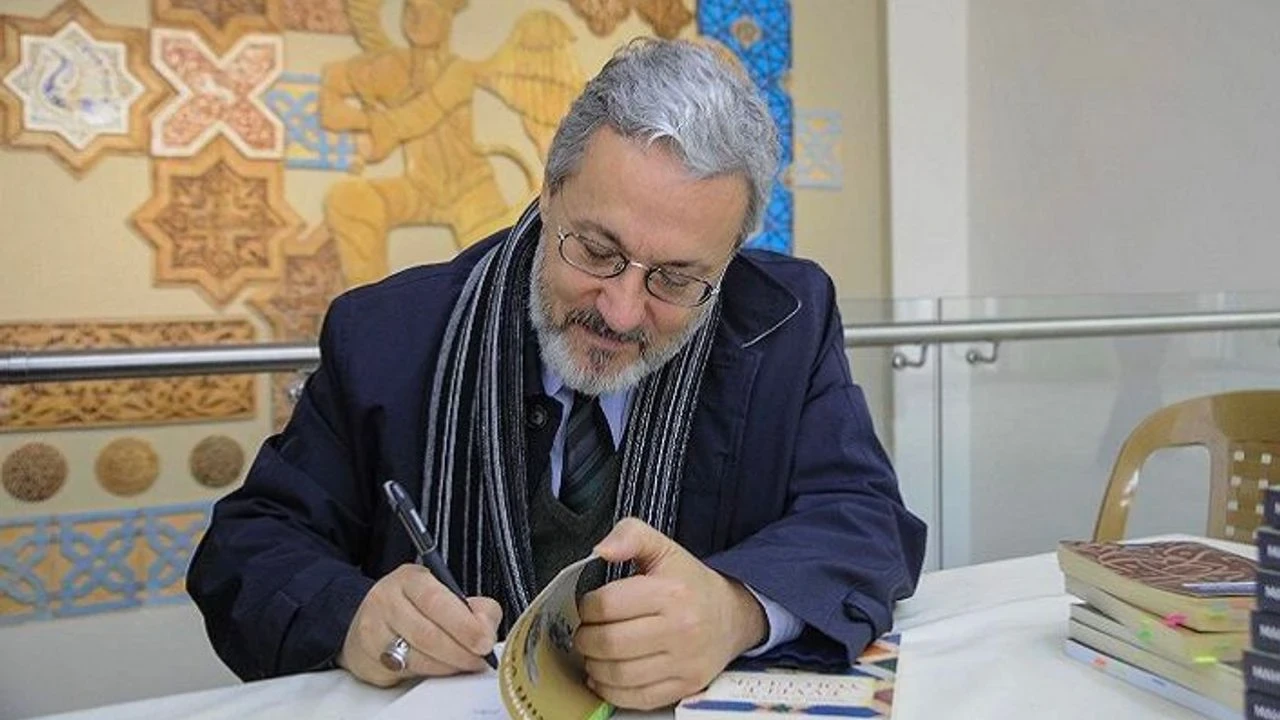
Emin Bin Salim & Ozan Dur
Yorumlar
Yorum Yaz