
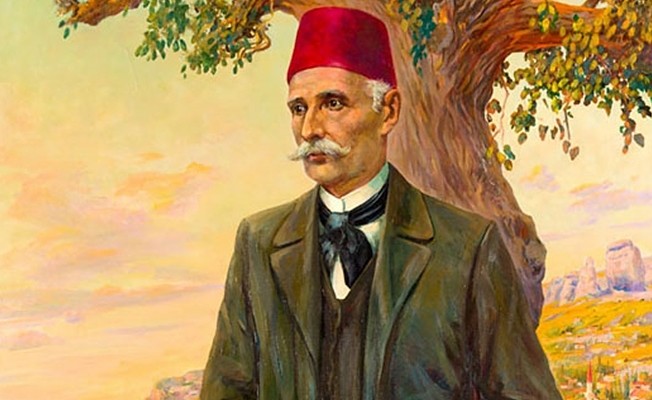

This article examines İsmail Gasprinski’s approach to language, education, and the Usul-i Jadid movement. Gasprinski sought to modernize traditional education, improve literacy through sound-based teaching methods, and establish a simplified common literary language that could unite Turkic communities. His famous ideal of “unity in language, thought, and action” profoundly influenced educational reform and cultural cooperation across the Turkic world.
İsmail Gasprinski’s Understanding of Language and the Usul-i Jadid
Introduction
İsmail Gasprinski (1851–1914) was an important intellectual—ziyalı in Azerbaijani terminology—who took a particular interest in the education of young people. Having rendered numerous services to the Turkic world, Gasprinski helped pave the way for the modernization of education through the schools he established. In an environment where children could not even learn to read and write and where the madrasa system had lost its functionality, he argued that Western-style schools needed to be opened. He devoted himself to the demanding and difficult task of language education and wanted children, at the very least, to be able to read and write in their mother tongue.
Today, almost everyone over the age of thirty in Türkiye knows that English has not been taught effectively in our schools. In recent years, partly in parallel with the increasing number of polyglots, language learning has become somewhat easier in our country, yet it remains highly inadequate. In the madrasas of Gasprinski’s time, children were made to memorize certain Arabic and Persian expressions that they did not understand. They attended madrasas for five or six years and graduated without having learned anything substantial. Gasprinski sought precisely to change this situation and to find ways of benefiting from modern educational methods. His interests were not limited to education; he also put forward ideas concerning agriculture and commerce. His recognition and articulation, as early as the 1900s, of the need to construct roads so that agricultural products could be exported was a significant development.
He was called Gasprinski because his father had been born in Gaspra. His father served in the Russian army and retired with the rank of lieutenant. His father’s name was Mustafa Alioğlu, while his mother, Fatma Hanım, was the daughter of the Crimean nobleman İlyas Mirza Kartafoz. Like his father, Gasprinski entered a military academy with the intention of joining the Russian army. However, he became disturbed by the atmosphere there, and his Turkish national consciousness developed during his time at the school.
Modern nations generally define themselves in relation to an “other.” When Russians defined themselves, they also defined who they were not and against whom they stood. During this period, anti-Turkish Slavist ideas were dominant. Gasprinski was deeply disturbed by this environment, and after he began struggling on behalf of the Turks, his relationship with the military academy came to an end. The immediate cause was his arrest in 1867 while attempting to travel to Istanbul to defend the Ottoman Empire against the Greeks during the Cretan Revolt.
Gasprinski’s education in Moscow familiarized him with the Russian educational system. Since Russia was then in a period of ascendance, this system must, to a considerable extent, have been of a high standard. During the Cold War, Russia and the United States would divide the world into two blocs, while Russia would become home to ideologies such as socialism and communism, which were capable of mobilizing millions of people. Gasprinski also learned Russian in Moscow. When he was unable to return to Russia, he began teaching Russian in Bakhchysarai. Having spent some time in France, he also studied Russian literature. In 1874, he sought to become an officer in the Ottoman Empire, but his application was rejected. In Istanbul, he was influenced most strongly by Ziya Pasha, Namık Kemal, and Şinasi Efendi.
He was most probably able to begin earning his livelihood through his knowledge of Russian. Russian is considered a difficult language to learn, particularly because of its grammar. It contains many challenging subjects, especially its case system.
Gasprinski devoted his life, in his own words, to the creation of a common language among the Turks. Although this idea may appear utopian to some, it might already have been realized had certain conditions emerged. He expressed his “cause” in the following words:
“This is what I have been saying, writing, and working for over the past twenty-five years. It is nothing other than opening a way and providing a solution. For although the Turkish nation is strong, noble, enduring, patient, and courageous, it has become dispersed and, despite spreading from the Great Wall of China to the Mediterranean, has remained without influence and without a voice because it lacks a language—that is, because it does not possess a common language (lisân-ı umumî). I have lived with this conviction, and I shall enter the grave with this conviction.”
Gasprinski stated his objectives as follows:
-
To remove, as far as possible, words of foreign origin that had entered Turkish.
-
To eliminate Arabic and Persian constructions and expressions that could not be understood even by literate people.
-
To adapt and use words from all Turkic dialects, provided that they were not excessively colloquial, in accordance with the structure of Ottoman Turkish.
Gasprinski was neither the first nor the only person to recognize that madrasa education had lost its functionality. Mehmet Âkif Ersoy, one of the most important thinkers produced by the Ottoman Empire, also drew attention to the inadequacy of language instruction and of the students themselves. There was even an Ottoman saying: “The student studies binâ, turns around, and studies it once again.” In other words, the madrasa method produced far more unsuccessful outcomes than the modern educational system. This resulted from memorization conducted before students had gained mastery of the language, as well as from the absence of practical application.
Under the madrasa system, truly learning the language was largely a matter of good fortune. Perhaps as a continuation of the madrasa tradition, grammar-oriented instruction continued in our country for many years without any practice whatsoever. Grammar was not unnecessary, but the question of where and how it would be used remained a great mystery. Students were learning merely in order to forget. Today, this inherited condition continues in one form or another. A student who leaves a subject—whether a foreign language or any other field—at the theoretical level and fails to put it into practice is inevitably condemned to failure.
Gasprinski made the following remarks:
“I taught in schools for many years. This provided me with sufficient knowledge of both Russian and Muslim schools. The unfortunate children attending Muslim schools study for six or seven hours a day and continue doing so for five or six years. Many nights, I was unable to sleep because of the sorrow I felt whenever I witnessed the misery caused by these children’s inability to achieve any meaningful result. Most students acquired neither sound knowledge nor a proper capacity for research. What they learned consisted merely of a few Arabic passages comprising no more than several sentences.”
He continued:
“A student who had studied at school for five years could neither perform his religious duties correctly nor write a single sentence.”
Instead of this system, Gasprinski introduced the Usul-i Jadid—the New Method—and endeavoured to disseminate it. In pursuit of this cause, he repeatedly came into conflict with the Russian authorities and risked his life. Eventually, the new schools became widespread. In the historical struggle between the madrasa and the modern school, it is the latter that has prevailed up to the present day.
Gasprinski argued that three factors caused division within a nation: religion, language, and distance. While the problems arising from religion and distance were being overcome, the language problem also had to be resolved. He expressed this view as follows:
“There are three things that separate people: geographical distance, differences in religion, and the absence of a common language. Twenty-five years ago, when I reflected upon our national circumstances and attempted, with my limited abilities, to find remedies for our troubles, I realized that although our religion was one, distance and the absence of a common language divided us. As steamships, railways, and telegraphs—products of civilization—gradually overcame distance year after year, it became as clear as daylight that the principal cause of our separation was ‘languagelessness,’ namely, the absence of a common literary language.”
Gasprinski lived in an age in which nation-states were being established and every nation was engaged in the process of constructing a common language. The creation of a common language, a shared history, and a common flag was on the agenda of all countries. In this context, the Turks also needed a common language through which they could understand one another.
Gasprinski emphasized that the Slavs, Germans, and Arabs possessed common literary languages despite speaking a variety of dialects. During an interview I attended at a research centre, I observed that the professor asking the questions was unaware of the dialects of Arabic. Gasprinski’s awareness of such matters at such an early date demonstrates the breadth and superiority of his knowledge.
Gasprinski’s recognition that certain words used in Turkish were extremely widespread must also have reinforced his belief in the possibility of a common language. He stated:
“There is no Turkish child who does not know words such as baş [head], kaş [eyebrow], göz [eye], kulak [ear], yaş [age/tear], aş [food], buğday [wheat], kırk [forty], elli [fifty], seksen [eighty], doksan [ninety], aldım [I took], kaldım [I stayed], baktım [I looked], kaçtım [I fled], korktum [I was afraid], okudum [I read], yazdım [I wrote], and doğdum [I was born].”
Being aware of and recognizing such common linguistic elements was therefore an indication of a highly developed consciousness.
The greatest influence of Türkiye Turkish would be exerted upon Chagatai Turkish. Some writers stated that Chagatai Turkish was gradually deteriorating. Certain authors of the period also observed that some intellectuals could read newspapers and journals published in Istanbul with considerable ease. Moreover, even village mullahs began subscribing to newspapers from Türkiye, bringing about a significant transformation.
The support extended to Gasprinski’s work by religiously committed individuals such as mullahs was highly important for the success of his “cause.” At the same time, the prevalence of tribal consciousness among the Turks of Russia posed a major risk. There were even people who intended to harm Gasprinski, although they eventually abandoned these plans.
Gasprinski did not seek to eliminate local dialects. He wanted literature, education, and science to share a common language. Had this been achieved in universities, printed works, and the media, Turks would be able to understand one another today. At the very least, the Turks of Asia could have understood Türkiye Turkish with considerable ease.
However, there is a situation with which I am familiar from Arabic: ordinary people may sometimes look down upon communication in a common language. Today, when someone attempts to speak Modern Standard Arabic in the Arab world, people may jokingly respond that the person sounds like a cartoon character. This should also be acknowledged as one of the possible consequences of such a project.
The reason Gasprinski selected Türkiye Turkish was probably that the Ottoman Empire had been one of the greatest empires of the recent past and that its language was Turkish.
He proposed simplifying the language of the Anatolian Turks so that it would become identical, or at least closer, to the language of the Muslims of Russia. Ottoman Turkish contained a large number of Arabic and Persian expressions that the Muslims of Asia could not understand. Therefore, rather than expecting Asian Turks to learn Arabic and Persian expressions, the Ottoman Empire needed to simplify its language.
Gasprinski wanted the madrasas to be modernized. Their original purpose had been to teach the Islamic sciences and train Islamic scholars. In the modern period, however, new scientific disciplines emerged together with Westernization. Science became so widespread that many Muslim and non-Muslim madrasa students turned towards it. Even today, when something is presented as having a scientific explanation, almost no one feels able to question it, although science may also be proven wrong over time.
Arabic was the most important subject in the madrasa, and Classical or Standard Arabic occupied a particularly prominent place. Approximately twenty books were included in the curriculum to improve Arabic instruction, and completing these books required nearly five years. Since this was an exceptionally long period and left insufficient time for disciplines such as Qur’anic exegesis, hadith, and Islamic jurisprudence, those subjects were removed from the compulsory curriculum. Modern schools were unable to transmit national and spiritual values, while the madrasas were unable to incorporate modern sciences into their systems.
The Ottoman Empire, caught between the modern school and the madrasa, was compared to someone who remained between two mosques and consequently missed the prayer. In other words, while attempting to choose between two mosques, they missed the prayer altogether. They both committed a sin and paid the price of their indecision. Ultimately, they chose the modern schools.
It is said that Ottoman madrasas initially included cultural and scientific subjects in their curricula, but that these courses were gradually removed. Madrasas were accused of withdrawing into themselves, while modern schools were accused of imitation—namely, imitating the West without being able to produce anything original.
Sultan Abdülaziz first took action to reform the madrasas in 1861, but he was unsuccessful. A legal opinion was obtained from Sheikh al-Islam Musa Kazım Efendi declaring it permissible to teach arithmetic, geometry, algebra, and chemistry in the madrasas. In subsequent years, attempts were also made to introduce languages such as English, French, German, and Russian. However, the outbreak of the First World War forced the suspension of this programme.
During the time of the Prophet Muhammad, lessons were held in mosques and smaller places of worship. Over time, however, mosques became insufficient, and madrasas began to be established. As secular subjects were gradually incorporated into the curriculum, conducting all lessons in mosques was no longer considered appropriate.
Nizam al-Mulk was the person who established the first madrasas in a systematic manner, founding them in 1092. Nevertheless, the first madrasa had been founded in Bukhara approximately 160 years before his time. Over the centuries, the madrasas lost their functionality. They became places of refuge for those seeking exemption from military service. In the Ottoman Empire, there were also people who entered the military profession and other fields through bribery and favouritism. The failure to supervise such practices and to ensure economic justice contributed to the deterioration of society.
Mehmet Saray describes Gasprinski’s understanding and system of language education as follows:
“According to Gasprinski’s new method (Usul-i Jadid), even the teaching of the Arabic alphabet would be transformed. Under this method, students would first be taught how the letters were pronounced, then how they were used within words, and similarly, how words were used within sentences. In addition, students would be given the opportunity to write from the very beginning. Gasprinski stated that school attendance would be properly organized, that each class would contain no more than thirty students, and that students would attend lessons for four hours a day and six days a week, with designated breaks and rest periods. He also stated that classrooms and school buildings would be hygienic, healthy, and safe. Furthermore, unlike in the past, students would not be punished through beating, bastinado, or verbal abuse, since such practices alienated children from school. Gasprinski explained that the Usul-i Jadid schools would offer a two-year programme in which students would study the following subjects: reading and writing in Arabic and Turkish, calligraphy, interactive question-and-answer instruction, Turkish grammar, and arithmetic.” (Mehmet Saray, 39)
In other words, the following points were intended:
-
With what sound a letter should be pronounced;
-
What position the mouth, tongue, and lips should assume;
-
Which sound that letter corresponded to in Turkish or other local languages.
For example, in classical madrasa education, the names of the letters—alif, ba, ta, tha, and so forth—were memorized first, and students did not immediately learn the phonetic values of those letters. In Gasprinski’s Usul-i Jadid method, however, the sound of the letter was taught first. For instance, students learned that the letter “ب” represented the sound “b,” after which they learned how the letter was used within words. This accelerated the process of acquiring reading and writing skills.
Step 1 – The Sound of the Letter
Letter: ب
Pronunciation: “b” (as in the Turkish word baba, meaning “father”)
At this stage, we learn the sound of the letter directly rather than its name.
Step 2 – Using the Letter Within a Word
Example words:
باب (bab) – door
بيل (bil) – know
باغ (bağ) – garden
Step 3 – Using the Word Within a Sentence
باب آچيلدی. (Bab açıldı.) – The door opened.
من باغا گتديم. (Men bağa getdim.) – I went to the garden.
The Difference
Under the classical method, the name of the letter was first memorized as “be,” after which the sequence alif-ba-ta was studied. In the Usul-i Jadid, however, the essential principle was to learn the sound rather than the name of the letter and then proceed immediately to words and sentences. In this way, children could begin reading within a few weeks.
I asked artificial intelligence to explain the section in parentheses because I thought it might be difficult to understand. I had also found it somewhat difficult to comprehend what was meant by “forms of pronunciation.” I therefore thank artificial intelligence in this context.
Şemseddin Sami distinguished between Eastern Turkish and Western Turkish, arguing that they were very similar to one another. He stated:
“The difference between Eastern Turkish and Western Turkish is not, as is commonly assumed, comparable to the difference between Italian and Spanish on the one hand and French on the other. The distinction is not great enough to require that each of the two forms of Turkish be regarded as a completely separate and independent language. Rather, it is comparable to the difference between the German spoken in northern and southern Germany, between Tuscan and Neapolitan Italian, or between Egyptian Arabic and the Arabic varieties of North Africa, such as those of Morocco and Tunisia. Eastern Turkish and Western Turkish constitute a single language; both are Turkish.”
He continued:
“I aspire to contribute to the unification of the two dialects by reviving and disseminating the pure Turkish words used in Eastern Turkish that we have neglected and forgotten—particularly those that are valuable and necessary—and incorporating them into our Turkish.” (Mehmet Saray, 49)
However, Gasprinski was opposed to the excessive promotion of dialects and regional varieties. As dialects were increasingly learned and disseminated, people moved further away from the common language. In this context, he did not want literary books to be written and works to be produced in local dialects.
Although Italian, Spanish, and French contain similar words, they differ considerably in terms of grammar. Their pronunciation also differs. It appears that the Turkic languages do not exhibit major grammatical differences and, at the same time, display substantial lexical similarities.
Although differences exist among Arabic dialects, they remain similar in many respects because they emerged from the same Arabic language. Dialects spoken in geographically close regions are often almost identical. For instance, the varieties spoken in the Levant are highly similar. Although differences of accent exist among Jordan, Syria, Palestine, and Lebanon, their inhabitants can understand one another with ease.
The dialect of Egypt, known as Umm al-Dunya—“the Mother of the World”—has become comprehensible throughout much of the Arab world due to the artists Egypt has produced and the strength of its media. The same may apply to Türkiye Turkish. Türkiye’s powerful cinema and television industry may contribute to the further dissemination of Türkiye Turkish across the Turkic world. Those who know Arabic will understand this point more clearly.
Gasprinski advocated the idea of a plain and accessible Turkish and dreamed of a form of Turkish that all Turks could understand. He stated that it should be such a language that “both the porter and boatman in Istanbul and the camel driver and shepherd in East Turkestan should be able to understand it.” Local words were to be adapted to Istanbul Turkish, while Arabic and Persian words were to be removed from Turkish. (Mehmet Saray, 49–50)
Gasprinski applied these principles in the newspaper Tercüman. Ziya Gökalp made the following observation about him:
“The newspaper Tercüman was understood by the Turks of the East and West as well as by the Northern Turks. The very existence of this newspaper is living proof that it is possible for all Turks to unite around the same language.” (p. 50)
Gasprinski personally attempted to implement these ideas while also sending letters to newspapers, requesting that they use a simpler language. He regarded the following method as appropriate for achieving his objectives: during a four-year course of instruction, lessons should be taught in a simple local variety for the first three years, while books written in the common Turkish language should be introduced in the final year. (Mehmet Saray, 52)
According to Gasprinski, the literary language was what connected a nation to its past. Neither property nor money could keep a nation alive; only its literary language could do so. The Huns had once shaken the world and made everyone tremble, yet it was the Greeks who continued to exist in the present. This was because they maintained their existence through the world of culture.
The condition of Turkish culture, history, and lexicography had become so troubling that Gasprinski stated:
“We possess dictionaries of every kind, yet we do not possess a Turkish dictionary. Grammars exist for all languages, including Bulgarian, yet there is no Turkish grammar. There is no work that records the proverbs, riddles, or even the general history of the Turkic peoples, whose population approaches forty million.”
While Gasprinski struggled for unity in language, action, and thought, the Russians also had certain plans. They wanted the alphabet of the Turkic world to be changed from Arabic to Latin letters. In this way, the Turks’ ties with both Islam and the Ottoman Empire would be severed.
The Russians supported the discourse favouring the adoption of the Latin alphabet, which was becoming widespread among Azerbaijani intellectuals, and Azerbaijanis assumed a pioneering role in this respect. When the Republic of Türkiye, under Mustafa Kemal, sought to turn towards the West, the Arabic alphabet was also abandoned in Türkiye. The Russians then began requiring the languages of the Turkic world to be written in the Cyrillic alphabet. Through writing in Cyrillic, these peoples gradually came under the influence of Russia and the Russian language.
An alphabet also signifies a civilization; changing an alphabet therefore means moving towards a different civilization. Gasprinski devoted his life to the cultural and linguistic unity of the Turks. The emergence of a degree of unity among Turkic states today demonstrates that his dream has, at least to some extent, been realized.
Conclusion
Gasprinski was right to demand that greater importance be attached to Turkish. Every nation should be able to produce works in its own language and live in peace. Western scholars, particularly in their Orientalist studies, examined Arabic and Persian literature and poetry. In the Ottoman Empire, knowledge of Persian was regarded as an important advantage in terms of employment opportunities.
Although there was nothing wrong with knowing these languages, it appears that Turkish was neglected to some extent. In India, the Turkic Mughal rulers wrote their works in Persian, while Turkish remained a language of the court. Wherever the Turks travelled, they carried Persian and Arabic with them. It would have been wonderful if they had also developed and advanced Turkish alongside these languages.
However, it is evident that such a consciousness did not exist in earlier periods. Since the Persians and Arabs had adopted written language before the Turks, conducting scholarly and scientific work in Persian and Arabic may have appeared more reasonable.
Note: May Allah have mercy upon our esteemed teachers Mehmet Saray and İsmail Gasprinski.
References
Saray, M. (1993). Gaspıralı İsmail Bey’den Atatürk’e Türk dünyasında dil ve kültür birliği [Language and cultural unity in the Turkic world from İsmail Bey Gasprinski to Atatürk]. Istanbul: Nesil Yayınları.
Toker, M. (2004). İsmail Gaspıralı ve “Dilde Birlik” fikri üzerine [On İsmail Gasprinski and the idea of “unity in language”]. Selçuk Üniversitesi Türkiyat Araştırmaları Dergisi, (16), 32.
Yılmaz, Y. (2023). Gaspıralı İsmail Bey’in dili ve üslûbu / Ismail Gasprinskiy’s language and style (Doctoral dissertation). Kırıkkale University, Institute of Social Sciences, Department of Turkish Language Education.
Ozan Dur


Yorumlar
Yorum Yaz