

Language Learning Advices
How I Learned Six Languages: Practical Tips from a Polyglot
The Hidden Side of the Iceberg
When people look at success, they usually see only the visible part of the iceberg. They see the results, but they rarely see the years of struggle, sacrifice, and persistence that lie beneath the surface.
Today, I want to talk about that invisible part of the journey—especially when it comes to learning languages.
First of all, I want you to know that I am just like many of you.
I was born into a low-income family in a small town in Anatolia. Until I went to university, eating at a restaurant was something that happened only on very rare occasions. Many simple things that people take for granted today—trying different foods, buying books whenever they wanted—only became possible for me after I received a university scholarship.
When I was a child, asking my father for even a few Turkish lira was difficult. Sometimes I would ask weeks in advance. It wasn't because he didn't want to give it to me; it was because he simply couldn't.
Buying books was a luxury.
Instead, I collected newspaper coupons that publishers offered and exchanged them for books. There wasn't even a proper public library in my hometown at that time.
So, believe me when I say this:
I started from the very bottom.
I graduated from a vocational high school, studying electrical engineering—not from an elite school or a prestigious language academy.
But something changed my life.
I experienced success once.
Just once.
And that single experience taught me something I have never forgotten.
I realized that when I worked consistently, I could actually improve.
That feeling became addictive.
From that day on, I wanted to succeed again and again.
One of the greatest lessons I learned is that success is often invisible while it is happening.
Today psychologists sometimes call this "invisible progress."
When you refuse to quit, you are improving every single day—even if you can't see it yourself.
That's why people compare it to the bamboo tree.
Farmers water a bamboo tree for years.
For nearly five years, almost nothing seems to happen.
It hardly grows.
Anyone looking from the outside might think all that effort is pointless.
But then, after years of patient care, something incredible happens.
Within just a few weeks, that tiny bamboo can grow nearly thirty meters tall.
Was it really growing only during those few weeks?
Of course not.
It was growing underground the entire time.
Its roots were becoming stronger.
Language learning is exactly the same.
Many students tell themselves:
"I'm not talented."
"Languages aren't for me."
"I've tried, but nothing is changing."
No.
Something is changing.
You simply can't see it yet.
Every page you read...
Every word you review...
Every listening exercise...
Every small conversation...
Every mistake...
They are all strengthening your roots beneath the surface.
And one day, people will suddenly say,
"Wow! Your English is amazing!"
"How did you learn Persian so well?"
"You must have a gift for languages."
But they won't have seen the thousands of quiet hours that made that moment possible.
That's why I don't believe language learning is a matter of talent.
I believe it's a matter of persistence.
I've been studying languages for many years.
If someone has never studied a foreign language before, of course our abilities won't be the same today.
That difference isn't magic.
It isn't talent.
It's simply the result of time and consistent effort.
Personally, I think the idea that only gifted people can learn languages is one of the biggest myths in education.
It's a balloon that has been inflated for far too long.
And it's time to let the air out.
Nobody raised me with foreign-speaking nannies.
I wasn't born into a multilingual family.
I wasn't surrounded by international schools.
I was born exactly like you.
Into an ordinary family.
In fact, my grandfather never had the opportunity to learn how to read or write.
Yet he understood something incredibly important:
Education changes lives.
He made sacrifices so that the next generation could receive opportunities he never had.
Today, our family continues to serve our country in different fields, and whenever I think about that journey, I remember a saying from one of my teachers:
"Don't complain. Build a story."
I could have spent years making excuses.
I could have blamed my financial situation.
I could have blamed my hometown.
I could have blamed my education.
Instead, I chose something else.
Whenever I didn't understand a grammar point, I studied it again.
When I forgot a word, I looked it up again.
Sometimes I reviewed the same word dozens of times before it finally stayed in my memory.
There were days during university when I couldn't even afford a packet of crackers for lunch.
Many afternoons passed without eating anything at all.
Life wasn't easy.
But quitting would have meant wasting every sacrifice that had already been made.
Everything I had endured would have been for nothing.
So I kept going.
There's a saying in English that I love:
"The harder the things you choose to do, the easier your life becomes."
I believe this idea beautifully aligns with the Qur'anic verse:
"Indeed, with hardship comes ease." (Qur'an 94:6)
Hardship is not always a sign that you're on the wrong path.
Sometimes, it's proof that you're moving toward something valuable.
Neither life nor our faith promises us a life without difficulties.
We all have responsibilities.
We all have struggles.
But the hours we have left—the hours we choose freely—can become an investment in knowledge, wisdom, and personal growth.
And perhaps that's where real success begins.;
There Is No Magic Method to Learning Languages
Now I'd like to share one of the most important lessons I have learned after studying several languages over the years.
If you remember only two things from this talk, let them be these:
First, there is no single perfect method for learning a language.
Second, there is no magic shortcut that allows you to learn a language without effort.
Everything else is secondary.
Let's begin with the first point.
Many people spend months searching for the perfect method.
They ask,
"Should I focus on grammar?"
"Should I only watch TV shows?"
"Should I memorize vocabulary?"
"Should I use flashcards?"
"Should I speak from day one?"
The truth is...
All of these methods have worked for someone.
Some people learned Japanese by watching anime.
Others learned Turkish simply by watching Turkish television series.
There are people in Africa who became fluent in French mainly by listening to French radio stations every day.
Some people love grammar.
Others hardly study grammar at all.
Some enjoy reading books.
Others learn best through conversation.
Some rely heavily on language apps.
Others prefer traditional textbooks.
Who's right?
Perhaps all of them.
Because language learning is deeply personal.
The best method is the one you can follow consistently for years.
I often recommend that beginners spend a few weeks building a basic grammatical foundation.
Not because grammar is the goal, but because grammar gives structure to everything else you learn.
Once you understand the basics, reading and listening become much more meaningful.
From there, active exposure becomes essential.
Read.
Listen.
Repeat.
Think in the language.
Little by little, your brain begins recognizing patterns without consciously translating every sentence.
Over time, you discover what works best for you.
That is why I always tell students:
Don't waste years searching for the perfect method.
Spend that time actually learning the language.
Your Goal Determines Your Method
One question should come before every study plan:
Why are you learning this language?
Your purpose changes everything.
Suppose your dream is to move to England.
In that case, speaking and pronunciation should become major priorities from the beginning.
You'll need confidence in everyday conversations.
You'll need to understand different accents.
You'll need to communicate naturally.
But if your goal is academic research, your priorities may look very different.
Reading scholarly articles.
Writing essays.
Understanding lectures.
Building an academic vocabulary.
Each goal requires a slightly different emphasis.
English is unique because, in today's world, we usually need all four language skills.
Reading.
Listening.
Writing.
Speaking.
Ignoring one of these for too long creates an imbalance.
A language is like a table with four legs.
Remove one leg, and eventually the whole table becomes unstable.
Consistency Beats Intensity
People often ask me,
"How many hours should I study every day?"
My answer surprises them.
If your goal is long-term success, two focused hours a day can be enough.
Yes, enough.
When I was preparing for university, my own schedule was much more intense.
I would wake up and begin studying almost immediately.
I continued until I went to bed.
Even while eating, I watched the clock because I didn't want to waste unnecessary time.
But that doesn't mean everyone has to study like that.
If you want extraordinary results in an unusually short period of time, extraordinary effort is required.
However, if your goal is steady, lifelong growth, then consistent daily study matters much more than exhausting yourself for a few weeks.
I have always prayed with the words inspired by the Prophet Muhammad (peace be upon him), asking Allah to protect me from laziness.
Looking back, I truly believe those prayers changed my life—not because they replaced effort, but because they strengthened my determination to keep working.
Prayer and effort belong together.
One without the other is incomplete.
Whenever I entered a mosque, I would often make a simple prayer:
"O Allah, open for me the doors of goodness and blessing."
Then I would return to my studies.
Because we ask Allah for success...
but we also continue working toward it.
Balance the Heart and the Mind
There is something else I have learned over the years.
Language learning is not merely an intellectual activity.
It is also psychological.
Your emotional state affects your ability to learn.
Your motivation matters.
Your patience matters.
Your hope matters.
When our inner world becomes unstable, studying becomes much harder.
That is why I believe spiritual well-being plays an important role in education.
Modern society spends enormous energy strengthening the material side of life.
Career.
Income.
Technology.
Competition.
These things certainly matter.
But our spiritual life also needs nourishment.
A balanced person learns better.
Endures difficulties more patiently.
Recovers from failure more quickly.
And continues long after others have given up.
Knowledge grows best in a heart that has not lost hope.
Learn Independently
One lesson transformed the way I approached learning.
At first, I attended classes just like everyone else.
I listened carefully.
I took notes.
I completed assignments.
But after a while I realized something important.
A teacher can only guide you for a limited number of hours each week.
Real progress happens outside the classroom.
So I changed my approach.
If my professor taught the past tense that week, I spent the following days reading as many texts as I could that used the past tense.
Not because it was homework.
Because I wanted that grammar to become part of my thinking.
Instead of passively waiting for the next lesson, I became an active learner.
And everything changed.
Soon I wasn't just passing my exams.
I was earning the highest grades.
One day, one of my professors smiled and said,
"Ozan, you've become a teacher yourself."
I have never forgotten those words.
Not because they praised me.
But because they reminded me of an important truth:
Learning begins when you stop depending entirely on the teacher.
A teacher can open the door.
Only you can walk through it.
This was exactly how I approached every language I studied.
Not with shortcuts.
Not with secret techniques.
But with curiosity.
Consistency.
And thousands of small steps that eventually became something much bigger.
Build Your Future One Day at a Time
Before I finish, I'd like to leave you with a few final thoughts—lessons that have shaped my own journey and continue to guide me today.
One of the biggest mistakes people make is believing that learning a language is the final destination.
It isn't.
Language is not the goal. Language is the vehicle.
You learn a language so that you can read books that others cannot read.
So that you can conduct research.
So that you can communicate with people from different cultures.
So that you can contribute something meaningful to humanity.
A language is like a key.
Owning the key is valuable.
But its true value lies in opening doors.
Don't spend your entire life polishing the key without ever opening a single door.
Once you've learned a language, ask yourself:
"Now, what am I going to build with it?"
That question matters far more than the language itself.
What Languages Gave Me
People often ask me what learning languages has brought into my life.
The answer is simple:
It changed my life.
Because I learned Persian, I had the opportunity to travel to Iran.
I studied there.
I met remarkable teachers.
I immersed myself in a different culture.
I wrote articles about Iranian history, language, and society.
Those articles reached hundreds of thousands—and eventually millions—of readers.
They became courses.
They became lectures.
They became books.
Insha'Allah, they will continue inspiring others for years to come.
Language opened every one of those doors.
I still remember my classes in Iran.
Sometimes the professors would ask,
"Can anyone give another synonym for this word?"
Because I had deliberately memorized groups of synonymous words, I could answer immediately.
Those small daily habits eventually became great advantages.
Looking back, I realize something important:
None of those opportunities appeared overnight.
They were the result of years of quiet preparation.
The opportunities arrived later.
The preparation came first.
That is almost always how life works.
Your Character Matters More Than Your Accent
Many students become obsessed with pronunciation.
They worry about sounding like a native speaker.
Of course, pronunciation is important.
If you can improve your accent, wonderful.
It will certainly help your communication.
But never forget something even more important.
People may admire your accent.
They will remember your character.
A person with excellent pronunciation but poor manners leaves a bad impression.
A person who speaks imperfectly but treats others with kindness earns respect everywhere.
Knowledge without character is incomplete.
As Muslims, we believe that beautiful character is one of the greatest forms of da'wah.
Sometimes your honesty, humility, and generosity speak more loudly than your vocabulary ever could.
Never Lose Hope
History teaches us an important lesson.
Nations rise.
Nations fall.
Circumstances change.
When the United States was still a group of British colonies, few could have imagined the global influence it would one day possess.
After the Second World War, Germany lay in ruins.
Its cities had been destroyed.
Its economy had collapsed.
Yet through determination, discipline, and rebuilding, it became one of the world's strongest economies.
History is full of people who refused to let their present circumstances define their future.
So why should we?
Never judge your future by your current situation.
Today's difficulties are temporary.
Tomorrow's opportunities have not yet arrived.
Life moves forward one page at a time.
You cannot return to previous chapters.
But you can still write the pages that haven't been written yet.
Focus your energy there.
Don't Let Difficult Times Define You
I know that many young people today worry about the economy.
They worry about finding work.
They worry about building a future.
Those concerns are real.
But don't allow economic hardship to steal your hope.
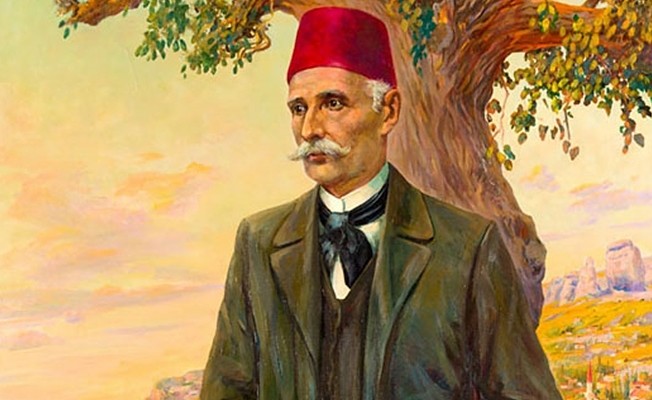
I once read a beautiful story about the family of the Turkish scholar Ali Ulvi Kurucu. Ali Ulvi Kurucu
His grandfather owned only a small piece of farmland.
Each year, the family survived on a share of its harvest.
Life was incredibly simple.
There were no luxuries.
Sometimes there weren't even enough clothes to buy.
Yet despite those hardships, he continued serving his community as an imam for decades.
Today, people still remember him—not because he was wealthy, but because of the goodness he left behind.
That story reminds me that difficult circumstances do not prevent meaningful lives.
Strong faith gives people the strength to endure difficult times.
The Qur'an repeatedly tells us the stories of earlier generations for exactly this reason.
Take the story of Prophet Yusuf (Joseph), peace be upon him.
There were years of abundance.
Then years of famine.
Life changes.
Conditions change.
But patience, faith, and wisdom remain constant.
Allah promises glad tidings to those who are patient.
That promise still stands today.
The Future Belongs to Those Who Prepare
I often tell young people this:
Don't wait for perfect circumstances before preparing yourself.
Prepare first.
The opportunity will come later.
Imagine someone who spends years complaining instead of learning.
Then one day, a wonderful opportunity appears.
They aren't ready.
Meanwhile, another person quietly spent those same years studying, reading, and improving.
When opportunity finally arrived, they were prepared.
Success often looks like luck from the outside.
But preparation usually explains what people call luck.
As the saying goes:
Those who want something find a way.
Those who don't find an excuse.
Every one of us must decide which person we want to become.
A Final Message
Dear friends,
If there is one message I hope you remember from everything I've shared today, it is this:
Never underestimate the power of small, consistent efforts.
Don't worry if your progress feels slow.
Don't worry if people don't notice your hard work.
Don't worry if success takes longer than you expected.
Keep watering the bamboo.
Keep reading one more page.
Keep learning one more word.
Keep making one more sincere prayer.
Keep taking one more step.
Years from now, people may only see your achievements.
They may assume you were naturally gifted.
They may think success came easily.
But you will know the truth.
You will remember the long nights.
The repeated failures.
The quiet prayers.
The sacrifices no one else ever saw.
And perhaps that is the most beautiful kind of success—
the kind built not on talent,
but on faith,
discipline,
patience,
and unwavering consistency.
May Allah bless your efforts, increase you in beneficial knowledge, strengthen your character, and make your learning a source of goodness for humanity.
Thank you very much. May Allah bless you all.
Ozan Dur


Yorumlar
Yorum Yaz