
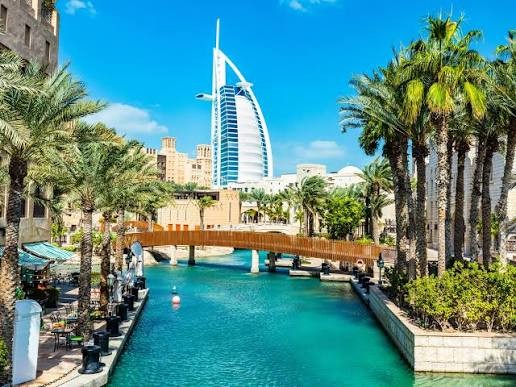
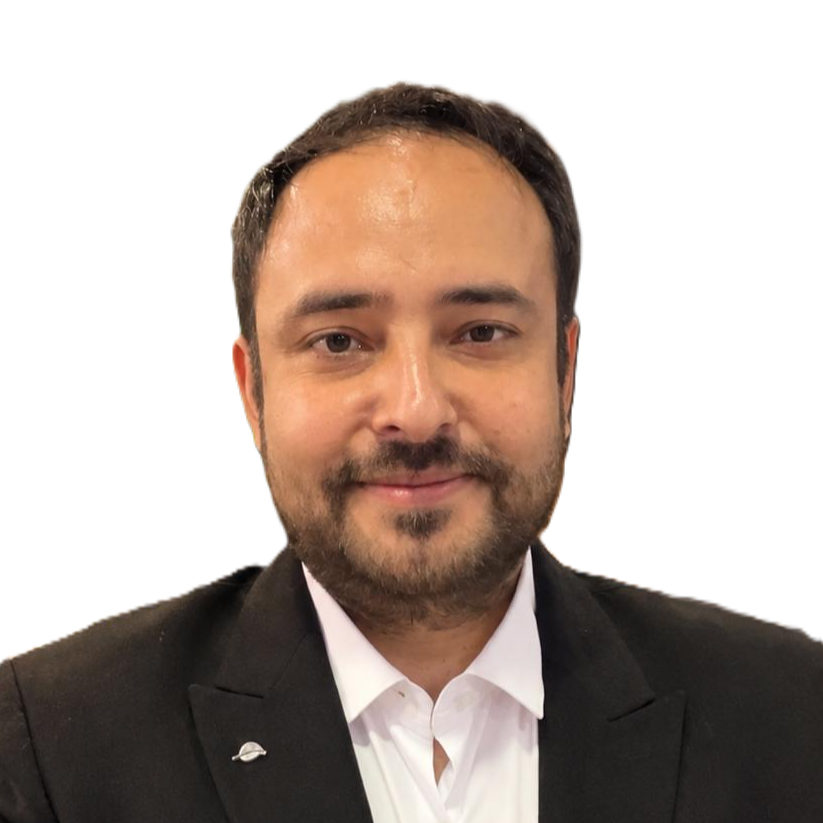
This interview explores Sadiye Abbasioğlu’s experience of studying English in Dubai, covering the language programme, multicultural classroom environment, desert climate and daily life in the UAE. She highlights the importance of speaking without fear, interacting with international students and gaining regular exposure to English.
In our interview with Sadiye Abbasioğlu, a student at Istanbul Medeniyet University, we discussed her distinctive educational experience in a desert climate after she chose Dubai—rather than the traditional destinations—to improve her English.
Ozan Dur: God willing, we will conduct this interview with Ms. Sadiye Abbasioğlu. Our topic is rather unusual. People generally travel to countries in Europe or to the United States to learn English, whereas Ms. Sadiye studied in the United Arab Emirates. We would like to hear about her experiences there.
The UAE has recently emerged as an important actor in international relations. Like other Gulf countries, it has an economy dependent on oil and natural resources. However, it has recently been seeking to diversify its economy. God willing, we will see far more investment in renewable energy—an area in which Europe has taken the lead—in the years ahead.
I would like to thank our guest for accepting my interview request. Could you please introduce yourself to our readers?
Sadiye Abbasioğlu: Hello, of course. My name is Sadiye Abbasioğlu. I am a second-year student in the Department of Preschool Education at Istanbul Medeniyet University. My family is originally from Tillo, Siirt, but I live in Siirt city centre.
OD: How did you feel before travelling to Dubai, and what were your impressions after arriving? Did it meet your expectations?
SA: To be honest, I had not expected to see so few Emirati citizens. Whenever I asked someone where they were from and they said they were a citizen of the UAE, I was surprised. Most of the people working in the service sector came from Pakistan, India, the Philippines, Ethiopia and Egypt.
The weather was also different from what I had expected. It was my first time experiencing a desert climate, but I still did not anticipate that I would find it so difficult. I live in one of Türkiye’s hottest cities. Before travelling, I checked the temperatures in Dubai, and they did not appear very different from those in my hometown. However, the temperature in Dubai felt at least ten degrees hotter than the figure shown in the forecast. On top of that, the humidity was extremely high. When the heat and humidity came together, the weather became genuinely unbearable.
However, as soon as you entered an indoor space, you could immediately feel the dramatic difference in temperature. For example, during August and September, when I was there, the difference between indoor and outdoor temperatures was around 15 to 20 degrees Celsius. I also saw air-conditioned bus stops, which are definitely necessary under such weather conditions. Finally, I can say that there was a great deal of construction taking place throughout the city.
OD: What level did you start at, and did you take a placement test? How many hours of classes did you attend each week, and what kinds of activities did you do in your free time?
SA: Yes. Before I went, I took a 66-question grammar test and a 15-minute speaking test. I was assessed at the B1 level. However, I did not take another examination at the end of the one-month programme. Unfortunately, because I had been placed in an A2 class, I received a certificate for that level.
We attended three hours of lessons every day, amounting to 15 hours per week, and weekends were free. Once a week, we had a Speaking Club workshop. It was attended not only by our class but also by the higher-level class. It was even open to people from outside the school, so anyone who wanted to practise English could participate. This was an excellent opportunity for people like me who wanted to improve their speaking skills.
We also had a one-hour pronunciation class every week. I think it could be useful for someone who has not had much exposure to English. Otherwise, regular practice over a longer period would be necessary to make meaningful progress.
OD: What were the coursebooks and teaching methods like? Did you find the education successful?
SA: We worked through a single coursebook. I liked its format; it was well designed. It frequently included speaking practice and group activities, which I believe was the most important aspect. We completed the activities together on the interactive whiteboard. During the final half-hour of each day, we played games.
I liked the way the lessons were conducted; overall, the teaching process was quite good. However, I felt that the class was not fully appropriate for my level. My teacher was also aware of this, and I spoke to her about changing classes. As I mentioned earlier, there were only two classes. She told me that the other class would probably be too difficult and that my existing class was more suitable for me. During my final week, however, she said she would make the lessons slightly more challenging for my benefit. What I mean is that if I had attended a class that matched my actual level, I could have improved my English much more.
OD: Which countries did the students in your class come from? Were there any other students from Türkiye?
SA: I stayed for one month, but since everyone started and completed their courses at different times, I had classmates from Italy, France, Georgia, Colombia, Tajikistan, Spain and Algeria during my time there. Unfortunately, however, most of the students were Turkish.
For example, during my final week, there were 18 students in the class, and one-third of them were Turkish. I say “unfortunately” because, as there were so many Turkish students, they constantly spoke Turkish among themselves. I often felt as though I were sitting in an English lesson at a Turkish high school.
Still, I tried to interact with foreign students as much as possible. During my first week, for example, I had an Italian friend, and we practised English by talking during the breaks. Our teacher was delighted to see this and told us that this was precisely what language learning was all about.
OD: What activities did you take part in outside the classroom? Were you able to visit the desert? During the excursions, did anyone provide information about Dubai and its history or culture?
SA: The school organised various weekday and weekend activities, including golf, volleyball and football matches, a desert safari, an Abu Dhabi tour, and social gatherings at different venues.
The only one I joined was the desert safari. We were picked up from the school and travelled to the desert together. First, we rented ATVs, and then we moved on to the “dune bashing” part of the experience. Afterwards, we stopped to take photographs at sunset. We then went to another area for dinner and live performances. At the end of the programme, we were taken back to the school.
Rather than joining the other activities I mentioned, I preferred exploring the city by myself. I visited Abu Dhabi separately with my friends.
OD: Were you able to visit anywhere outside Dubai? Which place did you like the most?
SA: I was only able to make a day trip to Abu Dhabi, but I really liked it. Unlike Dubai, the entire city did not seem to be under construction. We visited the Sheikh Zayed Grand Mosque and Emirates Palace. However, because we spent so much time at the mosque, we were unable to visit many other places.
OD: How many students were there in each class, and in your opinion, what distinguishes EC English from other language schools?
SA: There were only two classes: one at A2 level and the other at B2 level. I was placed in the A2 class. Unfortunately, neither class fully reflected the actual levels of all its students. Since there were only two classes, students were placed in whichever one was closest to their level. This meant that, for example, an A1 student and a B1 student could be in the same class.
I took two placement tests, and the results indicated that I was at B1 level. However, at the end of my third week, my teacher told me that I was at B1+ level. I am not sure which assessment was more accurate; perhaps I had made progress during those three weeks.
OD: EC English’s website says that the institution has conducted research for more than 30 years. What do you think about its teaching techniques? Was there any particular method that you found interesting?
SA: To be honest, I did not make any especially interesting observations in that regard. EC English’s Dubai branch was only established in 2025, so it is still a new school and remains in the process of developing.
OD: Did you notice any interesting local souvenirs? In Jordan, for instance, people create desert and camel pictures inside glass bottles using coloured sand.
SA: The sand-filled glass bottles you mentioned were also available in Dubai. Apart from those, souvenir shops generally sold plush camels and miniature models of the Burj Khalifa.
OD: How did you prepare before travelling? What kind of preparation would you recommend to people planning to study there?
SA: To be honest, I had several other commitments at the time, so I was unable to make any special preparations. I studied in the foreign languages track at high school, and I relied mainly on the English knowledge I had acquired during that period.
OD: Which methods did you find helpful during your English-learning journey? What contributed most to your improvement?
SA: The most important thing is trying to communicate with everyone. It could be a classmate, a cashier at a supermarket, or someone standing beside you at a bus stop. I believe this is the key.
It is essential to speak without feeling embarrassed or being afraid of making mistakes. As I mentioned earlier, you should avoid spending too much time with people from your own country and try to make international friends. Exposure to the language you want to learn is absolutely necessary.
Listening to podcasts regularly is also helpful. Of course, repeating what we hear and using what we learn in everyday life are equally important.
OD: In your opinion, should people travel abroad to learn a language?
SA: If the sole purpose is to learn grammar, then I would say no. However, travelling abroad is an excellent option for speaking practice. You meet people from many different countries and become part of an international student community. You do not merely learn English; you also have the opportunity to discover many different cultures. That makes it a wonderful experience.
OD: Did you see anything abroad that you would also like to see implemented in Türkiye?
SA: Yes, I did. For example, on public transport, passengers tap their cards on a validator both when boarding and leaving, so the fare is calculated according to the distance travelled. I think that is a very good system.
I also liked the fact that all music in shopping centres was turned off at prayer times so that the call to prayer could be heard. In addition, although Türkiye does not have a desert climate, I believe everyone would appreciate air-conditioned bus stops.
Finally, making Friday an official holiday during Mawlid al-Nabi celebrations was another practice that I would like to see adopted in our country.


Yorumlar
Yorum Yaz