
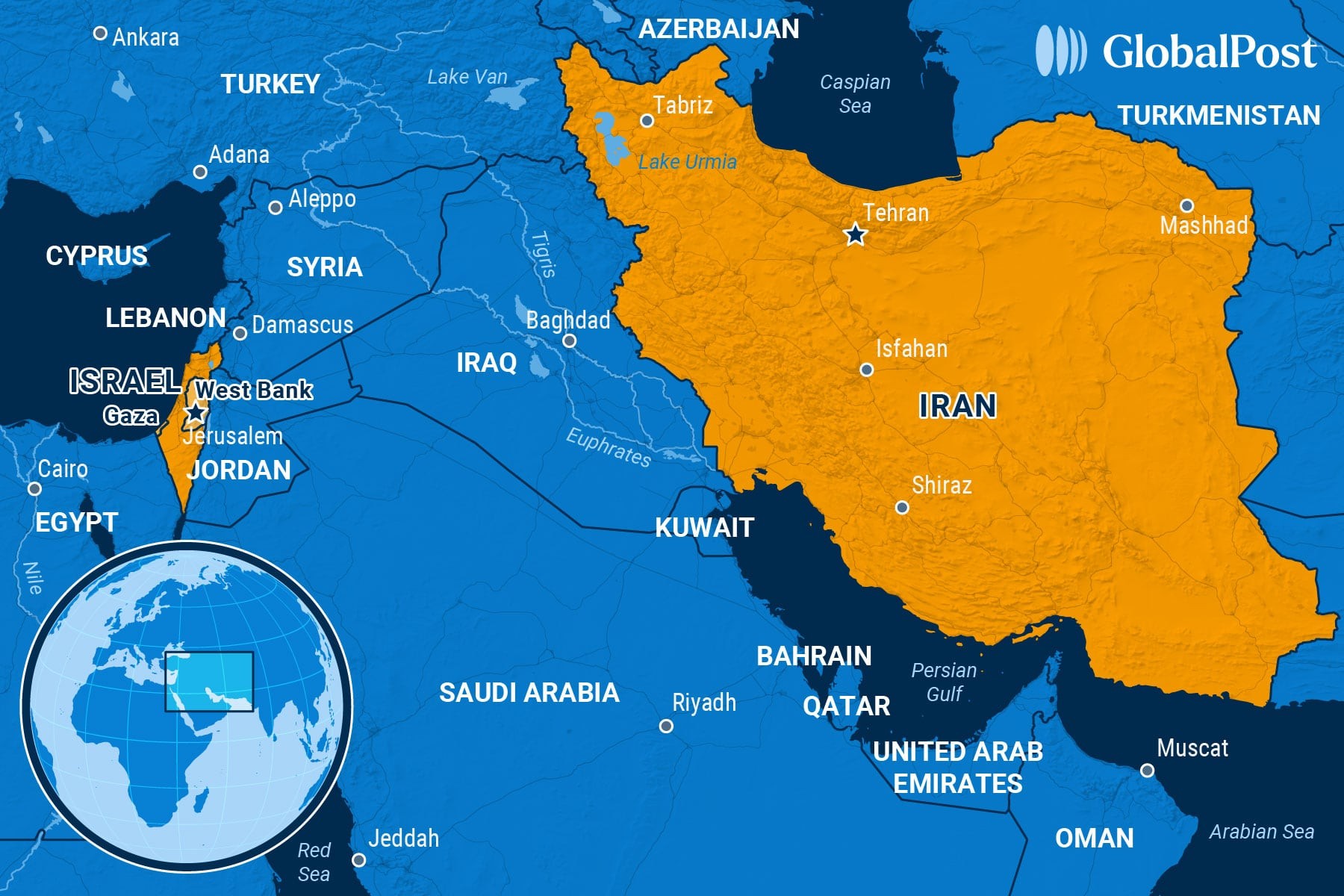

This article examines the historical transformation of Iran–Israel relations from ancient Persian–Jewish cooperation and the strategic partnership of the Pahlavi era to the intense hostility that followed the 1979 Iranian Revolution. It discusses key factors shaping the conflict, including Zionism, Iran’s Islamic ideology, Israel’s Periphery and Octopus doctrines, the Axis of Resistance, proxy warfare, regional competition, nuclear tensions and the influence of Western powers. The article argues that Iran will likely remain Israel’s primary security concern for the foreseeable future.
THE ORIGINS OF THE IRAN–ISRAEL CONFLICT
From a Marriage of Convenience to Bitter Hostility: The Origins of the Iran–Israel Conflict
Introduction
The first Jewish migration to Iran dates back to 741 BCE, while the earliest encounters between Persians and Jews can be traced to the reign of Cyrus the Great (560–529 BCE), the founder of the Achaemenid Empire. The Jews had been expelled from Jerusalem by Nebuchadnezzar in 597 BCE and resettled in Babylon. When Cyrus decided to conquer Babylon, he received support from the Jews living in exile. In return, he permitted them to return to Jerusalem. Following their return, he also allowed them to rebuild the Temple for the second time. Cyrus thus came to be regarded by the Jews as the first “Messiah,” or saviour. The attribution of such a status to a non-Jewish ruler is exceptionally rare. In subsequent periods, Jews attained prominent positions and developed favourable relations with Persian rulers.
Under the Sasanians, Ilkhanids, Safavids and Qajars, Jewish communities experienced alternating periods of persecution and tolerance. Iranian Jews first encountered Zionism in 1918. From that point onward, they began to organise themselves, supported the Zionist movement and contributed to Jewish land purchases in Palestine. They also began publishing a newspaper in Iran titled Shalom.
During the Pahlavi era, Jews enjoyed a relatively more comfortable social and political environment. However, Reza Shah’s support for Hitler during the final years of his reign caused considerable anxiety among Iranian Jews. Cooperation or an alliance with Germany could have placed the Jewish community at risk. As a result, some Jews migrated to Israel. Reza Shah’s pro-German policies eventually led to the occupation of Iran and his removal into exile. He was succeeded by his son, Mohammad Reza Shah.
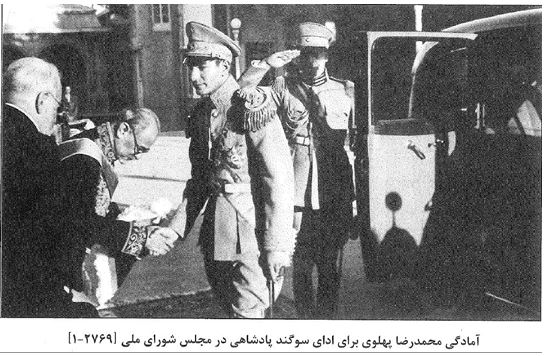
Photograph depicting Mohammad Reza Shah’s accession to power. The person bowing in the photograph is Mohammad Ali Foroughi.
Source: İlim ve Medeniyet
An examination of Iranian history reveals that the country was occupied during both the First and Second World Wars. These experiences contributed to the development of anti-imperialist and anti-colonial sentiments in Iran. In later decades, Israel would increasingly be perceived as an instrument of imperialism, a view that contributed significantly to the deterioration of relations between the two countries.
One of the most important developments during Mohammad Reza Shah’s reign was Iran’s recognition of Israel. Türkiye was the first Muslim-majority country to recognise Israel, while Iran became the second. In the 1950s, Iran had the largest Jewish population in the Middle East outside Israel. Before the formal recognition of Israel, however, Iran initially acted in coordination with the Arab states. Like Türkiye, Iran opposed the United Nations Partition Plan and condemned the establishment of Israel. In 1949, partly because of pressure from Iranian Muslims, Iran voted against Israel’s admission to the United Nations. There was even discussion of cooperating with regional countries to liberate Palestine. It may be argued that opposition to Zionism and Israel began to be directed against Israel as a state from this period onward. At the societal level, anti-Zionist sentiment appears to have continued to grow steadily from this point.
Despite all these developments, Iran recognised Israel on 6 March 1950. According to Farshad Roomi, there were several reasons behind this decision. Iran and Israel’s pre-revolutionary relationship may be described as a “marriage of convenience.” Both countries perceived themselves as facing pressure from the Arab world, and Iran moved closer to Israel partly to counterbalance this pressure. Another factor encouraging rapprochement was the perceived threat from the Soviet Union, which concerned both countries. Finally, Roomi argues that Iran sought to use its relationship with Israel as an instrument for strengthening its relations with the United States.
Eirik Kvindesland, a historian at the University of Oxford, explains the issue as follows:
“Together with India and Yugoslavia, Iran proposed an alternative plan. This federal solution envisaged Palestine remaining a single state with one parliament while being divided into Arab and Jewish cantons. It was a compromise developed by Iran in an attempt both to maintain positive relations with the pro-Zionist West and the Zionist movement and to preserve good relations with its Arab and Muslim neighbours.”
During this period and in the decades that followed, Iran’s policy was based on avoiding the alienation of either the East or the West while maintaining its relations with Israel discreetly.
Even before these developments, several events had facilitated closer relations with Israel. In 1949, an assassination attempt was made against Mohammad Reza Shah. Although the attempt failed, anti-Israel ayatollahs were marginalised and arrested. One of those detained was Ayatollah Abol-Ghasem Kashani, who was known for his opposition to Israel. Drawing upon knowledge acquired from the British and from its encounters with the Palestinians, Israel was developing systems that could be used to monitor and control populations. It had also succeeded in establishing a powerful intelligence organisation. Following the overthrow of Mohammad Mosaddegh, Iran would increasingly feel the need for such capabilities.
Iran also functioned as a transit route to Israel for Jews from Arab countries. Jews arriving from Egypt, Iraq and Syria entered Iran legally or clandestinely before migrating to Israel. Prime Minister Mohammad Sa’ed had authorised this migration. At the time, allegations emerged that Sa’ed had received bribes from Israel. Following Iran’s recognition of Israel, newspapers in Baghdad and Damascus also claimed that Iran had borrowed three million dinars from Israel and had recognised the country in return. Iran denied these allegations. Nevertheless, relations between Israel and the countries of the region were becoming increasingly tense.
During Reza Shah’s reign, Iran’s pre-Islamic history acquired considerable political and cultural importance. Cyrus’s benevolence and tolerance toward the Jews during the Achaemenid period were therefore frequently emphasised. Mohammad Reza Shah referred even more extensively to Iran’s pre-Islamic heritage and, in 1971, celebrated the 2,500th anniversary of the Persian Empire. The Iranian state thus promoted a secular form of nationalism, and Cyrus’s tolerance toward the Jews was invoked in the context of relations with Israel.
Ayatollah Kashani, one of the leading religious scholars of the period, received messages from al-Azhar and from youth organisations in Egypt and Iraq calling for Iran to sever its relations with Israel. Kashani responded positively and even met with Mosaddegh. In parliament, figures such as Hossein Makki argued that bribery and foreign powers were behind Iran’s recognition of Israel.
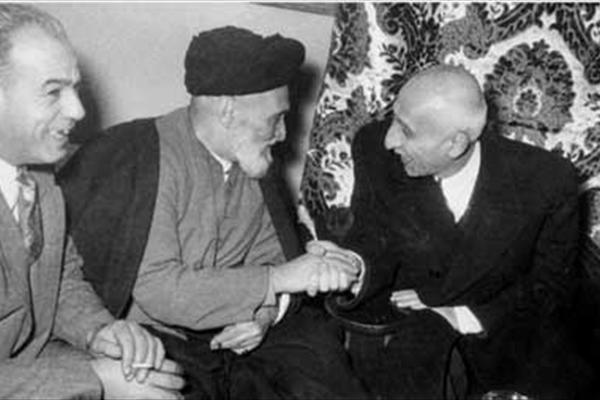
Meeting between Mohammad Mosaddegh and Ayatollah Kashani
Source: Diroozban
In response to pressure from Arab countries and Islamic circles within Iran, Prime Minister Bagher Kazemi announced the closure of Iran’s diplomatic mission in Jerusalem. The Mosaddegh government also declared that it would not accept an Israeli envoy to Iran and that no further steps would be taken toward strengthening the recognition of Israel. One of the principal motivations behind Mosaddegh’s decision was his desire to secure Arab support for the nationalisation of Iran’s oil industry.
Mohammad Mosaddegh was regarded as a threat by the major powers and was overthrown through an operation supported by the United States, Britain and the Shah. After returning to the country and consolidating his authority, Mohammad Reza Shah banned political parties.
The United States also sought to guarantee the security of Iran’s oil resources. The British were among the first powers to recognise the strategic importance that oil would acquire in the future. Following the discovery of oil in Abadan, Britain’s relations with Iran assumed a new dimension. The Second World War, meanwhile, marked the gradual replacement of Britain and France by the United States as the leading Western power. The United States entered Iran during the war and established relations across the region. In the years following Reza Shah’s removal, American aid began flowing into Iran. SAVAK, Iran’s intelligence organisation, was established with Israeli assistance. Generals who had helped overthrow Mosaddegh were promoted to senior positions. Mosaddegh had attempted to nationalise the oil industry, and the share of oil revenues allocated to Iran was subsequently increased substantially by the British, eventually reaching an equal division. Iran’s oil revenues rose from 34 million dollars in 1954–1955 to 437 million dollars in 1962–1963.
Another significant development during Mohammad Reza Shah’s reign was Israel’s implementation of the Periphery Doctrine. Because Israel perceived the Arab states as a major threat, it sought alliances with the non-Arab peoples and countries of the region. Within this framework, it developed relations with Iran, Türkiye and Ethiopia while also establishing close contacts with regional minorities. Maronites, Druze and Kurds were regarded by Israel as natural allies. Iran and Israel consequently developed close relations within the framework of this doctrine.
During the reign of Mohammad Reza Shah, Jews were able to enter state institutions. A substantial proportion of Iran’s Jewish population became doctors, engineers and members of other highly educated professions. Many educated Iranian Jews were reluctant to migrate to Israel because they feared that they would be treated as members of a lower social class. The attitude of Ashkenazi Jews toward Mizrahim, or Eastern Jews, was often discriminatory. Iranian Jews were aware of this situation, and some remained unwilling to migrate to Israel until the final years of the Shah’s rule.
Although the economic position of Iranian Jews had improved during the Pahlavi period, some members of the Jewish community participated in anti-Shah demonstrations from the late 1970s onward. Many Jews felt close to the Tudeh Party and considered joining it appropriate. Ultimately, however, Islamic groups emerged as the dominant force in the struggle against the Shah. Although almost every section of Iranian society participated in the revolution, the Islamic movement eventually took control of the state. During the Iran–Iraq War, members of the Tudeh Party were purged, and the Islamic character of the regime was further consolidated.
Iran–Israel relations deteriorated sharply after Ayatollah Khomeini came to power. Israel was associated in the Iranian public consciousness with the torture experienced under SAVAK. Khomeini had long opposed Israel and criticised its policies. After the revolution, he described the United States as the “Great Satan” and Israel as the “Little Satan.” Although he initially advocated the principle of “Neither East nor West,” Iran gradually developed important relations with Russia and China because it could not confront the West entirely on its own.
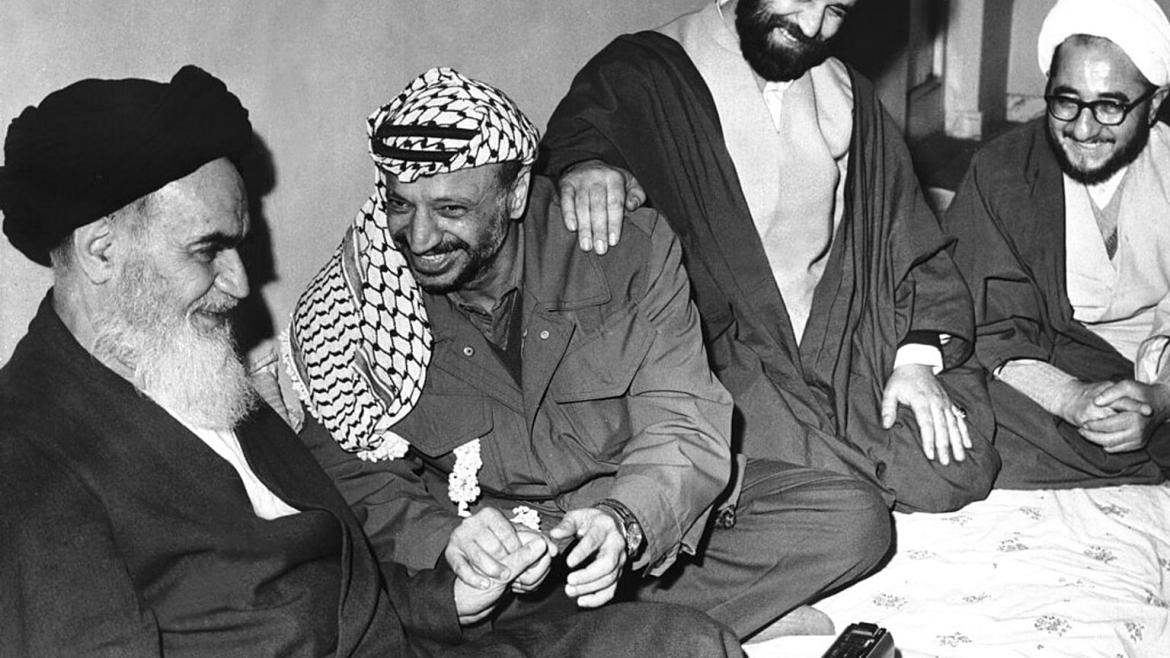
Meeting between Yasser Arafat and Ayatollah Khomeini
Source: Parsi Euronews
One of Khomeini’s first actions was to hand over the former Israeli embassy building to the Palestinians. He also established Quds Day in Iran, declaring the final Friday of Ramadan a day of solidarity with Palestine. Although Iran received assistance from Israel during its war with Iraq, it resumed its struggle against Israel after the war ended. Iran played an important role in the establishment of Hezbollah and Palestinian Islamic Jihad and continued to provide Hamas with logistical support, equipment and intelligence. Iraq was the first country in the region to launch missiles at Israel, and Iran subsequently became the second.
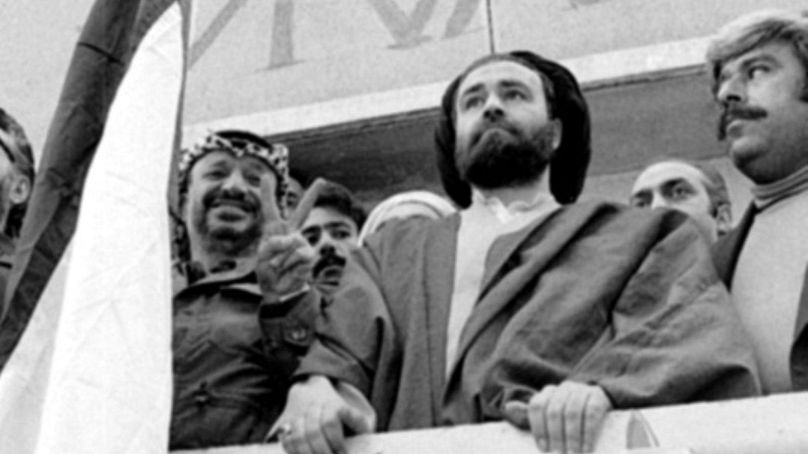
The handover of the former Israeli embassy building to Yasser Arafat, the leader of the Palestine Liberation Organization
Source: Parsi Euronews
As relations deteriorated under Khomeini, Iran developed what became known as the Axis of Resistance. Syria, Yemen and Lebanon were incorporated into this network. Relations became even more confrontational during Mahmoud Ahmadinejad’s presidency. Ahmadinejad denied the Holocaust and repeatedly made statements interpreted as calling for Israel to be wiped off the map. Such rhetoric considerably strengthened Israel’s position in the West. Through its influence in the media, finance and lobbying, Israel mobilised the United States and other Western countries against Iran and pursued policies aimed at economically weakening the country. Cyberattacks were also carried out during this period. Another central Israeli objective was to prevent Iran from acquiring a nuclear weapons capability. Israel had previously conducted military strikes against nuclear facilities in both Iraq and Syria within the framework of the same strategic concern.
More recently, Israel has developed the so-called Octopus Doctrine in its confrontation with Iran. According to this doctrine, Iran constitutes the head of the octopus, while Syria, Yemen and Lebanon represent its tentacles. In recent years, Israel has conducted major assassinations and military operations intended to sever these tentacles and weaken Iran’s regional network. Mohsen Fakhrizadeh, Qasem Soleimani and Hassan Nasrallah were killed. Within this strategic framework, Israel has continued to take decisive steps against Iran and, together with Western countries, has sought the reimposition of sanctions through the snapback mechanism. Iran has lived under sanctions for decades and may eventually face severe economic collapse. Whether this will occur remains to be seen.
Conclusion
Israel and Iran have been engaged in conflict for more than forty years, and numerous individuals have lost their lives during this struggle. For much of this period, both states avoided direct warfare and instead continued their confrontation through proxy forces. While Israel has enjoyed the support of the United States and other Western powers, Iran has occupied a comparatively disadvantaged position. During these decades, the United States and the West retained substantial global power, whereas Russia—one of Iran’s principal supporters—lost the Cold War and much of its former influence. China, meanwhile, generally refrains from intervening directly in the internal affairs of other countries and approaches international relations primarily through an economic and commercial perspective.
Iran’s anti-Israel policies and its efforts to expand Shiʿi influence throughout the region have caused anxiety among Arab states. In particular, the constitutional commitment to the “export of the revolution” and the establishment of the Axis of Resistance pushed several regional countries toward an increasingly anti-Iranian position. Israel has benefited more than any other actor from this development, and the Abraham Accords emerged within this political environment.
Iran has also contributed indirectly to the strengthening of hard-line political forces in Israel. Before coming to power, Benjamin Netanyahu worked extensively on terrorism and security issues. As early as 1992, he spoke about the threat posed by Iran’s nuclear programme, and he reiterated this argument in his 1995 book Fighting Terrorism. It is possible that the Israeli state establishment incorporated Netanyahu into the political system partly because of this strategic vision. Iran therefore appears likely to remain Israel’s foremost security priority.
References
Önal, K. (2025, August 4). Babil’den günümüze Pers-Yahudi ilişkileri ve İran Yahudilerinin bugünkü durumu. Türkiye Araştırmaları Vakfı.
https://www.turkiyearastirmalari.org/2025/08/04/yayinlar/analiz/babilden-gunumuze-pers-yahudi-iliskileri-ve-iran-yahudilerinin-bugunku-durumu/
Dur, O. (2024, September 5). İran’ın en çalkantılı döneminde Muhammed Ali Furuği. İlim ve Medeniyet.
https://www.ilimvemedeniyet.com/iranin-en-calkantili-doneminde-muhammed-ali-furugi
Roomi, F. (2023). The Iran-Israel conflict: An ultra-ideological explanation. Middle East Policy, 30(2), 1–16.
Motamedi, M. (2023, November 6). Iran and Israel: From allies to archenemies—How did they get here? Al Jazeera.
https://www.aljazeera.com/news/2023/11/6/iran-and-israel-from-allies-to-archenemies-how-did-they-get-here
Fateh, F. (2025, July 10). ایران و اسرائیل در دوره مصدق: از نبرد دیپلماتیک تا قطع روابط. Diroozban.
https://diroozban.ir/ایران-و-اسرائیل-در-دوره-مصدق-از-نبرد-دی/
Abrahamian, E. (1982). Iran between two revolutions. Princeton University Press.
Bayraklı, E. (2023, November 28). İsrail’in dış politika doktrini. Haber7.
https://www.haber7.com/yazarlar/prof-dr-enes-bayrakli/3528291-israilin-dis-politika-doktrini
Ozan Dur


Yorumlar
Yorum Yaz