
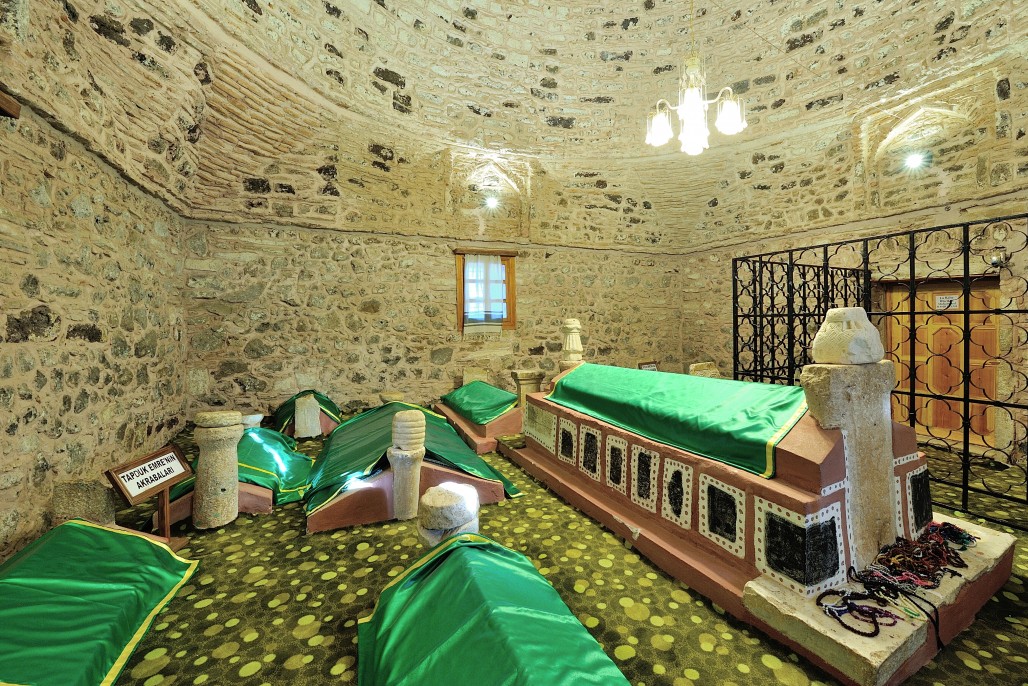

Yunus Emre did not seek fame, wealth, or immortality; he devoted his life to seeking Allah, serving others, and expressing divine love. Yet his sincerity gave his words a blessing that has carried them across seven centuries. His story reminds us that true success is not measured by recognition or material gain, but by serving a purpose greater than ourselves and leaving behind goodness that continues after we are gone.
Yunus Emre Did Not Seek Immortality, Yet He Became Immortal
When I look at the life of Yunus Emre, one of the things that moves me most is this: He did not ask much from this world. Perhaps his greatest desire was Allah. Yet while seeking Allah, he was granted many things he had never sought.
According to a well-known story, during a time of famine in Anatolia, Yunus Emre went to the lodge of Hacı Bektaş Veli to ask for wheat so that he could provide for his family. Hacı Bektaş Veli offered him “himmet”—spiritual guidance and blessing—instead of wheat. At first, Yunus chose the wheat. However, on his way home, he realised the importance of the choice he had made. He regretted his decision and returned to ask for himmet. But he was told that his spiritual journey would now continue through another door. Yunus’s destiny lay at the lodge of Tapduk Emre.
Although the historical details of this story are legendary, its message is deeply powerful: Sometimes, while looking for wheat, a person may miss spiritual blessing. While asking for something that will feed the body, one may fail to see what will nourish the soul.
Yunus Emre lived between the second half of the thirteenth century and the first quarter of the fourteenth century. Although the exact dates of his birth and death remain uncertain, it is generally accepted that he lived from around 1240 to 1320 or 1321. In other words, nearly seven hundred years have passed since Yunus left this world.
Seven centuries...
A human life lasts seventy or eighty years. Yet Yunus has been speaking to us for almost seven hundred years.
What makes this even more remarkable is that we do not see Yunus Emre setting goals such as:
“I will become a great poet.”
“My name will still be remembered seven centuries from now.”
“I will become one of the greatest figures in the Turkish language.”
“My poems will be set to music.”
“People will read my words hundreds of years after my death.”
He was searching for Allah.
Yet while searching for Allah, he found himself.
While searching for Allah, he became one of the greatest poets of the Turkish language.
While searching for Allah, his poems began to be recited in Sufi lodges, mosques, gatherings and homes.
While searching for Allah, his words were set to music.
While searching for Allah, he became part of Anatolia’s collective memory.
While searching for Allah, he became immortal.
This is the point that makes me think most deeply.
Yunus did not pursue immortality, yet he became immortal.
When we look at Turkish music today, we see Yunus. When we look at Sufi culture, we see Yunus. When we study the history of Turkish poetry, we see Yunus. When we examine the development of Anatolian Turkish, we once again encounter Yunus. Children are named after him. His name lives on in cities, schools, cultural centres and universities. Seven centuries later, his poems are still spoken and sung.
Perhaps this is one of the secrets behind Yunus’s greatness.
Yunus did not use truth in order to create art; art emerged while he was expressing the truth.
He did not write poetry to become famous, yet his poetry remained famous for centuries.
He did not live to make people love him, yet people still love him seven centuries later.
He did not seek immortality, yet he was never forgotten.
He did not chase the world; the world followed him.
When we consider all of this, one thought naturally comes to mind: Perhaps this is exactly what divine blessing means.
Our calculations as human beings are limited. We think about the next month. We plan for the next year. We set five-year goals. If we are especially far-sighted, we may think twenty years ahead.
But Allah’s decree is not limited by our calculations.
Allah may place such a blessing in a person’s sincerity that the person’s life comes to an end, but their work does not. Their body enters the earth, but their words continue to travel. Their name does not remain only on a gravestone; it is passed down from one generation to another.
Yunus Emre is one of the most beautiful examples of this.
I believe this is also how we should understand the advice, “Do not chase money.” But if we do not chase money, how are we supposed to earn it?
By improving ourselves.
And why should we improve ourselves?
Only to earn more?
No.
To bring meaning into our lives.
“I will learn and teach.”
“I will be useful to other people.”
“I will support my family.”
“I will contribute something to the city in which I live.”
“I will serve my country.”
“I will benefit my ummah.”
“I will leave behind a work through which I may earn the pleasure of Allah.”
As a person’s purpose grows, the meaning of their life also grows. Yet the greatness of a goal should not be measured only in numbers. Earning a great deal of money is not necessarily a great goal. Becoming widely known is not, by itself, a great goal either. A truly great goal is to serve a meaning greater than oneself.
Our highest ideal is to earn the pleasure of Allah. After that comes being useful to our families, our society, our country, our ummah and all of humanity.
When a person lives only for themselves, their life may remain limited to the length of their own lifetime. But when they live for a meaning greater than themselves, their work may go beyond the limits of their lifespan.
This is what the story of Yunus Emre tells me.
Today, people make enormous efforts to become visible. We want to gain more followers, become better known, earn more money and receive more praise. Yet the world of Yunus shows us a completely different path:
Do not try to become visible; try to become valuable.
Do not try to be remembered; do things that are worth remembering.
Do not make it your goal to be loved by people; try to become a person loved by Allah.
Sometimes, Allah will bring the rest in ways you could never have planned.
When we consider Yunus Emre’s deep concern for what was lawful and unlawful, his many years of service at the lodge of Tapduk Emre, his efforts to discipline his ego and his dedication of his life to Allah, it seems incomplete to explain his centuries-long influence through his literary talent alone.
There is a divine blessing here.
If, seven centuries later, we can still read a person’s poetry and feel tears in our eyes; if we still set his words to music, name our children after him, write books about him, and find that even a few of his words can change someone’s understanding of life, then we are standing before a great legacy that deserves deep reflection.
As Yunus himself so beautifully said:
“I did not come here to make claims;
My work is for love...”
Perhaps this is what everything is about.
The cause of the man who did not come to make a cause of himself has continued for seven centuries.
The fame of the man who did not seek fame has lasted for more than seven centuries.
The man who did not seek immortality became immortal.
The man who did not desire the world was engraved upon the memory of the world.
Because Yunus was searching for something else.
He was searching for Allah.
We sometimes make complicated plans to secure the next few years of our lives. Yet Yunus Emre reminds us of another possibility: If a person relies upon Allah, works sincerely, benefits others and strives to leave behind something good, Allah may grant centuries of blessing to only a few years of effort.
We calculate tomorrow.
Allah knows the centuries.
We ask for one door to open.
Allah knows the doors we cannot see.
We ask for wheat.
Sometimes, Allah shows us the door of spiritual blessing.
Perhaps one of the most beautiful lessons we should learn from Yunus Emre today is this:
How long we will live in this world is not in our hands. But what we choose to live for is largely up to us.
Let us live for such a meaningful purpose that our goodness does not end when our lives do.
Let us speak such words that they continue speaking after we fall silent.
Let us leave behind such a work that it continues to touch someone’s life after we are gone.
Most importantly, let us do all of this not to become immortal, but to earn the pleasure of Allah.
Because the most powerful lesson I draw from the life of Yunus Emre is this:
Once Yunus found Allah, he searched for nothing else.
Yet Allah granted him many things he had never sought.
Perhaps this is what true success really means.
Ozan Dur




Yorumlar
Yorum Yaz