
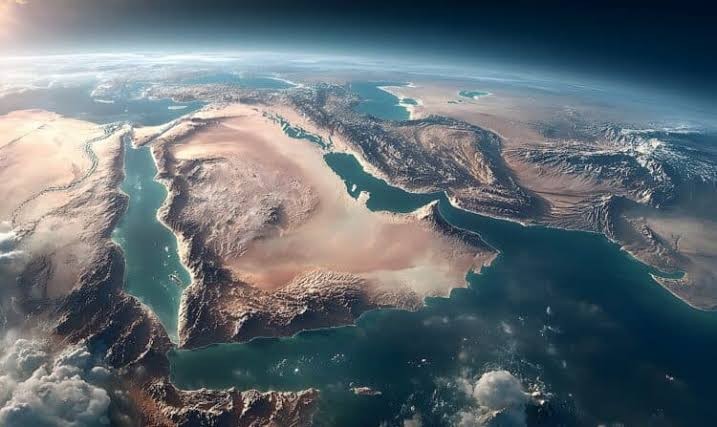

This article argues that studying the Middle East requires a multidisciplinary approach combining history, international relations, geopolitics, religion, languages, geography, and cultural traditions. It emphasizes the importance of learning regional languages, following current developments, conducting field research, and understanding the religious and civilizational foundations of countries such as Türkiye, Iran, Israel, Egypt, and Saudi Arabia.
How Should the Middle East Be Studied?
As a researcher who has been studying the Middle East for more than a decade, particularly by developing expertise in its history and languages, I would like to share my humble thoughts on the subject. This article was written in response to a question I recently received.
Middle Eastern studies are generally regarded as a field within the discipline of International Relations. However, approaching the region exclusively from an International Relations perspective is insufficient. The Middle East must also be examined through diplomacy, foreign policy, security, strategy, history, geopolitics, geography, regional languages, and numerous other disciplines. While researchers should develop deep expertise in one particular field, it is equally important for them to acquire at least a basic understanding of the others. In other words, one should become competent in one’s own area of specialization while also mastering the fundamental concepts of related disciplines. Researchers should possess at least a general awareness of such subjects as the security dilemma, the foreign-policy orientations and geopolitical objectives of states, their economic resources, and their demographic structures. Yemen, for instance, can pose a strategic challenge to Israel because of its geographical position, even though approximately 80 percent of its population lives below the poverty line.
The following observation by Ibn Khaldun is particularly noteworthy:
“The differences that attract attention in the customs and ideas of various peoples depend on the ways in which each of them earns a living.” [1]
This observation demonstrates that employment opportunities cannot be evaluated independently of geography. Climate and geography therefore occupy a central place in the accurate analysis of any country.
The Middle East is a dynamic and rapidly changing region that must be monitored continuously. Depending on one’s field of interest, it is therefore important to review the daily press and regularly follow the publications of think tanks.
There are various introductory sources for those who wish to approach the region through the discipline of International Relations. From the perspective of history, general works on Turkish and Ottoman history—as well as studies dealing specifically with Ottoman relations with the Middle East and the Arab world—are also important. While International Relations tends to concentrate on the modern period, history enables researchers to examine much earlier periods as well. Like history, diplomacy is an ancient field of knowledge. In earlier periods, when stable trade between hostile states was often impossible, access to natural resources could frequently be secured only through conquest or occupation. War and diplomacy have consequently played critical roles throughout history.
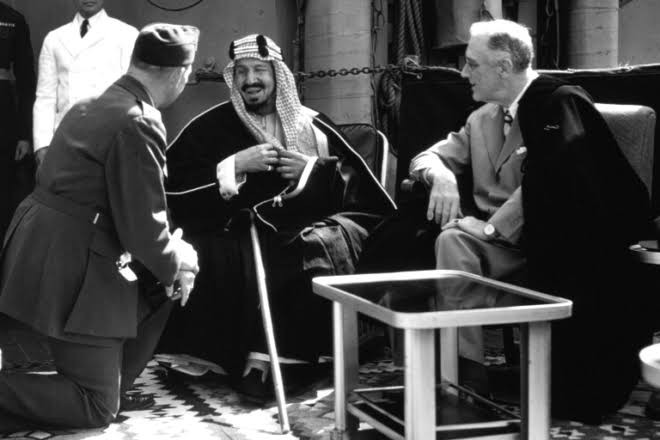
The Turks, Arabs, Persians, and Jews are among the principal peoples and actors of the Middle East. Egypt, Türkiye, Israel, and Iran are the region’s major agenda-setting powers. In recent years, Saudi Arabia has also joined this group. Although Saudi Arabia does not possess a particularly powerful military, its economic strength has enabled it to establish influence in various fields. It also competes with Egypt for leadership of the Arab world. Egypt’s cultural influence is more extensive than its current political or military power. Egyptian Arabic is understood throughout much of the Arab world, and Egypt is regarded as the inheritor of an ancient civilization. Oman, another Gulf country with deep historical roots, is also worthy of attention in this context.
During the Ottoman period, Arab lands were united under a single political structure. Following the dissolution of the Ottoman Empire, however, they were divided into twenty-two separate states. The borders of many of these states were drawn with a ruler, while the concentration of economic resources in the hands of a small minority deepened structural inequalities. This situation has also hindered the emergence of a powerful Muslim country. Egypt, for example, has a population exceeding one hundred million but continues to struggle with serious economic problems, whereas some Gulf states with populations of only a few million enjoy extraordinary wealth.
Algeria is one of the Arab countries with the most favourable attitudes towards the Ottoman Empire. In many other Arab countries, by contrast, a negative and prejudiced discourse claiming that Ottoman rule caused the Arab world to fall behind remains widespread. Israel, meanwhile, envisions a secular Türkiye because governments with Islamic references are unlikely to establish stable and amicable relations with Israel. Since secularism in the regional context is also associated with a pro-Western orientation, Israel supports the continuation of the Western-aligned axis in the Middle East. Iran, despite its revolutionary slogan of “Neither East nor West,” has today found itself compelled to develop strategic cooperation with China and Russia.
Each of these countries possesses its own distinctive geopolitical dynamics. For that reason, a field visit and observation period of at least two weeks can be immensely beneficial. In Iran, Isfahan, Shiraz, Tehran, and Tabriz should certainly be visited. Historical sites such as Persepolis and Qasr-e Shirin should be explored, and the tombs of Saadi and Hafez should also be visited. One should seek to understand the Iranian culture of taarof and acquire a solid knowledge of Iranian history before travelling. Expressions such as âre, baleh, and dastetun dard nakoneh should be heard in their cultural setting and properly understood.
Visitors should taste local Iranian cuisine and carefully observe the country’s geography. They should learn the difference between Iran’s monetary units—the rial and the toman—and acquire at least a basic knowledge of Persian numbers. Certain aspects of social life, such as insufficient traffic lights in some places, the high value attached to books and reading, and the tradition of fal or fortune-telling, are particularly noteworthy. Iranian society has attained a high cultural and intellectual level and places considerable value on education and knowledge. One may also encounter mosques decorated with glasswork and many other distinctive architectural structures. Anyone aspiring to become a specialist on the Middle East should therefore visit Iran and learn Persian to at least the B1 level.
Jerusalem lies at the heart of virtually every major issue in the Middle East. It is extremely difficult to understand the Israeli–Palestinian question without walking among Muslims, Christians, and Jews in Jerusalem’s Old City. The popular expression, “Tel Aviv is for entertainment, Haifa is for a good life, and Jerusalem is for worship,” can only be fully understood through direct observation. Palestine is smaller than a Turkish province, yet its exceptional importance cannot be understood without knowledge of its places of worship and religious dimensions. It is impossible to comprehend the Middle East—or to develop genuine expertise in the region—without appreciating the significance of such sacred places as the Mosque of Umar, the Church of the Holy Sepulchre, Al-Aqsa Mosque, and the Western Wall.
I believe that four fundamental areas are frequently overlooked: religion, language, civilization, and customs and traditions.
Religious, national, and ideological dimensions lie behind Israel’s massacres in Gaza. The religious dimension must therefore be taken into consideration. Jews regard themselves as a chosen people. The Qur’an also refers to this historical belief: “I once favoured you above all other peoples” (faddaltukum ‘ala al-‘alamin). Jewish thought has transformed this historical narrative into a modern ideology. At the same time, the Qur’an also states that they were brought low and humiliated. The religious dimension should consequently not be ignored.
There are noteworthy similarities between Zoroastrianism, the ancient religion of Iran, and Hinduism in India. From a linguistic perspective, the relationship between Persian, Hindi, and Urdu also deserves close attention. It is impossible to conduct a sound analysis of Indo-Iranian relations without knowing that Persian was spoken and used as a major cultural and administrative language in India for centuries. India has recently gained renewed attention because of the India–Middle East–Europe Economic Corridor, or IMEC, and should also be evaluated within this broader context.
Similarly, researchers should understand the relationship between God and Hebrew names ending in El, a shortened form associated with Elohim. It is important to be able to infer, at least intuitively, the meanings of names such as Samuel and Raphael. Recognizing the relationship between the Arabic word Allah and the Semitic root El can add another dimension to the analysis of interactions among civilizations. Such linguistic, religious, and civilizational connections are indispensable to genuine expertise. Unfortunately, however, they are frequently neglected. Regional issues are generally examined only through political history and contemporary developments, while their other dimensions are overlooked. This constitutes an incomplete approach.
At Jewish weddings, for example, a glass is broken in remembrance of the destruction of the Temple, accompanied by the words: “If I forget you, O Jerusalem, let my right hand forget its skill.” Such traditions demonstrate the cultural continuity of religious and historical events. Likewise, the identity of a religious Jew cannot be understood without appreciating the meaning of the prayer, “Next year in Jerusalem.”
Expertise in the Middle East must therefore be multi-layered rather than merely political, and it requires a lifelong process of learning.
In this context, I remain deeply grateful to all the teachers from whom I have had the privilege of learning.
I sincerely hope that this article will prove useful.

Yorumlar
Yorum Yaz