
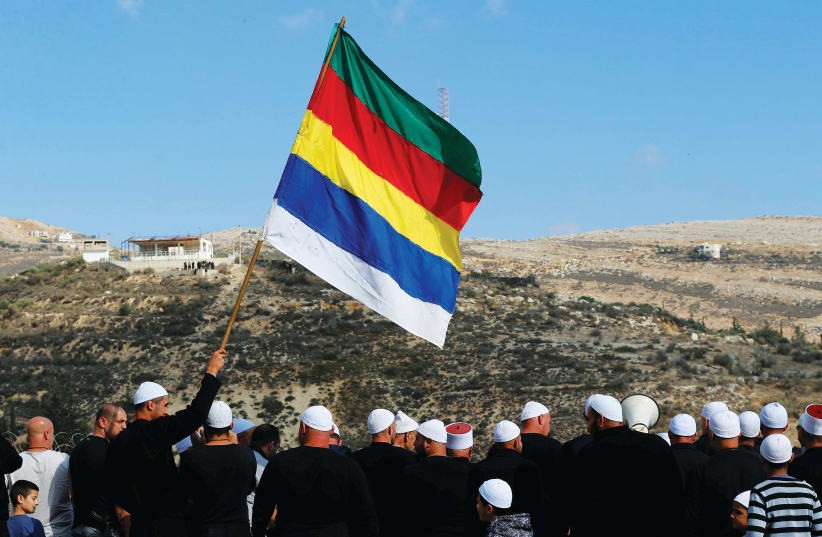

This article examines the historical, religious, and political position of the Druze in Syria, focusing on their demands for security, minority rights, and possible autonomy. It also analyses internal divisions among Druze leaders, Israel’s strategic support for minority groups, Turkey’s commitment to Syria’s territorial integrity, and the wider regional consequences of the conflict in Suwayda.
From Blood Brotherhood to Strategic Alliance? What Do the Druze in Syria Want?
The Druze live in several countries across the Middle East, particularly in Syria, Palestine, and Lebanon. Syria has the largest Druze population. They call themselves al-Muwahhidun (“the monotheists”). Some members of the community dislike the name “Druze”; therefore, they prefer the term Muwahhid and identify themselves accordingly. Originating in Egypt and subsequently spreading throughout Bilad al-Sham—a geographical region encompassing four modern countries—the Druze faith emerged from the Ismaili branch of Shi‘ism and adopted an esoteric interpretation of religion. Shortly after the first quarter of the eleventh century, it separated from Ismailism, and Hamza ibn Ali systematised its theological principles.
From the tenth century onwards, Ismailism spread across the Middle East and North Africa through missionaries known as da‘is. This period coincided with the formative era of the Fatimid state. The Fatimids adhered to the Ismaili branch of Shi‘ism and, during the reign of the fourth caliph, al-Mu‘izz li-Din Allah, succeeded in conquering Egypt, which had long been one of their principal objectives. During the reign of the sixth caliph, al-Hakim bi-Amr Allah, al-Hakim claimed divinity and established the Druze faith. He appointed Hamza ibn Ali as its leader, after which the faith gradually developed into a more established religious tradition.
The Druze emergence onto the political stage took place during a period when France was influential in the Middle East. In 1921, following the First World War, the Druze established a state under the leadership of Salim al-Atrash during the French Mandate. This political entity survived until the Second World War. After Syria gained its independence, the Druze became part of the Syrian state. Although they achieved limited political gains during the Ba‘athist era, they withdrew from active politics after 1966 and became increasingly inward-looking. During the Syrian popular uprising, except for some small-scale demonstrations, the Druze generally preferred to remain silent and avoided openly opposing the regime. Although tensions occasionally arose between the Druze and the Assad regime because of the threat posed by ISIS, these disagreements did not develop into a prolonged confrontation.
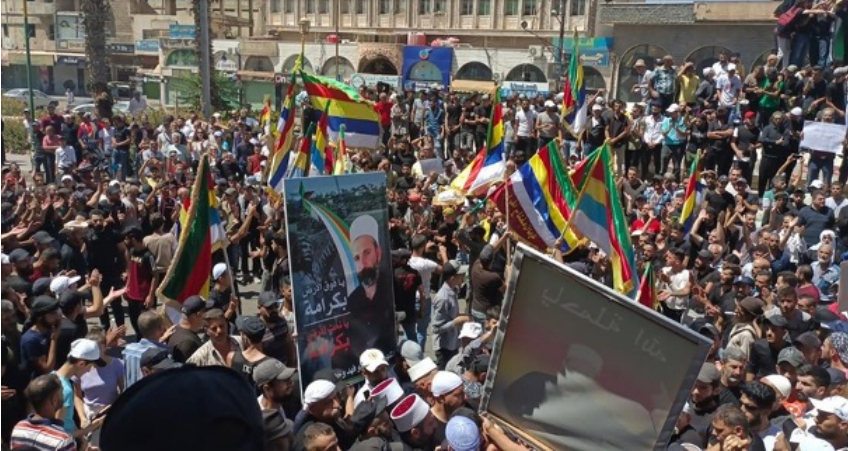
The image shows anti-Assad demonstrations.
Seeking to preserve their religious beliefs, the Druze favour the establishment of a secular administration in Syria. Considering the oppression carried out by ISIS, some Druze may fear that the al-Sharaa administration could impose similar pressure on them. From the perspective of Islamic jurisprudence, the Druze are regarded as a minority and are not generally classified among the People of the Book. Consequently, while some Druze wish to give the new administration an opportunity, others are developing relations with Israel and taking significant steps towards autonomy because of such concerns. If the rights of minorities are constitutionally guaranteed, the integration of the Druze into the new Syria may become easier.
Important Characteristics of the Druze
It is frequently stated that the Druze practise taqiyya, or the concealment of religious belief. Druze identity has gradually acquired an ethnic character, and outsiders are not permitted to convert to the faith. Druze generally marry only within their own community and live within a culture of considerable secrecy. Although they do not observe formal religious practices such as ritual prayer and fasting, they believe in spiritual development and perfection. Since they do not accept the principal articles of the Islamic faith, they are generally not regarded as an Islamic sect. Nevertheless, esoteric movements have always existed within Islam. Such movements claim that their traditions date back to the Prophet Muhammad and perhaps even to Adam, the first human being.
Shortly after Islam began to take shape as an organised religion, and as different sects emerged, Muslim scholars attempted to clarify its fundamental principles. In this context, the Five Pillars of Islam were established. Since the Druze do not practise these five pillars, they should, from the perspective of orthodox Islam, be regarded as adherents of a distinct faith. Within modern political systems, they are also recognised as a minority.
Because secrecy lies at the heart of the faith and its esoteric interpretation constitutes its essence, sufficient information about the Druze could not be obtained for many centuries. Ibrahim Pasha, the son of Muhammad Ali Pasha, defeated the Druze in Wadi al-Taym and confiscated the books found in their places of worship. From that point onwards, scholars began to acquire substantial information about Druze beliefs. Since inspiration occupies a particularly important place within esoteric traditions, and Druze religious life resembles a world of secrets, fully understanding it does not appear to be an easy task.
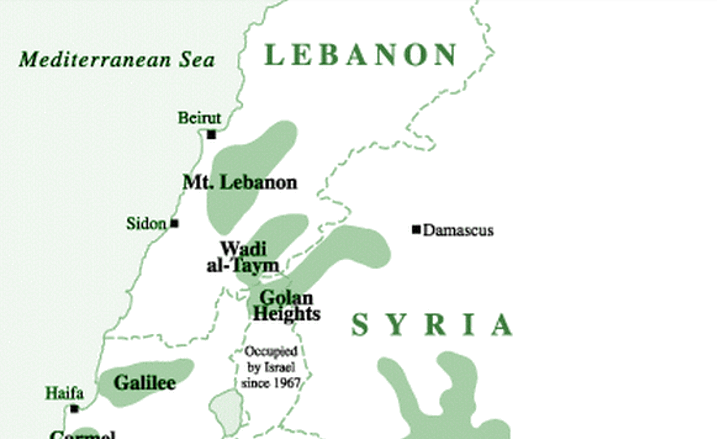
The Wadi al-Taym region can be clearly seen on the map.
Some Druze in Israel live in the Golan Heights, while a significant Druze community in Syria resides in the Suwayda region. The Druze living in Israel and Syria have kinship ties. While Israeli Druze serve in the Israel Defense Forces (IDF), the Druze in Syria seek to establish their own armed militias. When the clashes began, Druze citizens of Israel attempted to cross the border and placed pressure on the Israeli government. Israel’s use of its air force to bomb Syria further strengthened ideas of a “shared destiny” and “national unity” between the Druze and Israelis.
However, it should be noted that the Druze in Syria are divided among three different religious leadership groups, each of which holds different views. While some distrust the newly established al-Sharaa administration, others wish to give it an opportunity.
Sheikh Yusuf, one of the Druze leaders, seeks reconciliation with al-Sharaa and believes that he should be given a chance. Sheikh Hammoud has refrained from taking a clear position because of health problems. In contrast to them, Sheikh Hikmat demands autonomy and opposes disarmament. From Israel’s perspective, Sheikh Hikmat is a potential ally. He may also constitute one of the greatest threats to the stability of the Syrian administration.
Turkey can intervene more easily against organisations such as the PKK and PYD in northern Syria, where these groups cannot directly benefit from Israeli support. The situation of the Druze in the south, however, is different. As the PKK and PYD move towards disarmament following a decline in American support, Sheikh Hikmat, the leader of the Druze in Suwayda, remains opposed to laying down arms.
In connection with the preceding argument, Israel has displayed sympathy towards minorities since its establishment. Baha’is, Kurds, Maronites, Druze, and other minority communities have been among the groups in which Israel has shown interest. These minorities are generally unable to appeal to society as a whole, and a considerable proportion of them seek to develop positive relations with the West. The Maronites regard themselves as the descendants of the Phoenician civilisation. The Baha’i faith, meanwhile, spread rapidly from East to West and received considerable praise in the United States.
The reason for mentioning this is that maintaining good relations with Israel often means maintaining good relations with the United States. The reverse is also true. Moreover, relations between the Baha’is and Israel are quite strong. Druze citizens of Israel have served in the military since 1957 and can rise to senior positions in the armed forces. They can also serve in strategic and critically important posts. There is, therefore, what is frequently described as a “blood brotherhood” between Israel and the Druze.
In Israel’s view, al-Sharaa is more dangerous than Assad. Israel also wants Syria to join the Abraham Accords and believes that the crisis in Suwayda could be resolved in this way. Thomas Barrack instructed al-Sharaa to moderate his “jihadist rhetoric,” a position that corresponds with Israel’s discourse. Israel frequently accuses groups that oppose it of being radical. When a left-wing group opposes Israel, it is described as the “radical left”; when an Islamic group opposes it, it is labelled “radical Islamist.”
On 13 July 2025, clashes broke out between the Druze and Bedouins. Among the causes of such confrontations are incidents in which Druze and Bedouins arbitrarily detain—and sometimes kill—members of the opposing community while they are travelling. A few isolated incidents can rapidly escalate into open conflict. In this case, the immediate trigger was the kidnapping of a young Druze man while he was travelling. However, the foundations of the conflict between the two communities extend back several decades.
For approximately twenty years, the Druze and Bedouins have been disputing control over drug-trafficking routes. Some inhabitants of the region turned to the production and sale of drugs as a means of escaping poverty. Competition over natural resources and arms smuggling also constitutes one of the principal causes of conflict between the two groups. These issues have periodically brought the Druze and Bedouins into confrontation.
In addition to these developments, Turkey sought to provide Syria with full support. Turkey does not want the region to remain fragmented; instead, it favours regional stability. Israel, by contrast, envisions a Middle East divided into fragmented and relatively small states. These opposing perspectives occasionally bring Turkey and Israel into confrontation. After the clashes began, Turkish Foreign Minister Hakan Fidan made the following statement:
“In pursuing this policy, it prioritises its own national security interests without respecting any rules or principles, or the rights, sovereignty, and territorial integrity of other countries.”
Fidan also stated:
“The countries of the region are closely monitoring these destabilising activities. We are engaged in extensive coordination and joint efforts concerning this matter.”
Turkey also evaluated regional developments from a security perspective and adopted a firm tone after noting signs of mobilisation within the YPG. Fidan stated:
“We are also receiving reports that the YPG is mobilising. Our message to them is that they should not take advantage of the present disorder and engage in undesirable actions.”
As these statements demonstrate, a development in Syria could produce a domino effect and create chaos throughout the region. Since Turkey seeks regional stability, and because security concerns are crucial for states, Ankara is closely monitoring the area.
The military strength of the Druze in Suwayda is not comparable to the capabilities possessed by the YPG. However, the involvement of other countries changes the balance. Under ordinary circumstances, a terrorist organisation cannot seriously challenge a state on its own. Yet if another state provides that organisation with financial support and weapons, it can become a major threat. Israel might similarly provide the Druze in Suwayda with financial and military assistance in order to create instability in the region. This possibility should therefore be addressed with great sensitivity.
Arab countries and Russia condemned Israel over these latest developments. Convening the United Nations Security Council has been discussed; however, because of Israeli exceptionalism, the United States protects Israel under almost all circumstances and prevents the adoption of effective resolutions. During this conflict, Syria and Israel also established a direct channel of communication for the first time, a development that Israel welcomed. Events in this region are also relevant to Jordan, which is following them with concern. Fidan, meanwhile, made statements intended to reassure Jordan.
The fact that these clashes coincided with the withdrawal of Haredi Jewish parties from the Israeli government led many researchers to reflect on the timing. Netanyahu had previously prolonged the war in Gaza to protect his political career. He may similarly be seeking a display of heroism in the Syrian question. Although Netanyahu is often described as a “second Ben-Gurion,” he does not enjoy Ben-Gurion’s virtually untouchable political status. He remains a political figure whose entire career could end with imprisonment. Opposition leader Yair Lapid’s demand for early elections, which increases the pressure on Netanyahu, may also help explain this move.
As conditions for peace, Israel further demands that al-Sharaa relinquish Syria’s claim to the Golan Heights, accept the establishment of an autonomous Druze administration, and ensure the absence of proxy groups along the border. The Golan Heights occupy a highly significant place in Syria’s national memory. Introducing them into negotiations in this manner does not conform to moral or ethical principles. Israel also seeks control over the Golan Heights because of their strategic location. Holding the higher ground makes it easier to observe the areas below and to strike targets more effectively in the event of a perceived “threat.”
Al-Sharaa occupies a deeply unfavourable position within Israel’s strategic thinking. Israeli discourse frequently emphasises his supposedly “dirty” past while simultaneously attempting to prepare the Israeli public for peace. In this context, the slogan that “peace is made with one’s enemies” is often repeated.
Israel also demands the removal of heavy weapons from southern Syria. This could be interpreted as direct interference in the domestic affairs and sovereignty of another state. By bombing Damascus, Israel demonstrated the extent of its determination. It is evident that Israel approaches the issue exclusively from a security perspective and pays little attention to humanitarian considerations. Before the eyes of the world, cameras recorded the bombing of the presidential palace in Damascus—a building that may be regarded as almost sacred in the political symbolism of states.
Having already endured extensive war and destruction, Syrians cannot counterbalance Israel within the existing balance of power. Under these circumstances, seeking assistance from another powerful state would be a reasonable course of action. In this context, Syria could consider resisting Israeli expansionism collectively with Turkey and other Arab countries. I hope that Syria will remain united and territorially whole, and that it will enjoy stability for generations to come.
Ozan Dur


Yorumlar
Yorum Yaz