


Eli Amir’s The Scapegoat (תרנגול כפרות) is an autobiographical novel that portrays the experiences of Iraqi Jews who migrated to Israel in the early 1950s. Through the story of Nuri, Amir explores migration, cultural conflict, the encounter between Eastern and Western Jewish identities, secularization, and life in the Ma’abara and Kibbutz. This review examines the novel’s strengths while also questioning its limited treatment of the Arab population, land dispossession, the exclusion of Arab labor, and the colonial dimensions of the Kibbutz system. The article also discusses the tension between Ashkenazi and Mizrahi Jews and the attempt to construct a new Israeli national identity.
Book Review: The Scapegoat by Eli Amir – A Critical Look at Kibbutz, Zionism and Israeli Society
The Scapegoat (תרנגול כפרות) – Eli Amir
Eli Amir, The Scapegoat (תרנגול כפרות), 2010, Istanbul, 1st Turkish Edition, Apollon Publishing, 256 pages.
Eli Amir (b. 1937) is the author of the novel The Scapegoat. The book was translated into Turkish from English by Kahraman Türel in 2010. Its original Hebrew title is תרנגול כפרות (Tarnegol Kapparot), and the novel became one of the best-selling books after its publication in Hebrew.
Amir is also known internationally for works such as Yasmin and Dove Flyer. Some of his novels have also been adapted for the screen. His own life story and the experiences of Jews constitute the central themes of much of his literary work.
The Scapegoat focuses on Eli Amir's arrival in Palestine in 1950 and the cultural conflicts he experienced there. The autobiographical novel received awards in Israel and Mexico. It explores the difficulties faced by Jews who arrived in Palestine from Iraq, Poland, Morocco, and Romania as they attempted to adapt to a new society.
Amir succeeds brilliantly in portraying many of the difficulties he personally experienced. However, when the novel is examined from a broader historical perspective, an important limitation becomes visible: it says very little about the colonial dimensions associated with the Kibbutz system, the dispossession of Palestinian land, the exclusion of Arab workers, and the helplessness of Palestinians who lost their homes and livelihoods.
Iraqi Jews, Mizrahi Jews and the Kibbutz
Relations between the Sabras and Eastern Jewish communities remain problematic throughout the novel. [1] The characters frequently express a deep longing for the East, particularly Baghdad.
This is understandable given Amir's own background. He was born in Baghdad and was forced to migrate from Iraq to Palestine in 1950.
The contrast between their former lives and their new reality is striking. In Baghdad, many of these Jews had relatively comfortable lives and held respectable professions. After arriving in Israel, however, they found themselves living in Ma'abarot and working in Kibbutzim under extremely difficult conditions.
During the First Aliyah, Jewish settlers often made use of Arab labor. Later, however, a movement emerged advocating the idea that Jewish agricultural settlements should rely exclusively on Jewish labor.
This transformation had profound consequences for the Arab population. Palestinians would not only lose land; many would also lose their jobs and economic opportunities.
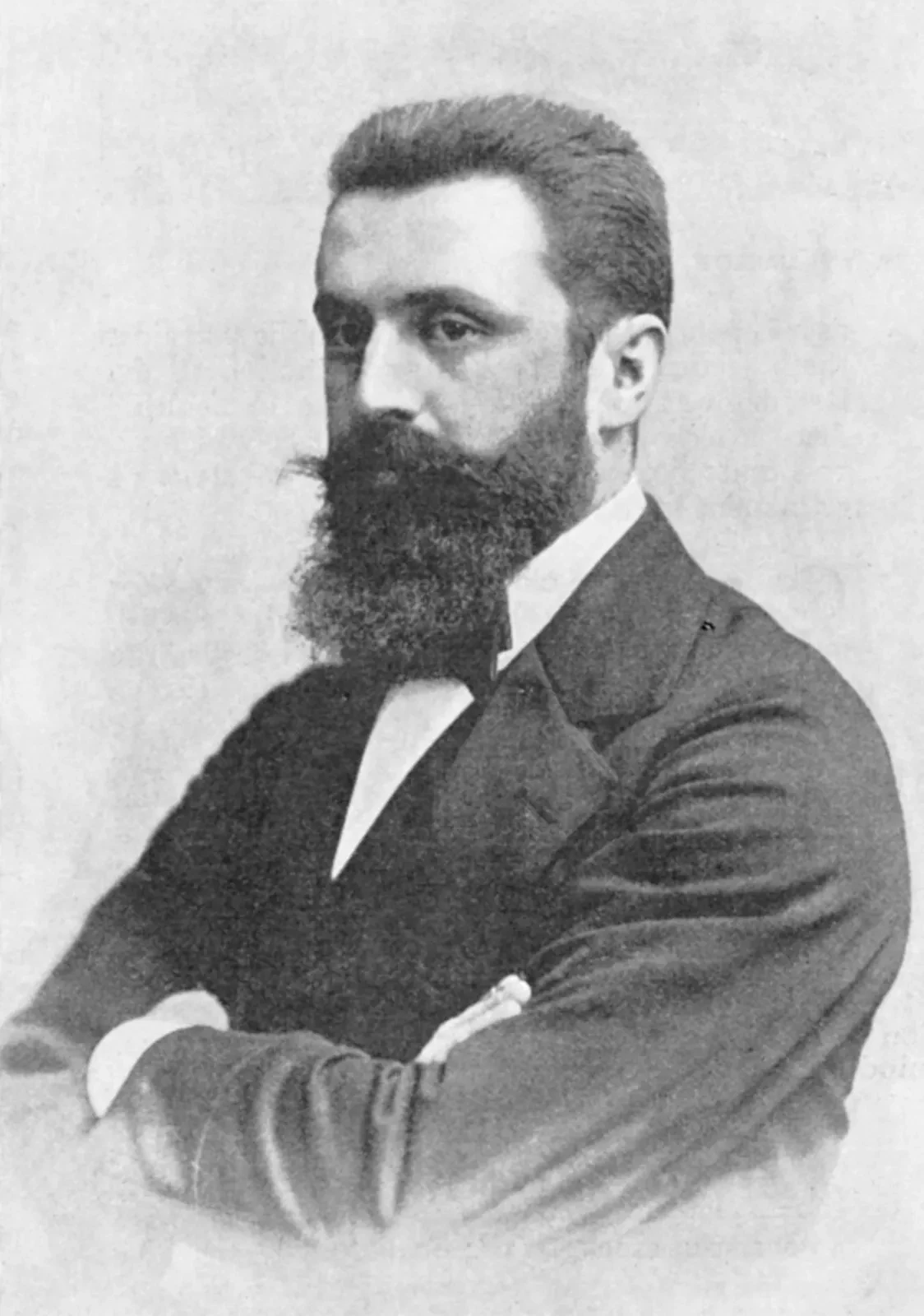
The contrast is particularly interesting when viewed alongside Theodor Herzl's original vision. Herzl imagined a Palestine in which Jews and Arabs could potentially live together in harmony. Yet the historical development of Zionism and the establishment of Israel would lead to a very different reality.
From Ma'abara to Kibbutz
The novel revolves around several interconnected themes: refugeehood, the conflict between Eastern and Western cultures, migration, identity, and the tragedy of moving from a religious background into a secular society.
The main character is Nuri, an Iraqi Jew from Baghdad who arrives in Palestine in 1950. His father places him in a Ma'abara, one of the temporary immigrant camps established for Jewish newcomers.
Life in the Ma'abarot was harsh. Many of the young people who arrived there wanted to leave as soon as possible. They dreamed of moving to a Kibbutz, even though they had little idea what life in a Kibbutz actually meant.
Once they arrive, however, they encounter a completely different world.
Everyone works without receiving an individual wage. Property is communal. Personal belongings are shared. Communal and sometimes mixed bathing arrangements challenge their traditional cultural norms. Men and women interact in ways that many of the Iraqi Jews find unfamiliar, and religious practices are significantly reduced. There is no traditional synagogue in the way they had known it.
Perhaps most strikingly, Iraqi Jews are sometimes referred to as “dirty Arabs.”
For immigrants coming from Baghdad, this is a profound cultural shock.
They had once occupied a particular social and economic position in Iraqi society. Now, in the Ma'abarot and Kibbutzim, they found themselves at the bottom of the social hierarchy.
In a sense, the pyramid had been turned upside down.
Zionism, Socialism and the Creation of a New Society
The Kibbutz system attempted to create a radically different social order.
Socialism was an important part of this project. In practice, socialist ideals and Zionist nationalism were combined to create a new political and social vision.
The objective was not merely to establish a Jewish state but also to create a new type of Jewish society.
The pioneers were expected to make enormous sacrifices. They were told, in effect, that Rome was not built in a day. The creation of a Jewish homeland would require years of hardship, discipline, labor, and sacrifice.
The novel portrays this commitment very effectively.
Some characters leave behind the women they love. Others abandon comfortable lives and dedicate themselves entirely to the Zionist project. Amir describes this dedication with considerable literary skill.
One of the motivations highlighted in the novel is the:
“intoxicating excitement of creating a homeland and a nation with one's own hands.”
This sentence captures something essential about the psychological appeal of the early Zionist project.
For many of the pioneers, they were not simply moving to another country. They believed they were participating in the creation of a new nation.
Yet the novel also reveals another reality: non-Ashkenazi and non-Sabra Jews could never fully become like the dominant group.
The Ashkenazi-Mizrahi Divide
One of the most important issues revealed indirectly by The Scapegoat is the tension between Ashkenazi and Mizrahi Jews.
The founders and political elites of the new state were predominantly Ashkenazi. As a result, Ashkenazi cultural norms often became the dominant model of Israeli identity.
A “melting pot” was envisioned—one that would transform Jews from very different cultural backgrounds into a unified Israeli society.
But creating a common identity was far more complicated than simply bringing different Jewish communities together.
Iraqi, Moroccan, Yemenite, Persian, and other Middle Eastern Jews arrived with their own languages, traditions, religious practices, foods, memories, and cultural identities.
The attempt to create a single Israeli identity therefore generated considerable tension.
The Scapegoat is particularly valuable because it allows the reader to experience some of this tension from the perspective of an Iraqi Jewish immigrant.
What Does the Novel Leave Out?
This is where my main criticism of the book begins.
Eli Amir is extremely successful in describing the experiences of Iraqi Jews and the cultural difficulties they faced after arriving in Israel. However, the Palestinian Arab experience remains largely outside the narrative.
The reader hears about Jewish immigrants losing their previous social status, struggling with poverty, adapting to communal life, and confronting cultural discrimination.
But what about the Arabs who had lived on this land before them?
What happened to their land?
What happened to their jobs?
What happened to their homes?
And what happened to their communities?
These questions are largely absent.
The Kibbutz is presented primarily through the experiences of Jewish pioneers and immigrants. Yet the historical development of the Kibbutz movement was also connected to the transformation of land ownership, the displacement of Palestinians, and the increasing exclusion of Arab labor.
This is why a critical reading of The Scapegoat requires us to look beyond the novel itself.
The story of Jewish suffering and migration is real and deserves to be understood. But understanding one historical trauma should not require us to ignore another.
Herzl and the Question of Palestine
Theodor Herzl's relationship with religion is also worth discussing.
Although Herzl sometimes referred to the biblical connection between the Jewish people and Palestine, his approach to Zionism was largely political and pragmatic. He was looking for a solution to the Jewish question and was attempting to establish a secure political future for Jews.
This pragmatic approach was also shared, in different ways, by other early Zionist leaders.
The irony is that later generations would increasingly frame the Zionist project through religious and biblical claims, while some of its original political architects were themselves much more secular.
This tension between secular Zionism and religious Zionism would later become one of the major political questions within Israeli society.
The state founded by largely secular Zionist leaders would eventually have to deal with religious communities whose political expectations and demands could not simply be ignored.
The Forgotten Muslim Story
There is another dimension to this historical memory that deserves attention.
The West knows the Jewish story extremely well.
In Germany, Holocaust memorials and museums can be found in some of the country's most important cities, particularly in Berlin. Anyone who visits these places is likely to be deeply affected by the history of the Holocaust.
The Jewish experience in Europe is therefore an essential part of the historical consciousness of the modern West.
But there is another story that is much less familiar in the Western public imagination:
the story of Muslims and Palestinians who experienced displacement, dispossession, and loss during the same historical transformation.
Recognizing this story does not diminish the suffering of European Jews.
On the contrary, a mature historical perspective should allow us to acknowledge different forms of suffering simultaneously.
The tragedy of one people should not require the erasure of another people's tragedy.
Evaluation
The Scapegoat is a powerful literary work because it successfully reflects the period through the perspective of an Iraqi Jewish immigrant.
Amir's depiction of cultural conflict, migration, displacement, the tension between Eastern and Western Jewish identities, and the transformation from a religious society into a secular one is particularly impressive.
The book also provides an important window into the experience of Mizrahi Jews during the early years of Israel.
However, its limitations become clear when the Kibbutz is examined from a broader historical perspective.
The darker aspects of the Kibbutz system—particularly its relationship with Palestinian land, the displacement of Arabs, the exclusion of Arab labor, and the marginalization of non-Ashkenazi Jewish identities—require further investigation.
For this reason, The Scapegoat should not be read as a complete history of the early years of Israel. Rather, it should be read as a powerful Jewish immigrant perspective on that history.
And perhaps this is precisely why the book is worth reading.
It tells us one side of the story exceptionally well.
Our responsibility as readers is to ask about the stories that remain outside its pages.
Ozan Dur
Note
[1] A Sabra is a term historically used for Jews born in Palestine/Israel, particularly those regarded as native-born Jews. One of the best-known Sabras, Yitzhak Rabin, would later become Prime Minister of Israel. He was the first Israeli-born prime minister.

Yorumlar
Yorum Yaz